

Last updated: June 2024
Østensjøvannet is a nature reserve covering an area of 539 acres, which includes both the water body and certain parts of surrounding land. It was established in order to preserve the important wetland area and its associated vegetation, bird and animal life significant for the region. In June 2002, Oslo municipality went further and created the Østensjøvannet Environmental Park, which covers 1187 acres of land and water. The park aims to further protect and strengthen the area, which is one of the most popular recreation areas of Oslo, and acts as an important area for research and education. (Ref. 1, 7)
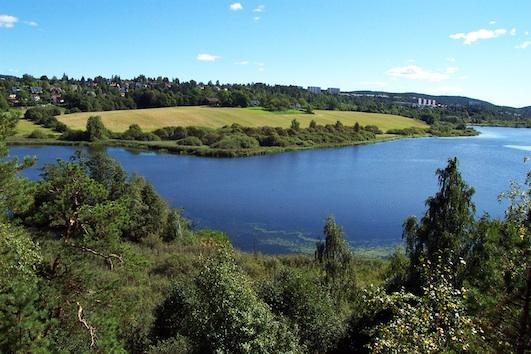
Source: Ref. 11
Overview
Nature-based solution
- Blue infrastructure
- Lakes/ponds
- In-land wetlands, peatlands, swamps, and moors
- Parks and urban forests
- Large urban parks or forests
Key challenges
- Green space, habitats and biodiversity (SDG 15)
- Habitat and biodiversity conservation
- Water management (SDG 6)
- Improvements to water quality
- Cultural heritage and cultural diversity
- Preservation of natural heritage
- Protection of historic and cultural landscape/infrastructure
- Health and well-being (SDG 3)
- Creation of opportunities for recreation
Focus
Maintenance and management of urban nature, Management and improved protection of rivers and other blue areas, Protection of natural ecosystems
Project objectives
1. Preserve and develop Lake Østensjø and its surroundings as a precious area of living nature, culture and recreation through sustainable use and management
2. Secure the area's cultural landscape, so that the old agricultural land, with meadows, fields, grazers, cultural heritage, historical buildings, stone walls and mounds, roads and trails, graveyards, gardens and culturally important vegetation are preserved.
3. Secure the wetlands of birdlife and conservation listed plants and facilitate education.
4. Secure the development towards better water quality and contribute to preservation the biodiversity of the inner lake.
5. Secure a good childhood for the young, promote public health and well being.
(Ref. 1)
Implementation activities
Protection and preservation of cultural heritage as well as green space, habitats and biodiversity through the establishment of the 1187-acre Environmental Park (Ref. 1,2)
Reduction of polluted runoff into the lake (Ref. 1)
Development of new hiking trails and pedestrian/cycle paths, designed to the greatest possible extent to satisfy accessibility requirements for those with reduced mobility (Ref. 1)
Biodiversity conservation or restoration-focused activities
Biodiversity conservation:
- Protect and enhance urban habitats
- Preserve and strengthen existing habitats and ecosystems
- Means for conservation governance
- Public engagement
Main beneficiaries
- Local government/Municipality
- Public sector institution (e.g. school or hospital)
- Non-government organisation/Civil Society
- Researchers/University
- Citizens or community groups
Governance
Management set-up
- Government-led
Type of initiating organisation
- Local government/municipality
Participatory approaches/ community involvement
- Co-planning (e.g. stakeholder workshops, focus groups, participatory mapping)
- Citizen monitoring and review
Details on the roles of the organisations involved in the project
Local Government: Leads NBS initiative, develops relevant management plans and regulations (Ref. 1,9)
NGO: Friends of Østensjø Lake is an NGO that maintains the nature reserve and arranges activities and other inventions for the park, as well as run the local newspaper "Sothøna". (Ref. 3).
Citizens/ Civil Society/ Public Sector/ Universities: citizens, schools and the University of Oslo are users of the area and often conduct data collection and research withinin Østensjø Environmental park. (Ref. 3)
Project implemented in response to ...
... an EU policy or strategy?
Unknown
... a national policy or strategy?
Unknown
... a local policy or strategy?
Unknown
Financing
Total cost
Unknown
Source(s) of funding
- Public local authority budget
Type of funding
- Earmarked public budget
Non-financial contribution
Unknown
Impacts and Monitoring
Environmental impacts
- Water management and blue areas
- Improved water quality
- Enhanced protection and restoration of freshwater ecosystems
- Green space and habitat
- Increase in protected green space areas
- Increased conservation or restoration of ecosystems
Economic impacts
- Unknown
Socio-cultural impacts
- Social justice and cohesion
- Improved access to urban green space
- Health and wellbeing
- Gain in activities for recreation and exercise
- Cultural heritage and sense of place
- Protection of natural heritage
- Protection of historic and cultural landscape / infrastructure
- Education
- Increased support for education and scientific research
Type of reported impacts
Achieved impacts
Presence of formal monitoring system
Unknown
Presence of indicators used in reporting
Yes
Presence of monitoring/ evaluation reports
Yes
Availability of a web-based monitoring tool
No
References
1. Friends of Østensjø Lake/Østensjøvannets Venner (2002). Reguleingsbestemmelser for Østensjøområdet Miljøpark, GNR./ BNR. 147/1, 147/30, 160/1, 160/12 MFL. Available at: Source link [Accessed: 28 October 2020].
2. The City of Oslo (2007a). Management Plan for the Østensjø area Environmental Park, Part 1 Statusreport/Forvaltningsplan for Østensjøområdet miljøpark. Del 1 Statusrapport natur og kulturkvaliteter. Friluftsetaten. Available at: Source link [Accessed: 28 October 2020].
3. Friends of Østensjø Lake (2017). Yearly Report 18-03-2016 to 29-03-2017. Yearly meeting 29th March 2017/Årsmøte 29 mars 2017. [Document provided].
4. The City of Oslo (2017a). Quiet Urban Areas. [Not available in 2020].
5. The City of Oslo (2017b). Plans and Programmes. Available at: Source link [Accessed: 28 October 2020].
6. Oslo River Forum/ Oslo Elveforum (2003). Yearly Meeting 2003. Årsmelding 2003. [Document provided].
7. The City of Oslo (2007b). Management Plan for the Østensjø area Environmental Park, Part 3 - Managementplan/Forvaltningsplan for Østensjøområdet miljøpark, Del 3 Skjøtselplan. Friluftsetaten. Available at: Source link [Accessed: 28 October 2020].
8. The City of Oslo (2007c). Greenplan for Oslo Municipal Strategy Plan for the Blue-green structure in the Building Zone of Oslo. Grøntplan for Oslo Kommunedelplan for den blågrønne strukturen i Oslos byggesone. Saksnr. 2007 11655, Planning- and Building Agency/Plan-& Bygningsetaten. Available at: Source link [Accessed: 28 October 2020].
9. The City of Oslo (2020). Consultation draft: management plan for the Østensjø Lake area environmental park 2020–2030. Høringsutkast: forvaltningsplan for Østensjøområdet miljøpark 2020–2030. Available at: Source link [Accessed: 28 October 2020].
10. Pihl,R. (2020). Østensjø Lake. Østensjøvannet. STORE NORSKE LEKSIKON. Available at: Source link [Accessed: 28 October 2020].
11. Oslo River Forum. (2013). Friends of Østensjø Lake. Østensjøvannets Venner. Available at: Source link [Accessed: 28 October 2020].
12. Ånestad, A. (2020). The friends of the Østensjø Lake receive reports of animal cruelty every day. Østensjøvannets venner får meldinger om dyreplageri hver dag. Dagsavisen. Available at: Source link [Accessed: 28 October 2020].
2. The City of Oslo (2007a). Management Plan for the Østensjø area Environmental Park, Part 1 Statusreport/Forvaltningsplan for Østensjøområdet miljøpark. Del 1 Statusrapport natur og kulturkvaliteter. Friluftsetaten. Available at: Source link [Accessed: 28 October 2020].
3. Friends of Østensjø Lake (2017). Yearly Report 18-03-2016 to 29-03-2017. Yearly meeting 29th March 2017/Årsmøte 29 mars 2017. [Document provided].
4. The City of Oslo (2017a). Quiet Urban Areas. [Not available in 2020].
5. The City of Oslo (2017b). Plans and Programmes. Available at: Source link [Accessed: 28 October 2020].
6. Oslo River Forum/ Oslo Elveforum (2003). Yearly Meeting 2003. Årsmelding 2003. [Document provided].
7. The City of Oslo (2007b). Management Plan for the Østensjø area Environmental Park, Part 3 - Managementplan/Forvaltningsplan for Østensjøområdet miljøpark, Del 3 Skjøtselplan. Friluftsetaten. Available at: Source link [Accessed: 28 October 2020].
8. The City of Oslo (2007c). Greenplan for Oslo Municipal Strategy Plan for the Blue-green structure in the Building Zone of Oslo. Grøntplan for Oslo Kommunedelplan for den blågrønne strukturen i Oslos byggesone. Saksnr. 2007 11655, Planning- and Building Agency/Plan-& Bygningsetaten. Available at: Source link [Accessed: 28 October 2020].
9. The City of Oslo (2020). Consultation draft: management plan for the Østensjø Lake area environmental park 2020–2030. Høringsutkast: forvaltningsplan for Østensjøområdet miljøpark 2020–2030. Available at: Source link [Accessed: 28 October 2020].
10. Pihl,R. (2020). Østensjø Lake. Østensjøvannet. STORE NORSKE LEKSIKON. Available at: Source link [Accessed: 28 October 2020].
11. Oslo River Forum. (2013). Friends of Østensjø Lake. Østensjøvannets Venner. Available at: Source link [Accessed: 28 October 2020].
12. Ånestad, A. (2020). The friends of the Østensjø Lake receive reports of animal cruelty every day. Østensjøvannets venner får meldinger om dyreplageri hver dag. Dagsavisen. Available at: Source link [Accessed: 28 October 2020].