

Last updated: October 2021
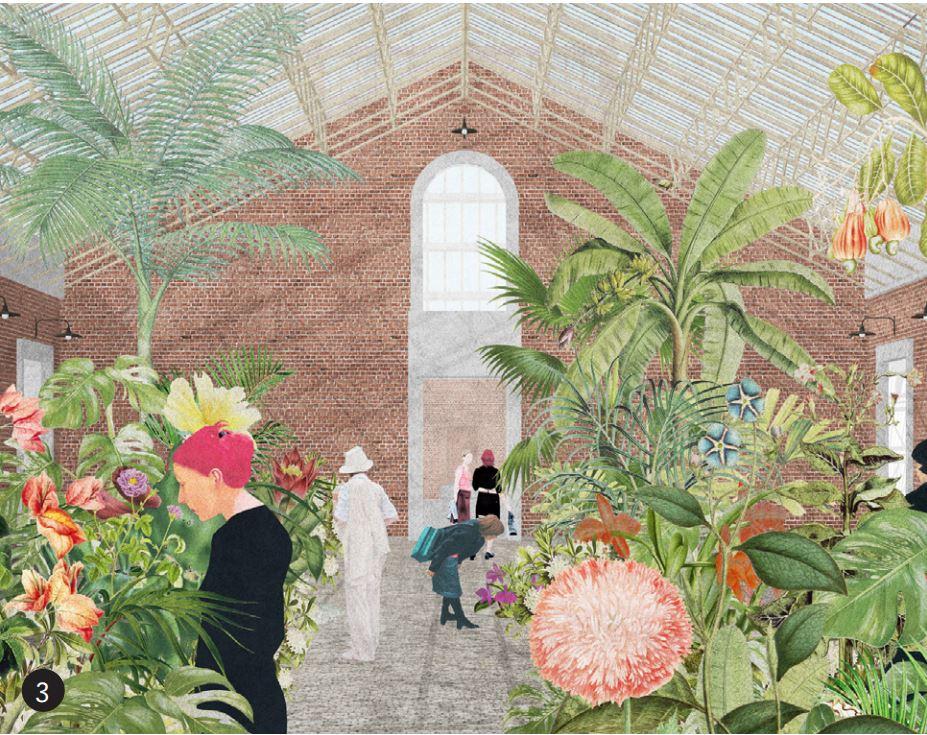
FutureBuilt is a program running between 2010-2020, with expectations to continue from 2021-2030 (Ref. 9). One of its projects consists of the construction of a large greenhouse in between a housing complex in an old industrial building. The greenhouse will be the centre of the building and provide a Mediterranean climate with a lot of green facades, green roofs and indoor vertical greeneries (Ref. 1). The nave of the complex will become a greenhouse and the natural gathering point for the residents. (Ref. 1, 3)
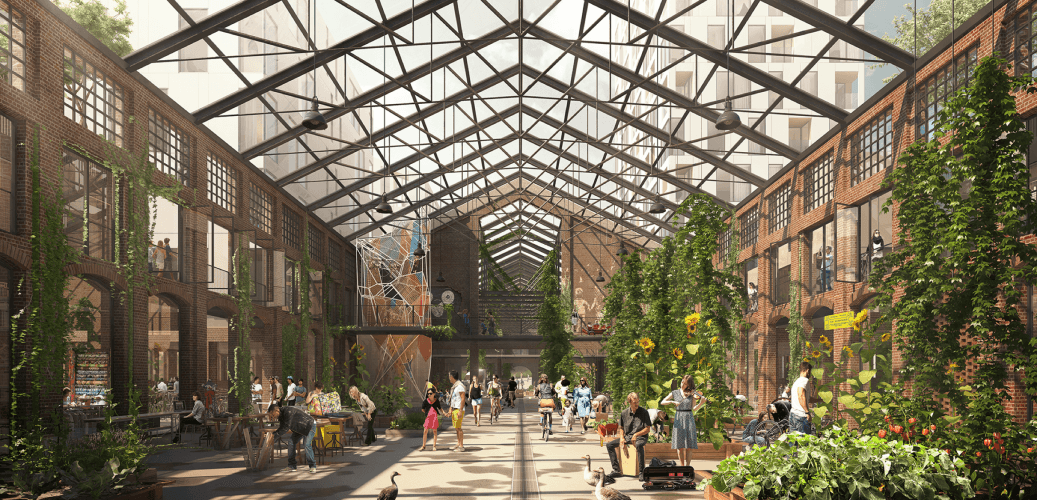
Source: Ref. 1
Overview
Nature-based solution
- Nature on buildings (external)
- Green roofs
- Green walls or facades
- Nature in buildings (indoor)
- Green walls and ceilings
- Atriums/Courtyards
Key challenges
- Climate action for adaptation, resilience and mitigation (SDG 13)
- Climate change mitigation
- Green space, habitats and biodiversity (SDG 15)
- Green space creation and/or management
- Regeneration, land-use and urban development
- Conversion of former industrial areas
- Promote natural styles of landscape design for urban development
- Economic development and employment (SDG 8)
- Economic development: industry
- Cultural heritage and cultural diversity
- Protection of historic and cultural landscape/infrastructure
Focus
Creation of new green areas
Project objectives
This project is part of the broader FutureBuilt program, which has the following goals:
-Achieve climate-neutral urban areas and high-quality architecture (Ref. 9)
-Produce model projects that will reduce greenhouse gas emissions by 50% in the areas of transport, energy use, and material use (Ref. 9)
-Stimulate innovation and learning among developers, architects, consultants, contractors, municipalities and users (Ref. 9)
Cultural Heritage:
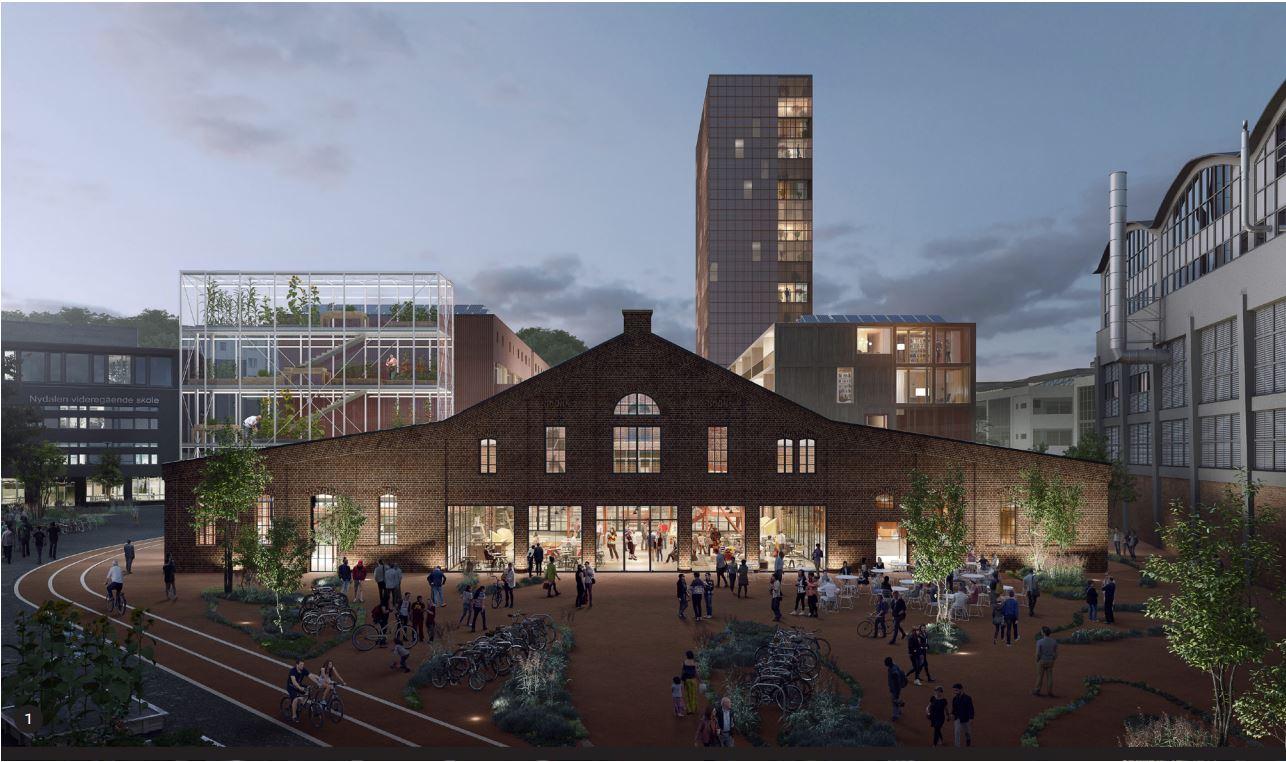
The project aims for the preservation of a historic industrial building that dates back to 1876 to a modern, low-carbon housing complex with a large greenhouse as the central meeting point of the building (Ref. 8).
Implementation activities
Construction of a large greenhouse in between a housing complex in an old industrial building. The greenhouse will be the centre/nave of the building and provide a Mediterranean climate year around with a lot of green facades etc. (Ref. 1)
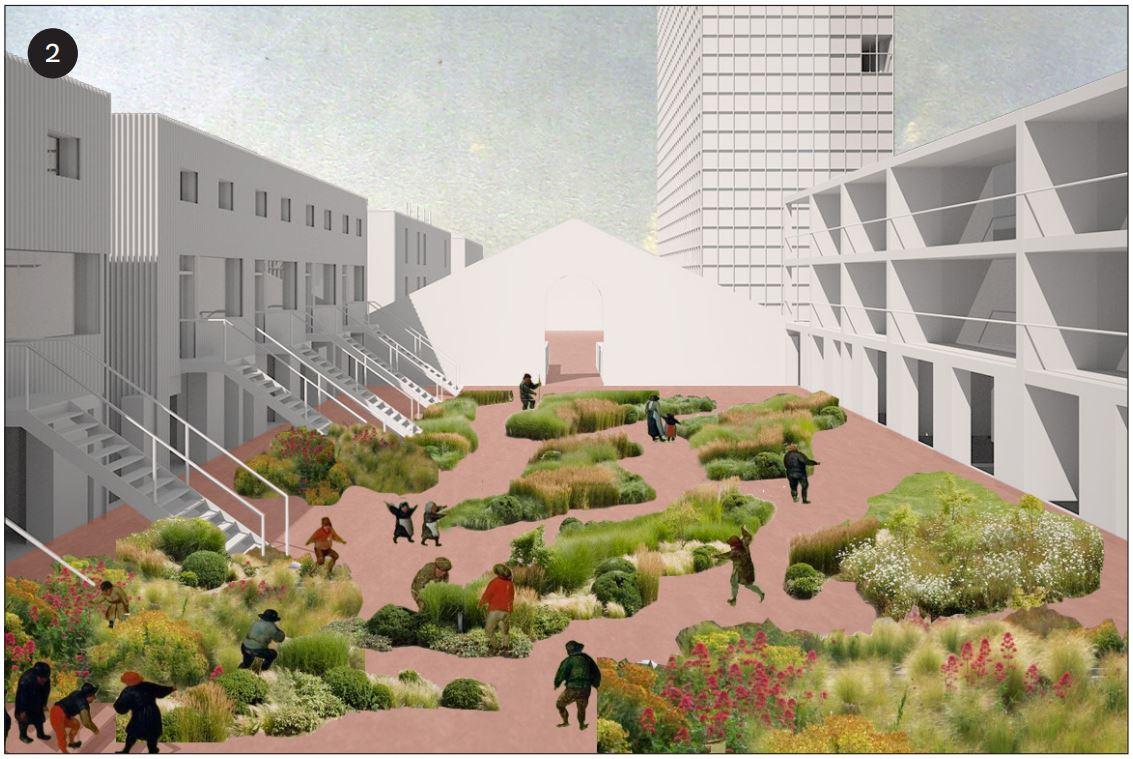
The project will include green roofs, local surface water solutions, and urban farming (Ref. 3)
Climate-focused activities
Climate change mitigation:
- Increase green urban nature for carbon storage (wetlands, tree cover)
- Install vertical or horizontal artificial surfaces that help with carbon storage and cooling
Main beneficiaries
- Local government/Municipality
- Private sector/Corporate/Company
- Citizens or community groups
Governance
Management set-up
- Co-governance with government and non-government actors
Type of initiating organisation
- Local government/municipality
- Private sector/corporate actor/company
Participatory approaches/ community involvement
- Unknown
Details on the roles of the organisations involved in the project
Local Government/ Private Sector: "FutureBuilt is a program collaboration between Oslo, Bærum, Asker and Drammen municipalities, Husbanken, Enova, KMD, DIBK, Green Building Alliance and National Architects of Norway. FutureBuilt is legally a looser "host municipality" cooperation under the Local Government Act, with the municipality of Oslo as host. FutureBuilt is linked to the Planning and Building Agency (PBE) in Oslo Municipality" (Ref. 5)
Private Sector: responsible for the Nydalsveien 32B project specifically are the architects SAAHA AS and Lala Tøyen AS; and the consultants: Gether, Degree of Freedom, Asplan VIak AS, WSP Engineering (Ref. 8)
Citizens: A jury decided to go for the project "I love Nydalen" in a competition for architects for suggested development of Nydalsveien 32. (Ref. 2)
Project implemented in response to ...
... an EU policy or strategy?
Unknown
... a national policy or strategy?
Unknown
(The FutureBuilt project wants to promote sustainable urban development and prove that near-carbon neutral solutions are possible. (Ref. 3). However, no reference to a specific national regulation was made.)
... a local policy or strategy?
Unknown
Financing
Total cost
Unknown
Source(s) of funding
- Unknown
Type of funding
- Unknown
Non-financial contribution
Unknown
Impacts and Monitoring
Environmental impacts
- Climate change
- Reduced emissions
- Enhanced carbon sequestration
- Green space and habitat
- Promotion of naturalistic styles of landscape design for urban development
- Increased green space area
Economic impacts
- Unknown
Socio-cultural impacts
- Cultural heritage and sense of place
- Protection of historic and cultural landscape / infrastructure
- Education
- Increased awareness of NBS and their benefits
Type of reported impacts
Expected impacts
Presence of formal monitoring system
Yes
Presence of indicators used in reporting
Yes
Presence of monitoring/ evaluation reports
No
Availability of a web-based monitoring tool
No evidence in public records
References
1. FutureBuilt (2016). Nydalsveien 32B. Available at: Source link [Accessed: 30 October 2020].
2. Norske Arkitekters Landsforbund (2016). Norwegian Architecture Competitions. Limited planning and design. Development of Nydalsveien 32B/Norske Arkitekturkonkurrenser. Begrenset plan- og designkonkurranse. Utvikling av Nydalsveien 32B. Nr. 468. Available at: Source link [Accessed: 30 October 2020].
3. FutureBuilt (n.d). Climate Friendly Architecture and Urbanism. Oslo. [Document provided].
4. FutureBuilt (2017). Quality Program Goals FutureBuilt/Mal kvalitetsprogram FutureBuilt. [Document provided].
5. Oslo Kommune (2016). CLIMATE SUPPORT FOR CLIMATE ASSESSMENT IN MUNICIPALITIES - 2016. 10 FutureBuilt Projects/KLIMASATS ‐ STØTTE TIL KLIMASATSING I KOMMUNENE ‐ 2016. 10 FutureBuilt Prosjekter. [Document provided].
6. The City of Oslo (2017) Quiet Urban Areas. [Not available in 2020].
7. FutureBuilt (2016). FutureBuilt documentation requirements - Building projects/FutureBuilt dokumentasjonskrav – byggeprosjekter. [Document provided].
8. Norske arkitekters landsforbund. (2020). Nydalsveien 32b. Available at: Source link [Accessed: 30 October 2020].
9. FutureBuilt (2017). About us. Om oss. Available at: Source link [Accessed: 30 October 2020].
2. Norske Arkitekters Landsforbund (2016). Norwegian Architecture Competitions. Limited planning and design. Development of Nydalsveien 32B/Norske Arkitekturkonkurrenser. Begrenset plan- og designkonkurranse. Utvikling av Nydalsveien 32B. Nr. 468. Available at: Source link [Accessed: 30 October 2020].
3. FutureBuilt (n.d). Climate Friendly Architecture and Urbanism. Oslo. [Document provided].
4. FutureBuilt (2017). Quality Program Goals FutureBuilt/Mal kvalitetsprogram FutureBuilt. [Document provided].
5. Oslo Kommune (2016). CLIMATE SUPPORT FOR CLIMATE ASSESSMENT IN MUNICIPALITIES - 2016. 10 FutureBuilt Projects/KLIMASATS ‐ STØTTE TIL KLIMASATSING I KOMMUNENE ‐ 2016. 10 FutureBuilt Prosjekter. [Document provided].
6. The City of Oslo (2017) Quiet Urban Areas. [Not available in 2020].
7. FutureBuilt (2016). FutureBuilt documentation requirements - Building projects/FutureBuilt dokumentasjonskrav – byggeprosjekter. [Document provided].
8. Norske arkitekters landsforbund. (2020). Nydalsveien 32b. Available at: Source link [Accessed: 30 October 2020].
9. FutureBuilt (2017). About us. Om oss. Available at: Source link [Accessed: 30 October 2020].
Source: Ref. 2
Source: Ref. 2
Source: Ref. 2