

Last updated: October 2021
Nelson Mandela Square is located on the south side of the main railway station in Nurnberg. Serving as an important transition zone for pedestrians (25,000 people daily), the neglected square, which was mostly used as a car park is to be redeveloped into a green park providing recreational facilities in the densely populated residential area. (2, 7). The square and the bicycle storage facility opened on September 15, 2020. 70 new trees, a spacious lawn, safe bicycle paths, benches, parking spaces and Nuremberg's first bicycle parking garage now ensure both quality of stay and functionality. (7)

The Nelson Mandela Square is handed over
Reference 7: https://www.nuernberg.de/internet/stadtportal/nelson_mandela_platz.html
Overview
Nature-based solution
- Grey infrastructure featuring greens
- Railroad bank and track greens
- Parks and urban forests
- Pocket parks/neighbourhood green spaces
Key challenges
- Green space, habitats and biodiversity (SDG 15)
- Green space creation and/or management
- Environmental quality
- Air quality improvement
- Regeneration, land-use and urban development
- Regulation of built environment
- Promote natural styles of landscape design for urban development
- Health and well-being (SDG 3)
- Enabling opportunities for physical activity
- Creation of opportunities for recreation
- Cultural heritage and cultural diversity
- Preservation of historic traditions
Focus
Creation of new green areas
Project objectives
1. Create a comfortable social green space next to the Nurnberg railway station (3)
2. Allow a comfortable transition from the Old Town to the Southern part of the city (3)
3. Increase the amount of greenspace in the area (4)
4. Make the square more attractive for Nurnberg citizens (4)
5. Provide recreational facilities for inhabitants of surrounding areas (4)
6. Improve the local air quality and general environmental quality of the area. Reducing the number of cars in the area (6, 7)
Implementation activities
- 2007: two participatory workshops with local citizens organized to understand the needs of the users of the square (1)
- 2010: A competition for a landscape design of the square was launched (1)
- Asphalt and concrete and parking spaces were cleared to make space for the plantation of new trees and lawn. 70 new trees were planted in total. (7)
- For recreational activity, benches, drinking water stations, a safe bicycle path bicycle and a storage facility was opened. (7)
- A pavilion that was originally intended for a café is now closed closed with a sand-colored temporary asphalt. Because of the coronavirus crisis, the establishment of the café was postponed. (7)
- A monument called “Rolihlahla”, commemorating the square’s namesake Nelson Mandela, was placed at the center of the park. (7)
- And an innovative technology was installed for the irrigation of the lawn: extensive irrigation system was installed under the lawn, that combines irrigation hoses and fleece mats to ensure that the water is evenly distributed over the surface so that the lawn stays green even with heavy use and hot, dry summers. (7)
Main beneficiaries
- Citizens or community groups
Governance
Management set-up
- Government-led
Type of initiating organisation
- Local government/municipality
Participatory approaches/ community involvement
- Co-planning (e.g. stakeholder workshops, focus groups, participatory mapping)
Details on the roles of the organisations involved in the project
The project was led and initiated by the local government. The winner of the competition for the landscape design of the square was the landscape architecture and urban planning company Prof. Rainer Schmidt. The company was responsible for planning. (1) The project was funded by the state and the federal government. (8)
Project implemented in response to ...
... an EU policy or strategy?
Unknown
... a national policy or strategy?
Yes
(The program Social City (Soziale Stadt), implemented in different cities of Germany, aims at improving social and environmental conditions in disadvantaged districts. The project of reconstruction of Nelson-Mandela square received funding from the city of Nurnberg through this program (2)
)
... a local policy or strategy?
Unknown
Financing
Total cost
More than €4,000,000
Source(s) of funding
- Public national budget
- Public regional budget
Type of funding
- Direct funding (grants, subsidies, or self-financed projects by private entities)
Non-financial contribution
Unknown
Impacts and Monitoring
Environmental impacts
- Climate change
- Lowered local temperature
- Environmental quality
- Improved air quality
Economic impacts
- Unknown
Socio-cultural impacts
- Social justice and cohesion
- Improved liveability
- Increased opportunities for social interaction
- Health and wellbeing
- Gain in activities for recreation and exercise
- Cultural heritage and sense of place
- Increased sense of place identity, memory and belonging
- Other
Type of reported impacts
Achieved impacts
Presence of formal monitoring system
Unknown
Presence of indicators used in reporting
No evidence in public records
Presence of monitoring/ evaluation reports
No evidence in public records
Availability of a web-based monitoring tool
No evidence in public records
References
1. Münicipaliy of Nürnberg. (2016). Tatort Stadterneuerung. Available at: Source link [Accessed: 30 Sept. 2020]
2. Stadtportal Nürnberg. (nd.) INTERNATIONALER TEILOFFENER REALISIERUNGSWETTBEWERB. KUNSTWERK Source link unavailable in 2020].
3. Wettbewerb, N. (2009). Umgestaltung Nelson-Mandela-Platz Nürnberg. [online]. Available at: Source link [Accessed: 30 Sept. 2020].
4. Schröder, T. (2014) City by Landscape: The Landscape Architecture of Rainer Schmidt. Available at: Source link [Accessed: 30 Sept. 2020].
5. Stadtportal Nürnberg. (nd.) Ergebnis städtebaulicher Realisierungswettbewerb für die Umgestaltung des Nelson-Mandela-Platzes. [Weblink unavailable in 2020].
6. Stadtportal Nürnberg. (nd.) WORKSHOP ZUM WETTBEWERB NELSON-MANDELA-PLATZ. [Weblink unavailable in 2020].
7. Stadtportal Nürnberg. (2020). Umgestaltung des Nelson-Mandela-Platzes. [online]. Available at: Source link [Accessed: 1 Oct. 2020].
8. Stadtportal Nürnberg. (2020). Der Nelson-Mandela-Platz ist fertiggestellt. [online]. Available at: Source link [Accessed: 1 Oct. 2020].
2. Stadtportal Nürnberg. (nd.) INTERNATIONALER TEILOFFENER REALISIERUNGSWETTBEWERB. KUNSTWERK Source link unavailable in 2020].
3. Wettbewerb, N. (2009). Umgestaltung Nelson-Mandela-Platz Nürnberg. [online]. Available at: Source link [Accessed: 30 Sept. 2020].
4. Schröder, T. (2014) City by Landscape: The Landscape Architecture of Rainer Schmidt. Available at: Source link [Accessed: 30 Sept. 2020].
5. Stadtportal Nürnberg. (nd.) Ergebnis städtebaulicher Realisierungswettbewerb für die Umgestaltung des Nelson-Mandela-Platzes. [Weblink unavailable in 2020].
6. Stadtportal Nürnberg. (nd.) WORKSHOP ZUM WETTBEWERB NELSON-MANDELA-PLATZ. [Weblink unavailable in 2020].
7. Stadtportal Nürnberg. (2020). Umgestaltung des Nelson-Mandela-Platzes. [online]. Available at: Source link [Accessed: 1 Oct. 2020].
8. Stadtportal Nürnberg. (2020). Der Nelson-Mandela-Platz ist fertiggestellt. [online]. Available at: Source link [Accessed: 1 Oct. 2020].
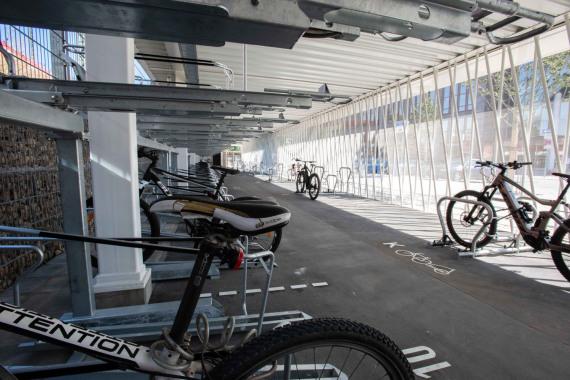
The bicycle storage facility
Reference 7: https://www.nuernberg.de/internet/stadtportal/nelson_mandela_platz.html