

Last updated: October 2021
Pegnitztal West is a new corridor and recreation zone along a section of the Pegnitz river in Nurnberg suitable for all kinds of social groups and intended for recreational activities (1). The project instrumentalizes green and blue infrastructure for creating conditions for sport, leisure, and recreation, as well as serving a transitional function for the dwellers of the neighboring Gostenhof and St. Johannis districts (1). The green corridor also provides a protected urban habitat for various species, including more than 8 different tree species, water bats, green woodpeckers and swamp warblers. The project also stabilized the water level of the river and helps flood protection efforts. (2, 7)
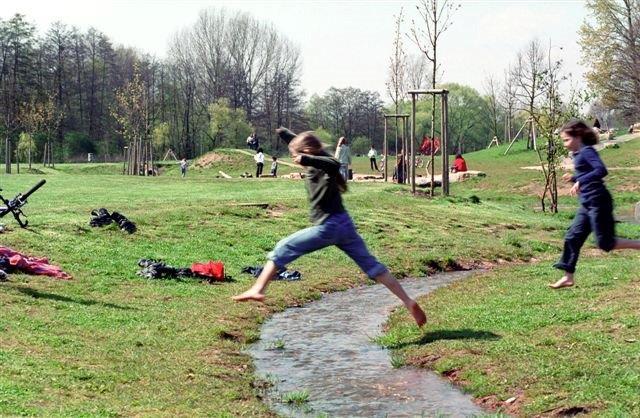
Pegnitztal West
Photographer: Christine Dierenbach, retrieved 09/20/2018 from Data Exchange Service (City of Nürnberg)
Overview
Nature-based solution
- Grey infrastructure featuring greens
- Blue infrastructure
- Riverbank/Lakeside greens
- Parks and urban forests
- Large urban parks or forests
- Green corridors and green belts
- Other
- Rivers/streams/canals/estuaries
Key challenges
- Climate action for adaptation, resilience and mitigation (SDG 13)
- Climate change adaptation
- Water management (SDG 6)
- Flood protection
- Improvements to water quality
- Green space, habitats and biodiversity (SDG 15)
- Habitat and biodiversity restoration
- Habitat and biodiversity conservation
- Green space creation and/or management
- Regeneration, land-use and urban development
- Regulation of built environment
- Social justice, cohesion and equity (SDG 10)
- Social interaction
- Health and well-being (SDG 3)
- Enabling opportunities for physical activity
- Creation of opportunities for recreation
- Economic development and employment (SDG 8)
- Tourism support
Focus
Creation of new green areas, Protection of natural ecosystems, Monitoring and maintenance of habitats and/or biodiversity
Project objectives
1. New recreational area for all social and age groups (1)
2. Provide the opportunity for natural experience within the city (2)
3. Improve quality of life in the city center (2)
4. Provide Nurnberg residents and visitors open access to river bank (2, 7)
5. Improve urban climate, reduce the heat island effect (2)
6. Enhance leisure-related activities and tourism (2)
7. Maintenance and protection of biodiversity (2)
8. Flood protection (2)
Implementation activities
1. Primary dendrological evaluation, biotope mapping (2)
2. Paths for cycling, walking, and running were created (1)
3. Green walking loans along the river side arranged (2)
4. Infrastructure for barbecues and trash disposals provided (1)
5. Access to the river banks improved (1)
6. Sports facilities for adults and playgrounds for children created (1)
7. Lawn/meadow areas were created where shrubs and 8 new tree species with a total of 142 trees were planted. 44 benches were also placed in the park. (2)
8. High bank walls against flooding erected (2)
9. The park was granted environmental protection (7)
Climate-focused activities
Climate change adaptation:
- Increase or improve urban vegetation cover to help reduce outdoor temperature
- Create or improve outdoor spaces to help people escape from urban heat
Biodiversity conservation or restoration-focused activities
Biodiversity conservation:
- Protect and enhance urban habitats
- Preserve and strengthen existing habitats and ecosystems
- Promote environmentally-sound development in and around protected areas
- Create new habitats
- Preserve and strengthen habitat connectivity
- Reduce negative impacts and avoid the alteration/damage of ecosystem
- Protect species
- Undertake specific measures to protect species
- Undertake specific measures to protect valued species
Biodiversity restoration:
- Restore species (native, endangered, or unspecified)
- Restore valued species
- Restore ecological connectivity
Main beneficiaries
- Citizens or community groups
- Young people and children
- Other
Governance
Management set-up
- Government-led
Type of initiating organisation
- Local government/municipality
Participatory approaches/ community involvement
- Unknown
Details on the roles of the organisations involved in the project
The project was initiated and led by the local government. (1) Funding came mostly from the city but received subsidies from the federal cooperation project “koopstadt”. (2)
Project implemented in response to ...
... an EU policy or strategy?
Yes
(Parts of the project area are managed within the framework of three directives: Flora Fauna Habitat-Gebiete (FFH), Special Protection Area (SPA), Landschaftsschutzgebiete (LSG) (3))
... a national policy or strategy?
Yes
(The project is realized within the strategy "Lebenstadt Innenstadt" that promotes development of inner cities attractive to citizens by developing local centers for housing, retail, crafts, culture and leisure. Around 100 Bavarian communities participate in this initiative (5))
... a local policy or strategy?
Yes
(The project is conducted within the urban renewal of the area "Northern Old town" of Nurnberg (2))
Financing
Total cost
€500,000 - €2,000,000
Source(s) of funding
- Public national budget
- Public local authority budget
Type of funding
- Earmarked public budget
- Direct funding (grants, subsidies, or self-financed projects by private entities)
Non-financial contribution
Unknown
Impacts and Monitoring
Environmental impacts
- Climate change
- Lowered local temperature
- Water management and blue areas
- Increased protection against flooding
- Green space and habitat
- Increased number of protection areas
- Increased green space area
- Increased conservation or restoration of ecosystems
- Increased number of species present
Economic impacts
- Unknown
Socio-cultural impacts
- Social justice and cohesion
- Improved access to urban green space
- Increased opportunities for social interaction
- Health and wellbeing
- Improved physical health
- Gain in activities for recreation and exercise
Type of reported impacts
Achieved impacts
Presence of formal monitoring system
Yes
Presence of indicators used in reporting
Yes
Presence of monitoring/ evaluation reports
Yes
Availability of a web-based monitoring tool
Yes
References
1. Stadtportal Nürnberg. (nd.) Pegnitztal West. [online]. Available at: Source link [Accessed: 24 Sept. 2020].
2. Stadt Nürnberg - Wirtschaftsreferat, Amt für Wohnen und Stadtentwicklung. (2012). Altstadt ans Wasser. Nürnberg: Stadt Nürnberg - Wirtschaftsreferat, Amt für Wohnen und Stadtentwicklung. Available at: Source link [Accessed: 24 Sept. 2020].
3. Stadtportal Nürnberg. (2014) Gesamtstädtisches Freiraumkonzept Nürnberg "Baustein Wasser". Available at: Source link [Accessed: 24 Sept. 2020].
4. Stadtportal Nürnberg. [image] Gesamtstädtisches Freiraumkonzept Nürnberg "Baustein Wasser". Available at: Source link [Accessed: 24 Sept. 2020].
5. Bayerisches Staatministerium für Wohnen, Bau und Verkehr (nd.)
Leben findet Innenstadt. [online]. Available at: Source link [Accessed: 24 Sept. 2020]."
6. Stadtportal Nürnberg. (nd). Angeln, Sporteln, Chillen. [online]. Available at: Source link [Accessed: 24 Sept. 2020].
7. Verkehrsverbund Großraum Nürnberg. (2017). Nürnbergs Landschaftschätze - Natur vor der Haustür. Nürnberg: Verkehrsverbund Großraum Nürnberg, Source link. Available at: Source link [Accessed: 24 Sept. 2020]
8. Source link. (nd.) Landschaftsschutzgebiet Pegnitztal West. Available at: Source link [Accessed: 24 Sept. 2020].
2. Stadt Nürnberg - Wirtschaftsreferat, Amt für Wohnen und Stadtentwicklung. (2012). Altstadt ans Wasser. Nürnberg: Stadt Nürnberg - Wirtschaftsreferat, Amt für Wohnen und Stadtentwicklung. Available at: Source link [Accessed: 24 Sept. 2020].
3. Stadtportal Nürnberg. (2014) Gesamtstädtisches Freiraumkonzept Nürnberg "Baustein Wasser". Available at: Source link [Accessed: 24 Sept. 2020].
4. Stadtportal Nürnberg. [image] Gesamtstädtisches Freiraumkonzept Nürnberg "Baustein Wasser". Available at: Source link [Accessed: 24 Sept. 2020].
5. Bayerisches Staatministerium für Wohnen, Bau und Verkehr (nd.)
Leben findet Innenstadt. [online]. Available at: Source link [Accessed: 24 Sept. 2020]."
6. Stadtportal Nürnberg. (nd). Angeln, Sporteln, Chillen. [online]. Available at: Source link [Accessed: 24 Sept. 2020].
7. Verkehrsverbund Großraum Nürnberg. (2017). Nürnbergs Landschaftschätze - Natur vor der Haustür. Nürnberg: Verkehrsverbund Großraum Nürnberg, Source link. Available at: Source link [Accessed: 24 Sept. 2020]
8. Source link. (nd.) Landschaftsschutzgebiet Pegnitztal West. Available at: Source link [Accessed: 24 Sept. 2020].

Pegnitztal West
Photographer: Christine Dierenbach, retrieved 09/20/2018 from Data Exchange Service (City of Nürnberg)