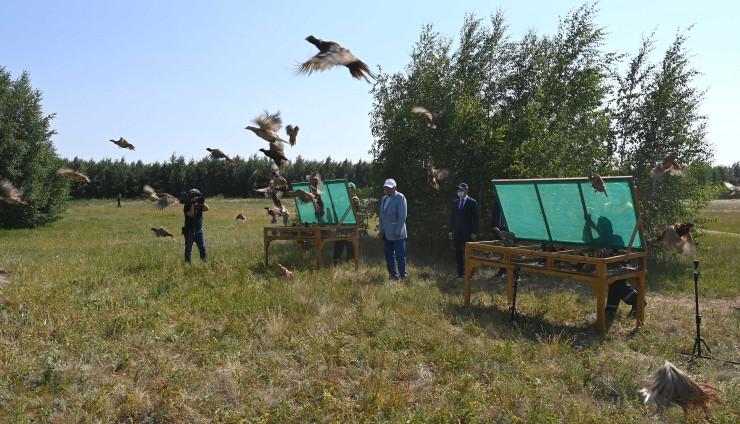
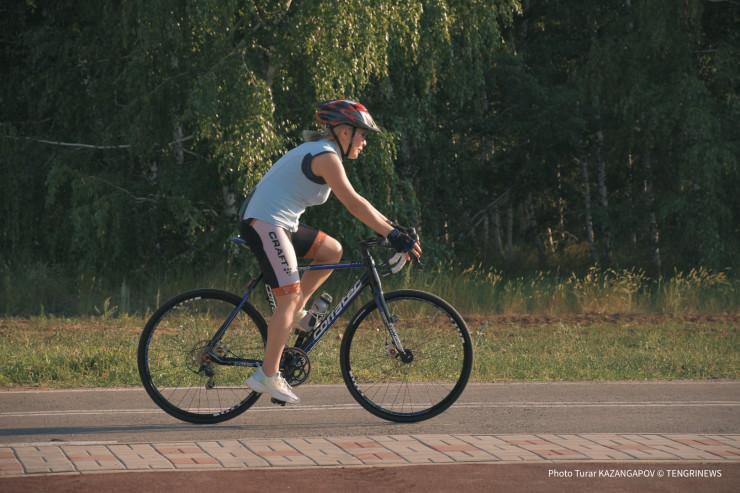
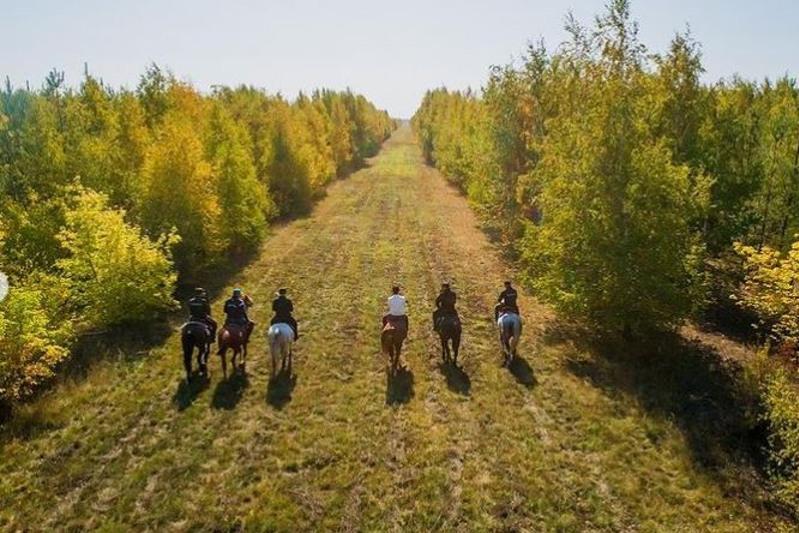
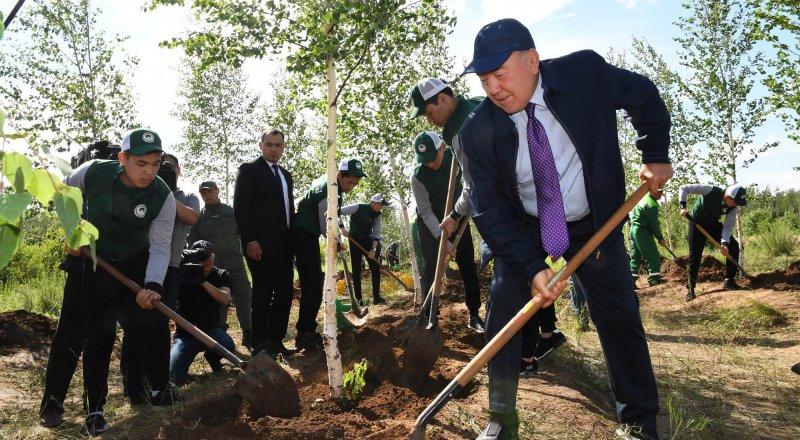
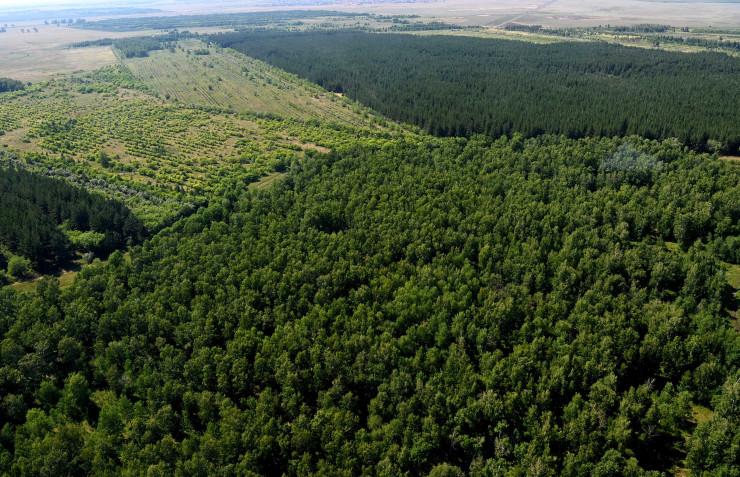
The green belt was created not only as an aesthetic element but also to serve as the lungs of the city. The forest planting works around Nur-Sultan have been carried out since 1997 [6, 7]. The area of the green belt of Nur-Sultan is 100 thousand hectares, of which 15 thousand hectares are planted within the city limits. The main idea of the project was to provide comfortable conditions for the residents of Nur-Sultan city, which would serve as a mechanism for improving air quality, mitigating climate and as a natural barrier to protect the city from dust winds and snowstorms [2, 4, 5, 6, 7]. An important aspect that was taken into consideration are the animal species of the forest, as the territory of the green belt is inhabited by foxes, hares, corsacs, white and grey partridges, roe deer, wild boars, etc [1, 2, 7, 8]. The primary importance of biodiversity efforts is assigned to the breeding of birds, especially pheasants [1, 2, 3, 4, 5], as pheasants are an element of local cultural heritage, and on the territory of the green belt, traditions and cultural events related with the pheasants are organised every year [2, 4]. The young forest should turn into an improved recreation area, a favourite pastime for city residents at any time of the year [2,7].
Overview
Nature-based solution
- Parks and urban forests
- Large urban parks or forests
- Green corridors and green belts
Key challenges
- Climate action for adaptation, resilience and mitigation (SDG 13)
- Climate change adaptation
- Green space, habitats and biodiversity (SDG 15)
- Habitat and biodiversity conservation
- Green space creation and/or management
- Environmental quality
- Soil quality improvement
- Air quality improvement
- Regeneration, land-use and urban development
- Promote natural styles of landscape design for urban development
- Social justice, cohesion and equity (SDG 10)
- Social interaction
- Environmental education
- Health and well-being (SDG 3)
- Enabling opportunities for physical activity
- Creation of opportunities for recreation
- Cultural heritage and cultural diversity
- Preservation of natural heritage
- Preservation of historic traditions
Focus
Project objectives
Implementation activities
Climate-focused activities
Climate change adaptation:
- Increase or improve urban vegetation cover to help reduce outdoor temperature
- Implement green walls or roofs to lower indoor temperature and provide insulation
- Create or improve outdoor spaces to help people escape from urban heat
Biodiversity conservation or restoration-focused activities
Biodiversity conservation:
- Protect and enhance urban habitats
- Preserve and strengthen existing habitats and ecosystems
- Promote environmentally-sound development in and around protected areas
- Preserve and strengthen habitat connectivity
- Protect species
- Undertake specific measures to protect species
- Undertake specific measures to protect native species
- Undertake specific measures to protect valued species
- Means for conservation governance
- Manage biological resources for conservation and sustainable use
- Raise public awareness
- Public engagement
- Protect and apply traditional knowledge and conservation practices
Main beneficiaries
- National-level government
- Local government/Municipality
- Citizens or community groups
- Young people and children
Governance
Management set-up
- Government-led
Type of initiating organisation
- National government
Participatory approaches/ community involvement
- Dissemination of information and education
- Consultation (e.g. workshop, surveys, community meetings, town halls)
- Joint implementation (e.g. tree planting)
Details on the roles of the organisations involved in the project
Project implemented in response to ...
Financing
Total cost
Source(s) of funding
- Public national budget
Type of funding
- Earmarked public budget
Non-financial contribution
Impacts and Monitoring
Environmental impacts
- Climate change
- Lowered local temperature
- Strengthened capacity to address climate hazards/natural disasters
- Environmental quality
- Improved air quality
- Improved protection against strong wind
- Improved soil quality
- Green space and habitat
- Increased green space area
- Increased conservation or restoration of ecosystems
- Increase in protected green space areas
- Increased number of species present
- Increased protection of threatened species
- Restoration of derelict areas
Economic impacts
- Unknown
Socio-cultural impacts
- Health and wellbeing
- Gain in activities for recreation and exercise
- Cultural heritage and sense of place
- Protection of natural heritage
- Increased awareness of flora and fauna as culturally and historically meaningful
- Increased appreciation for natural spaces
- Education
- Increased support for education and scientific research
Type of reported impacts
Presence of formal monitoring system
Presence of indicators used in reporting
Presence of monitoring/ evaluation reports
Availability of a web-based monitoring tool
References
2. KazInform (2021). Greening the capital: how the "green belt" is developing around Nur-Sultan. Accessed on 18 September, 2021, Source link
3. Tengrinews (2021). Nazarbayev proposed to change the status of the green belt of Nur-Sultan. Accessed on 18 September, 2021, Source link
4. Tengrinews (2018). Nazarbayev flew over the "green belt" of Astana. Accessed on 18 September, 2021, Source link
5. Tengrinews (2021). Nur-Sultan keepers. They are not visible, but they are busy with important business. Accessed on 18 September, 2021, Source link
6. Tengrinews (2011). Kazakhstan's "Green Belts" are a contribution to world ecological security: Nazarbayev. Accessed on 18 September, 2021, Source link
7. Kuanyshev N. (2020). The green belt of Nur-Sultan is a fairy tale that has come true. Altynorda - Kazakhstan news. Accessed on 18 September, 2021, Source link
8. Source link (2021). Green belt of Nur-Sultan. Accessed on September 18, 2021, Source link
9. An interactive map of open budgets (2020). The current content of the green belt of Nur-Sultan city (2020-2022). Accessed on September 23, 2021,Source link
10. Forbes (2021). A pheasant farm for 2000 birds per year appeared on the territory of the "green belt" of the capital. Accessed on October 3, 2021, Source link