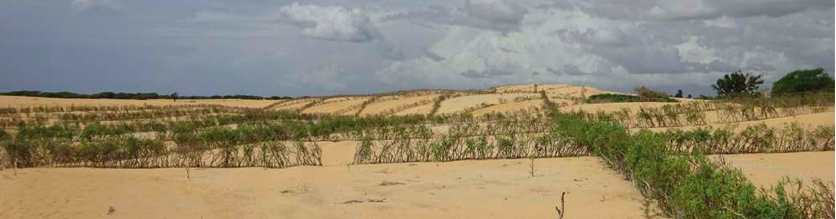
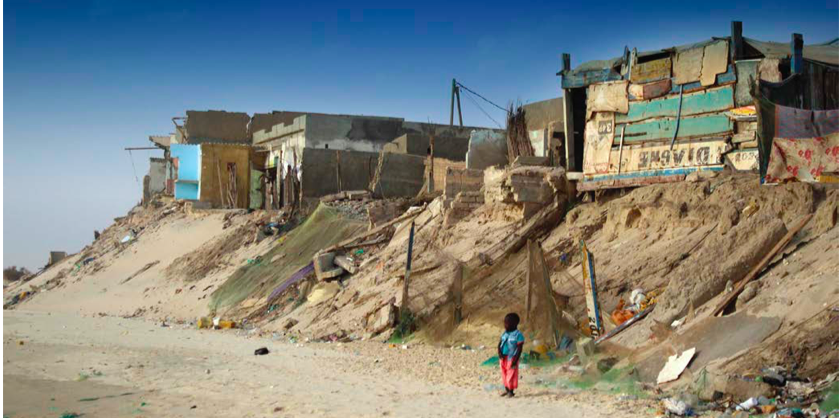
Mauritania is one of the Sahelian countries most severely affected by the periods of drought occurring since 1968. The resulting desertification is exacerbated by human activities, which have compounded climatic factors, with direct consequences for an already precarious situation. Environmental degradation, responsible for the dangerous displacement of sand dunes in Mauritania, has wiped out homes, livestock and livelihoods throughout the desert country. In Nouakchott, Mauritania’s capital and biggest city, the coast are protected by a fragile wall of dunes at risk from natural erosion, sand mining, grazing of livestock on dune vegetation, and careless abuse of the landscape for leisure like dune racing. In this scenario, protecting the dunes is a priority, and the government is using World Bank financing to overcome the challenge. From a climate change perspective, the intervention addresses accelerating erosion that allows seawater to wash into the city, assaulting buildings, roads, fresh water supply and public space. From a biodiversity perspective, the intervention aims at sustaining the balance between the food for the livelihoods of the local population and the preservation of the rich coastal biodiversity. (1,2)
Overview
Nature-based solution
- Blue infrastructure
- Coastlines
- Coastal wetland, mangroves and salt marshes
- Other
Key challenges
- Climate action for adaptation, resilience and mitigation (SDG 13)
- Climate change adaptation
- Coastal resilience and marine protection (SDG 14)
- Coastal protection / hazard mitigation
- Marine and coastal biodiversity protection
- Green space, habitats and biodiversity (SDG 15)
- Habitat and biodiversity conservation
- Green space creation and/or management
- Water management (SDG 6)
- Flood protection
- Improvements to water quality
- Social justice, cohesion and equity (SDG 10)
- Environmental education
Focus
Project objectives
Implementation activities
Climate-focused activities
Climate change adaptation:
- Protect coastal and freshwater ecosystems to prevent coastal erosion and pollution
- Increase the use of climate-resilient plant species (resistant to drought, fire, and pests)
Biodiversity conservation or restoration-focused activities
Biodiversity conservation:
- Protect and enhance urban habitats
- Preserve and strengthen existing habitats and ecosystems
- Reduce negative impacts and avoid the alteration/damage of ecosystem
- Protect species
- Undertake specific measures to protect species
- Undertake specific measures to protect native species
- Means for conservation governance
- Manage biological resources for conservation and sustainable use
- Raise public awareness
- Public engagement
- Capacity building
Main beneficiaries
- Local government/Municipality
- Citizens or community groups
- Food producers and cultivators (i.e. farmers, gardeners)
Governance
Management set-up
- Government-led
Type of initiating organisation
- National government
- Multilateral organisation
- Transnational network
Participatory approaches/ community involvement
- Dissemination of information and education
- Joint implementation (e.g. tree planting)
Details on the roles of the organisations involved in the project
Project implemented in response to ...
Financing
Total cost
Source(s) of funding
- Public national budget
- Multilateral funds/international funding
Type of funding
- Earmarked public budget
- Direct funding (grants, subsidies, or self-financed projects by private entities)
Non-financial contribution
- Provision of land
- Provision of goods
- Provision of labour
- Provision of expertise
- Public authorities (e.g. land, utility services)
- Citizens (e.g. volunteering)
Impacts and Monitoring
Environmental impacts
- Environmental quality
- Improved waste management
- Water management and blue areas
- Improved water quality
- Increased protection against flooding
- Improved stormwater management
- Enhanced protection and restoration of coastal and marine ecosystems
Economic impacts
- Stimulate development in deprived areas
Socio-cultural impacts
- Social justice and cohesion
- Improved liveability
- Safety
- Improved community safety to climate-related hazards
- Other
Type of reported impacts
Presence of formal monitoring system
Presence of indicators used in reporting
Presence of monitoring/ evaluation reports
Availability of a web-based monitoring tool
References
2. World Bank (2020), RESILIENT COASTLINES. RESILIENT COMMUNITIES, available at Source link (accessed 04-04-2022)
3. World Bank (2018), World Bank Board Approves West Africa Coastal Areas (WACA) Resilience Investment Project, available at Source link (accessed 04-04-2022)
4. JICA (2010), Information Disclosure under JICA Guidelines for Environment and Social Considerations (April, 2010) and the Guidelines revised thereafter, available at Source link (accessed 04-04-2022)