

Last updated: April 2023
In 2021, the local municipal government of Navi Mumbai City and a local NGO converted a neglected urban space used as a dump yard in Nisarg Udyan into a healthy and dense forest (Ref 1,2). The aim of the project was to improve biodiversity and complement the local ecosystem, choosing specifically native species from the local area for plantation (Ref 3). By applying the Miyawaki forest technique, the project was able to transform the wasteland into a 3-acre mini-forest quickly. A civic officer on behalf of the Navi Mumbai Municipal Corporation (NMMC) drove the re-forestation project jointly with the support of Green Yatra, a local NGO, and corporate social responsibility (CSR) funding support from Sony Music Entertainment (Ref. 1, 3).

Nisarg Udyan forest
Ref. 2
Overview
Nature-based solution
- Parks and urban forests
- Large urban parks or forests
Key challenges
- Environmental quality
- Soil quality improvement
- Air quality improvement
- Waste management
- Green space, habitats and biodiversity (SDG 15)
- Habitat and biodiversity restoration
- Habitat and biodiversity conservation
- Green space creation and/or management
- Regeneration, land-use and urban development
- Promote natural styles of landscape design for urban development
- Social justice, cohesion and equity (SDG 10)
- Environmental education
Focus
Creation of new green areas, Ecological restoration of ecosystems, Monitoring and maintenance of habitats and/or biodiversity
Project objectives
- To create a dense urban forest by planting 60,000 saplings of evergreen species, according to environmentally-sensitive decisions, prioritising native species with a varied representation (tree, sub-tree, canopy and shrub) (Ref. 1, 2)
- To increase urban greenery due to the lack of space for nature in the city (Ref. 1)
- To reclaim the land previously used for solid waste dump (Ref 1, 4)
- To improve the quality of soil (Ref 1)
- To improve the air quality of the area (Ref 2)
- To attract local biodiversity and engage people with nature (Ref 2)
- To improve the aesthetic appeal of the whole area (Ref 2)
Implementation activities
The implementation activity involved clearing the site of the previously dumped material, preparing the soil and planting the samplings. First, the site was cleared of cloth, plastic, and construction debris that accumulated over time (Ref 1). Next, to ensure the quality of the soil, biological, physical and chemical soil testing was carried out. Based on this, nutritional value was also derived. To fulfil the nutritional requirements of the soil, a mixture of coco peat, compost, soil, perforate and water retainer was used (Ref 1).
Regarding forestation, in order to make environmentally-sensitive decisions, a forest survey was conducted from neighbouring areas to identify the local native to the species. Based on this forest survey, about 60+ native species were identified for plantation. To ensure a multi-layered evergreen forest, these were divided into four categories: tree, sub-tree, canopy, and shrub. The species included - amla (Indian gooseberry), lemon, neem, jamun, mangoes, the flame of the forest, teak, Indian almond, black catechu and others (Ref 1).
The project also included monitoring local biodiversity (Ref 1); specifically, 35 bird species, 15 butterfly and insect species, including bees, millipedes, centipedes, snails, 12 snake species, 1 Golden Jackal were identified (Ref 1).
To ensure a regular water supply for the plantation, treated water from a nearby sewage treatment plant (STP) was used for this project (Ref 1).
Lastly, the project is considered to have generated a source of employment for hundreds of local people in rural regions of Palghar district (Maharashtra) (Ref. 2).
Biodiversity conservation or restoration-focused activities
Biodiversity conservation:
- Protect and enhance urban habitats
- Create new habitats
- Reduce negative impacts and avoid the alteration/damage of ecosystem
- Protect species
- Undertake specific measures to protect species
- Undertake specific measures to protect native species
- Means for conservation governance
- Raise public awareness
Biodiversity restoration:
- Rehabilitate and restore damaged or destroyed ecosystems
- Restore species (native, endangered, or unspecified)
- Restore native species
- Restore valued species
- Public engagement
Main beneficiaries
- Public sector institution (e.g. school or hospital)
- Non-government organisation/Civil Society
- Private sector/Corporate/Company
- Citizens or community groups
Governance
Management set-up
- Co-governance with government and non-government actors
Type of initiating organisation
- Local government/municipality
- Non-government organisation/civil society
- Private sector/corporate actor/company
Participatory approaches/ community involvement
- Joint implementation (e.g. tree planting)
Details on the roles of the organisations involved in the project
This project was initiated by the Navi Mumbai Municipal Corporation and Green Yatra, a Mumbai-based environmental NGO (Ref. 1, 4). From Navi Mumbai Municipal Corporation, a civic officer, Abhijit Bangar, had a critical role in the uptake of this reforestation project (Ref. 1).
The financing for the project was provided as corporate social responsibility (CSR) funds from Sony Music Entertainment. Besides providing the funds, the music company has invested 18,000 hours of labour in creating the forest (Ref 1, 3, 4).
Project implemented in response to ...
... an EU policy or strategy?
No
... a national policy or strategy?
No
... a local policy or strategy?
No
Financing
Total cost
Unknown
Source(s) of funding
- Corporate investment
Type of funding
- Direct funding (grants, subsidies, or self-financed projects by private entities)
Non-financial contribution
Type of non-financial contribution
- Provision of labour
Who provided the non-financial contribution?
- Citizens (e.g. volunteering)
- Private sector (businesses, financial institution)
Impacts and Monitoring
Environmental impacts
- Climate change
- Lowered local temperature
- Environmental quality
- Improved air quality
- Improved soil quality
- Green space and habitat
- Increased green space area
- Reduced biodiversity loss
- Increased number of species present
- Increased protection of threatened species
- Restoration of derelict areas
Economic impacts
- Increase of green jobs (e.g. paid employment positions)
- Stimulate development in deprived areas
Socio-cultural impacts
- Social justice and cohesion
- Improved access to urban green space
- Health and wellbeing
- Improved mental health
- Cultural heritage and sense of place
- Improvement in people’s connection to nature
- Increased appreciation for natural spaces
- Education
- Increased knowledge of locals about local nature
- Other
Type of reported impacts
Achieved impacts
Presence of formal monitoring system
Unknown
Presence of indicators used in reporting
No evidence in public records
Presence of monitoring/ evaluation reports
No evidence in public records
Availability of a web-based monitoring tool
No evidence in public records
References
(1) Nitnaware, H 2022, IAS Officer Converts Dumpyard Into City’s Green Lungs With 60,000 Trees in Just a Year, The Better India, April 29, Source link
(2) Nisarg Udayan (Old dumping yard) available at Source link (accessed 28-02-2023)
(3) Mumbai Live Team, 2021, NMMC To Develop Urban Forest At Nisarga Udyan Using Japanese Method, Mumbai Live, ( date unknown), viewed on 28 February 2023, Source link
(4) Abraham, B 2022, How These Dumping Yards And Open Spaces Turned Into Urban Forests And Biodiversity Hotspots, IndiaTimes, October 11, Source link
(2) Nisarg Udayan (Old dumping yard) available at Source link (accessed 28-02-2023)
(3) Mumbai Live Team, 2021, NMMC To Develop Urban Forest At Nisarga Udyan Using Japanese Method, Mumbai Live, ( date unknown), viewed on 28 February 2023, Source link
(4) Abraham, B 2022, How These Dumping Yards And Open Spaces Turned Into Urban Forests And Biodiversity Hotspots, IndiaTimes, October 11, Source link
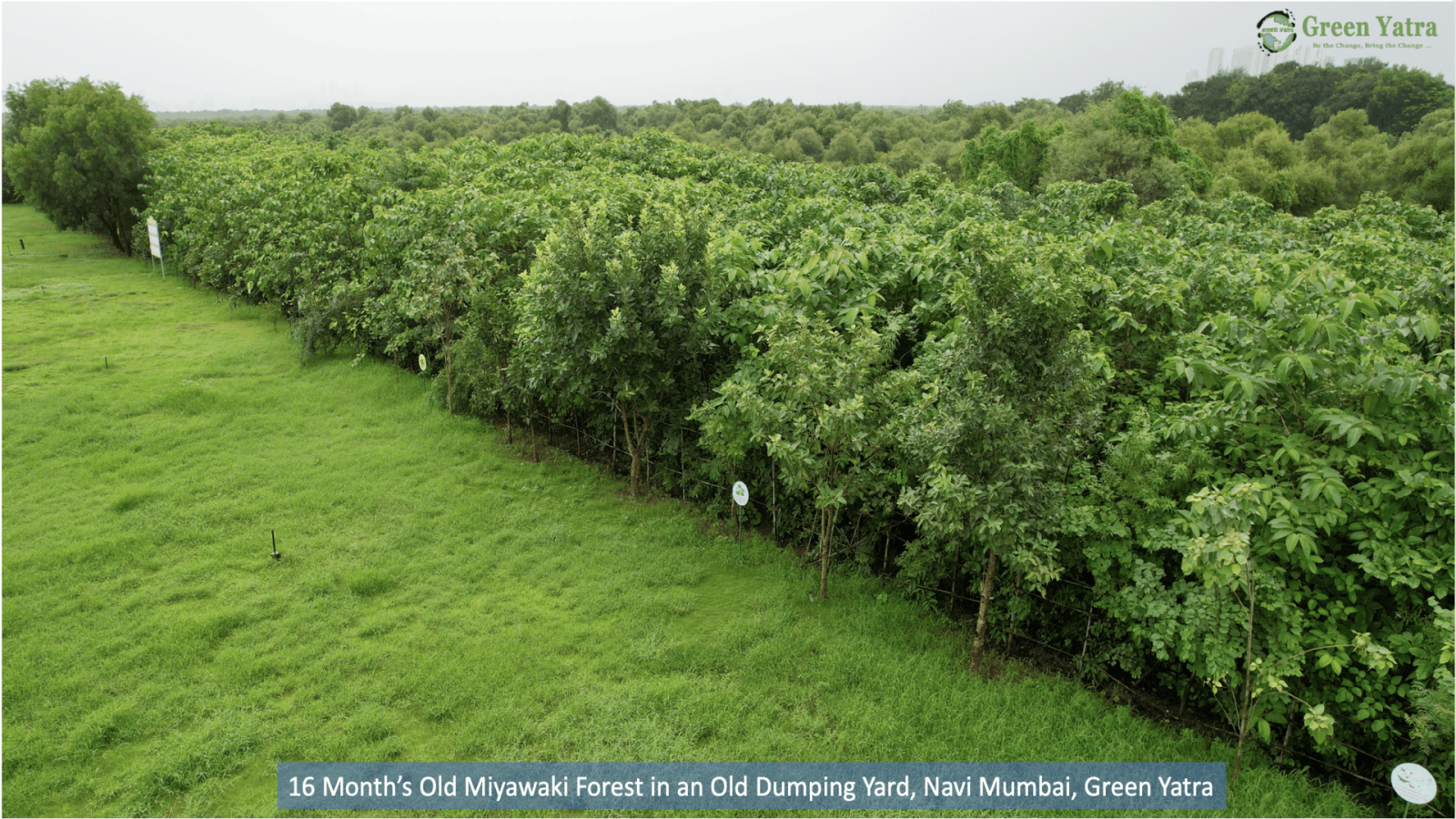
Nisarg Udyan forest
Ref. 2

Plantation site
https://www.indiatimes.com/news/india/ngo-turns-dumping-yards-into-urban-forests-and-hotspots-of-biodiversity-581745.html
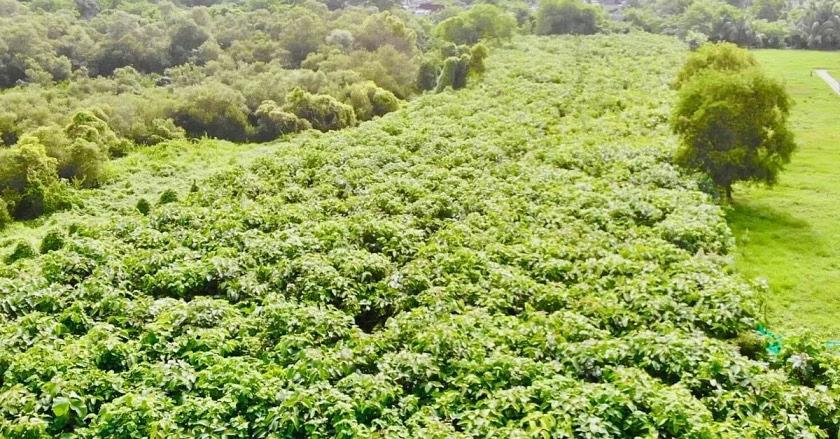
Aerial view of the forest
https://www.thebetterindia.com/283755/ias-officer-hero-converts-dumpyard-miyawaki-forest-plants-trees-abhijit-bangar/
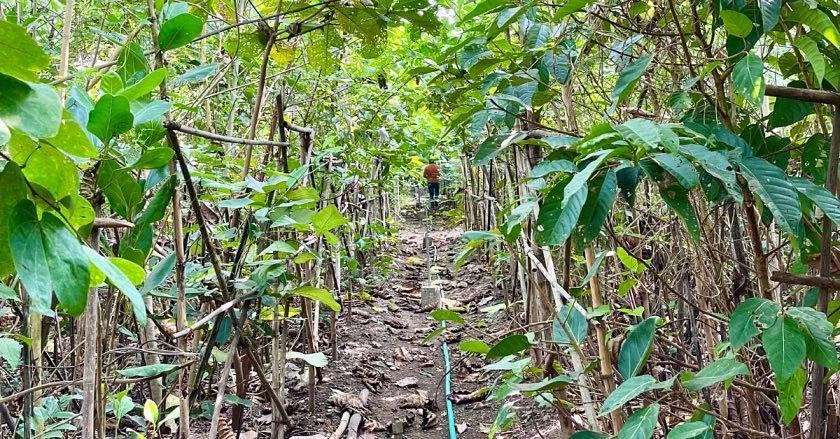
Dense canopy of the developed forest
https://www.thebetterindia.com/283755/ias-officer-hero-converts-dumpyard-miyawaki-forest-plants-trees-abhijit-bangar/

Planted saplings
NMMC Commissioner Twitter Post
Information about this nature-based solution was collected as part of the "NBS 2022" UNA Asian extension project funded by the Asia-Europe Foundation.