

Last updated: October 2021
Nancy has the most community gardens in France. While these gardens are generally designed at the initiative of associations or collectives of inhabitants, in Nancy, they are part of the urban development plans. This demonstrates a real desire from the city to bring the inhabitants closer to sustainable development while providing them with the means to create greenery in the heart of the city (Ref. 1). The Plateau-de-Haye district, where green space was recently created, allowed the emergence of many plots (Ref. 2).
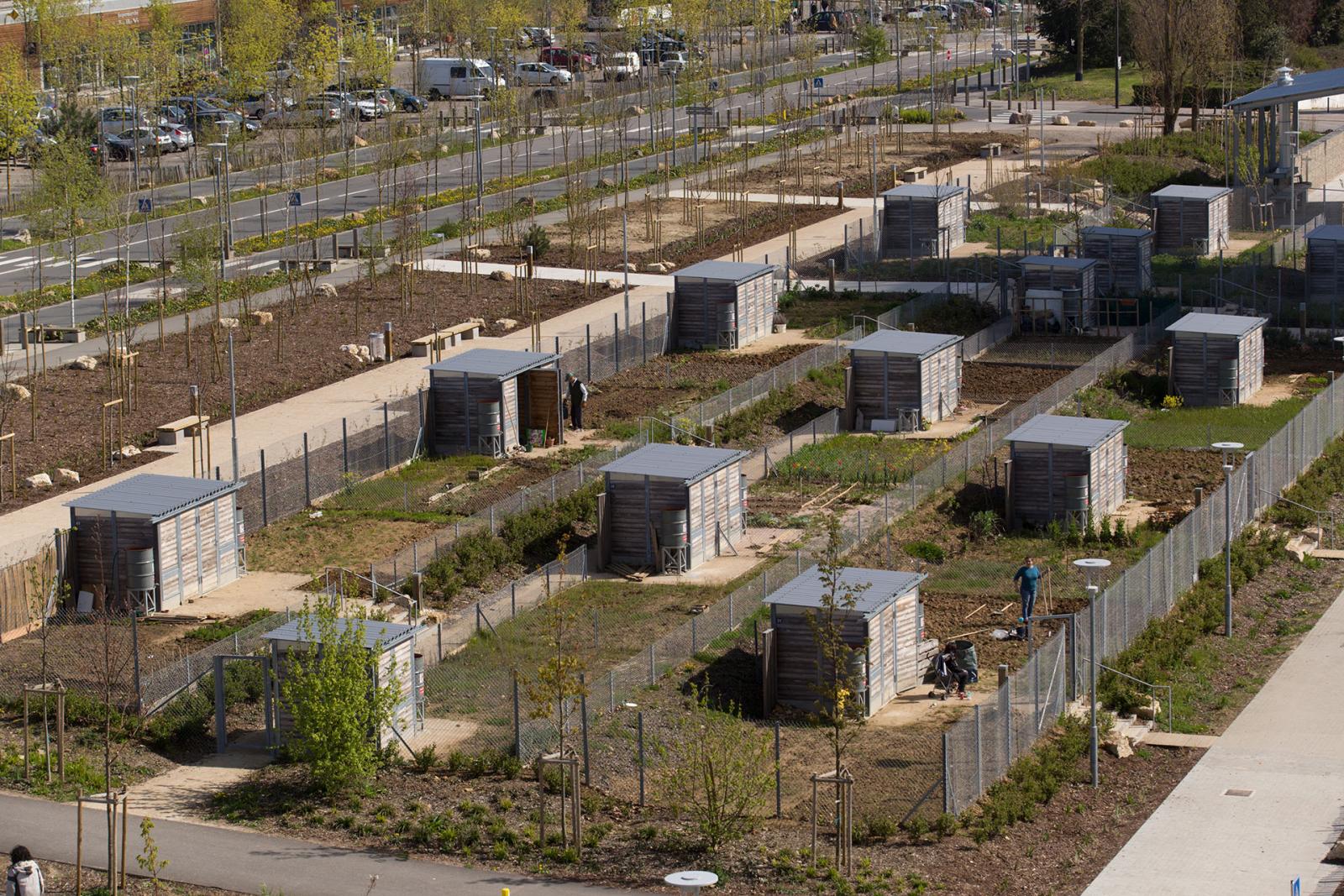
Community garden in Nancy
https://www.nancy.fr/utile/nancy-la-ville-qui-cultive-la-vie/les-jardins-partages-232.html
Overview
Nature-based solution
- Community gardens and allotments
- Community gardens
Key challenges
- Green space, habitats and biodiversity (SDG 15)
- Green space creation and/or management
- Inclusive and effective governance (SDG 16)
- Inclusive governance
- Social justice, cohesion and equity (SDG 10)
- Environmental education
- Social cohesion
- Social interaction
- Health and well-being (SDG 3)
- Creation of opportunities for recreation
- Sustainable consumption and production (SDG 12)
- Sustainable consumption
- Sustainable production
Focus
Creation of new green areas, Maintenance and management of urban nature
Project objectives
"Promote vegetables, learn how to grow them; Manage the community gardens on an experimental basis; Develop the pedagogical side with the inhabitants and the children of the district, the schools." (Ref. 3)
"Develop social bonds of proximity through social, cultural or educational activities and be accessible to the public (according to a definition of the Ministry of Ecology, Sustainable Development and Energy)." (Ref. 1)
"Bringing nature into the city" (Ref. 6) The gardens "are based on values of exchange and solidarity" (Ref. 6)
Implementation activities
"social, cultural or educational activities" (Ref. 1)
"Eco Workshops" (Ref.5, slide 10)
"The confraternity of Saint-Fiacre (patron of the gardeners) has been working to promote plants, fruits and vegetables ".
"Its 140 members participate in the festivities organized by the town hall (Fête d'automne, Nature en Fête ...) in order to encourage inhabitants to grow and cook vegetables. With its knowledge and pedagogical experience, the confraternity naturally participates in the development of community gardens in Nancy." (Ref. 6)
"In the first year, the municipal gardeners take care of the land and provide help and advice to those who wish." (Ref. 6)
Main beneficiaries
- Local government/Municipality
- Non-government organisation/Civil Society
- Citizens or community groups
- Food producers and cultivators (i.e. farmers, gardeners)
Governance
Management set-up
- Co-governance with government and non-government actors
Type of initiating organisation
- Local government/municipality
- Citizens or community group
- District/neighbourhood association
Participatory approaches/ community involvement
- Dissemination of information and education
- Consultation (e.g. workshop, surveys, community meetings, town halls)
- Co-management/Joint management
Details on the roles of the organisations involved in the project
These gardens are generally designed at the initiative of associations or collectives of inhabitants, in Nancy, they are part of the urban development plans." (Ref. 1)
Project implemented in response to ...
... an EU policy or strategy?
Yes
("The European Environment Agency has set a goal: "a garden 300 m from each dwelling". (Ref. 7, page 9))
... a national policy or strategy?
Yes
("Ville Verte, Ville en Vie" (Green City, City in Life), a call for municipalities to expand their gardens and green spaces from the National Union of the Landscaping Companies (Ref. 7)
)
... a local policy or strategy?
Yes
("Nature in the City" with different action plans (Ref. 13))
Financing
Total cost
Unknown
Source(s) of funding
- Public local authority budget
Type of funding
- Earmarked public budget
Non-financial contribution
Type of non-financial contribution
- Provision of land
- Provision of labour
Who provided the non-financial contribution?
- Public authorities (e.g. land, utility services)
- Citizens (e.g. volunteering)
Impacts and Monitoring
Environmental impacts
- Environmental quality
- Improved soil quality
- Green space and habitat
- Increased green space area
- Increased spread of native/heirloom/open-pollinated seed
Economic impacts
- Increase in agricultural production (for profit or not)
Socio-cultural impacts
- Social justice and cohesion
- Improved social cohesion
- Improved access to urban green space
- Increased opportunities for social interaction
- Increased involvement of locals in the management of green spaces
- Increased access to healthy/affordable food
- Increased sustainability of agriculture practices
- Education
- Increased support for education and scientific research
- Increased knowledge of locals about local nature
Type of reported impacts
Achieved impacts
Presence of formal monitoring system
Unknown
Presence of indicators used in reporting
No evidence in public records
Presence of monitoring/ evaluation reports
No evidence in public records
Availability of a web-based monitoring tool
No evidence in public records
References
1. Definancy (2016). "Nancy : n°1 des villes vertes 2.0". Available at: Source link (Website not available in 2020).
2. Nancy (n.d). "Les jardins partagés". Available at: Source link (Accessed: October 14, 2020).
3. Net1901 (n.d). "COMM'UN JARDIN AU COEUR DE SOLVAY ". Available at: Source link (Accessed: October 14, 2020).
4. Ecoconseil (n.d). "Les jardins partagés du Grand Est". Available at: Source link (Website not available in 2020).
5. Assises Européennes du Paysage (2011). Powerpoint "Nancy, la ville cultive le partage". Available at: Source link (Website not available in 2020).
6. Nancymag (2011). "Des jardins à partager". Available at: Source link (Website not available in 2020).
7. L’Union Nationale des Entreprises du Paysage (2016). "Ville en vert, Ville en vie : un nouveau modèle de société". Available at: Source link (Accessed: October 14, 2020).
8. L’Union Nationale des Entreprises du Paysage (2017)."Villes vertes et jardins 2.0". Available at: Source link (Accessed: October 14, 2020).
9. Laïlle,P.; Provendier, D.; Colson, F. & Salanié, J. (2014). "Les Bienfaits du Végétal en Ville"- Plante & Cité and Val'Hor. Available at: Source link (Accessed: October 14, 2020).
10. L’Union Nationale des Entreprises du Paysage (2015). "Climat : Les 5 propositions des entreprises du paysage aux décideurs". Available at: Source link (Website not available in 2020).
11. L’Union Nationale des Entreprises du Paysage (2010). "Le jardin, un bien social à partager". Available at: Source link (Website not available in 2020).
12. L’Union Nationale des Entreprises du Paysage (2016). "Les Villes de Demain". Available at: Source link (Website not available in 2020).
13. Nancy (n.d). "La nature dans la ville". Available at: Source link (Website not available in 2020).
14. Nancy (n.d). "Nancy, la ville qui cultive la vie". Available at: Source link (Accessed: October 14, 2020).
15. Nancy. (2015). "Projet de Ville". Available at: Source link (Website not available in 2020).
16. Racines Carrees (2016). "Jardins Partagees". Available at: Source link (Accessed: October 14, 2020).
2. Nancy (n.d). "Les jardins partagés". Available at: Source link (Accessed: October 14, 2020).
3. Net1901 (n.d). "COMM'UN JARDIN AU COEUR DE SOLVAY ". Available at: Source link (Accessed: October 14, 2020).
4. Ecoconseil (n.d). "Les jardins partagés du Grand Est". Available at: Source link (Website not available in 2020).
5. Assises Européennes du Paysage (2011). Powerpoint "Nancy, la ville cultive le partage". Available at: Source link (Website not available in 2020).
6. Nancymag (2011). "Des jardins à partager". Available at: Source link (Website not available in 2020).
7. L’Union Nationale des Entreprises du Paysage (2016). "Ville en vert, Ville en vie : un nouveau modèle de société". Available at: Source link (Accessed: October 14, 2020).
8. L’Union Nationale des Entreprises du Paysage (2017)."Villes vertes et jardins 2.0". Available at: Source link (Accessed: October 14, 2020).
9. Laïlle,P.; Provendier, D.; Colson, F. & Salanié, J. (2014). "Les Bienfaits du Végétal en Ville"- Plante & Cité and Val'Hor. Available at: Source link (Accessed: October 14, 2020).
10. L’Union Nationale des Entreprises du Paysage (2015). "Climat : Les 5 propositions des entreprises du paysage aux décideurs". Available at: Source link (Website not available in 2020).
11. L’Union Nationale des Entreprises du Paysage (2010). "Le jardin, un bien social à partager". Available at: Source link (Website not available in 2020).
12. L’Union Nationale des Entreprises du Paysage (2016). "Les Villes de Demain". Available at: Source link (Website not available in 2020).
13. Nancy (n.d). "La nature dans la ville". Available at: Source link (Website not available in 2020).
14. Nancy (n.d). "Nancy, la ville qui cultive la vie". Available at: Source link (Accessed: October 14, 2020).
15. Nancy. (2015). "Projet de Ville". Available at: Source link (Website not available in 2020).
16. Racines Carrees (2016). "Jardins Partagees". Available at: Source link (Accessed: October 14, 2020).