

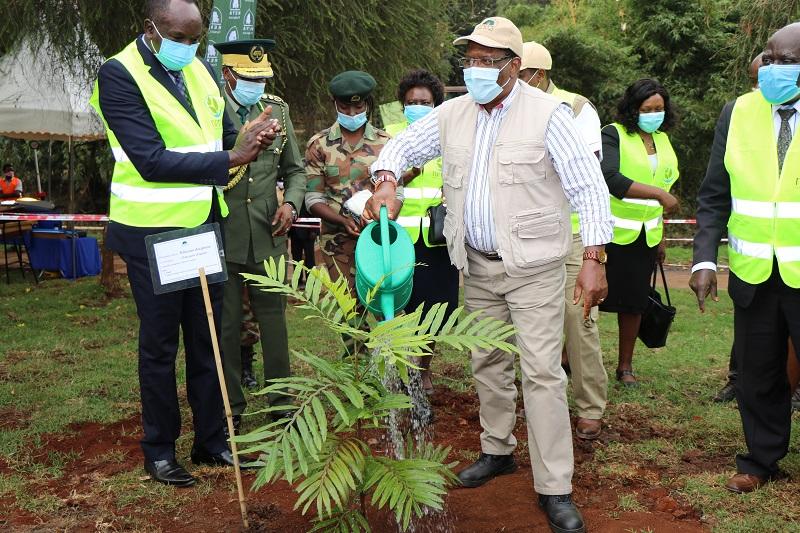
The John Michuki Memorial Park was transformed from a vast dumpsite in 2008 and established in honor of John Michuki, the Environment Minister during the Kibaki administration, in 2012. Michuki garnered admiration and accolades for his enthusiasm and determination to clean and preserve the environment (Ref 1, 2). Situated along the Nairobi River, the park serves as a historically rich recreational facility (Ref 3). However, several issues arose after the park was transferred to the county administration in 2013 (Ref 2). A section of the Nairobi River flowing through the park experienced severe environmental degradation due to illegal discharges and poor waste management, negatively impacting the riparian ecosystem and biodiversity (Ref 4). Additionally, the park became a refuge for drug users, street children, and thieves, with stray dogs posing safety threats in the area (Ref 1, 2). As the first project within the Cleaning Up Kenya Campaign, the restoration of Michuki Memorial Park was launched in 2020 by the government (Ref 5). The park is now managed by the Kenya Forest Service (KFS) following a directive from the national government (ibid.). With funds from the treasury, a perimeter fence was erected, a 2.4 km walkway was constructed, and 4,200 seedlings and 6,357 indigenous trees were planted, along with the establishment of a nursery (Ref 1, 6). A total of 20,000 tons of solid waste were removed (Ref 6). Additionally, a community forest association was formed to ensure community engagement (Ref 2).
Overview
Nature-based solution
- Blue infrastructure
- Rivers/streams/canals/estuaries
- Riverbank/Lakeside greens
- Parks and urban forests
- Large urban parks or forests
Key challenges
- Climate action for adaptation, resilience and mitigation (SDG 13)
- Climate change adaptation
- Environmental quality
- Soil quality improvement
- Waste management
- Green space, habitats and biodiversity (SDG 15)
- Green space creation and/or management
- Habitat and biodiversity conservation
- Water management (SDG 6)
- Flood protection
- Improvements to water quality
- Cultural heritage and cultural diversity
- Preservation of natural heritage
- Health and well-being (SDG 3)
- Creation of opportunities for recreation
- Enabling opportunities for physical activity
- Inclusive and effective governance (SDG 16)
- Inclusive governance
- Combatting crime and corruption
- Social justice, cohesion and equity (SDG 10)
- Sense of community and community engagement
Principal problems in Functional Urban Area (FUA)
- Environmental Degradation
- Biodiversity loss
- Poor water quality
- Health, Well-being and Social cohesion
- Insecurity in public spaces
Key priorities
Focus
Project objectives
Implementation activities
Climate-focused activities
Climate change adaptation:
- Implement measures that prevent/manage desertification, soil erosion and landslides
Biodiversity conservation or restoration-focused activities
Biodiversity conservation:
- Protect and enhance urban habitats
- Preserve and strengthen existing habitats and ecosystems
- Reduce negative impacts and avoid the alteration/damage of ecosystem
- Protect species
- Undertake specific measures to protect native species
- Means for conservation governance
- Public engagement
Main beneficiaries
- National-level government
- Local government/Municipality
- Public sector institution (e.g. school or hospital)
- Researchers/University
- Citizens or community groups
- Young people and children
- Marginalized groups: Children, young people or youth groups
Governance
Management set-up
- Government-led
Type of initiating organisation
- National government
- Public sector institution
Participatory approaches/ community involvement
- Co-planning (e.g. stakeholder workshops, focus groups, participatory mapping)
- Taskforce groups
- Joint implementation (e.g. tree planting)
- Co-management/Joint management
Details on the roles of the organisations involved in the project
Project implemented in response to ...
Type of enablers
Financing
Total cost
Source(s) of funding
- Public national budget
Type of funding
- Earmarked public budget
Non-financial contribution
Impacts and Monitoring
Environmental impacts
- Environmental quality
- Improved waste management
- Achieved improved waste management
- Water management and blue areas
- Enhanced protection and restoration of freshwater ecosystems
- Expected enhanced protection and restoration of freshwater ecosystems
- Green space and habitat
- Increased number of species present
- Achieved increased number of species present
- Restoration of derelict areas
- Achieved restoration of derelict areas
Economic impacts
- Increase of green jobs (e.g. paid employment positions)
- Achieved increase of green jobs (e.g. paid employment positions)
- Generation of income from NBS
- Expected generation of income from NBS
Socio-cultural impacts
- Social justice and cohesion
- Improved access to urban green space
- Achieved improved access to urban green space
- Increased involvement of locals in the management of green spaces
- Expected increased involvement of locals in the management of green spaces
- Health and wellbeing
- Gain in activities for recreation and exercise
- Expected gain in activities for recreation and exercise
- Enhanced cognitive restoration, relaxation and stress relief
- Achieved enhanced cognitive restoration, relaxation and stress relief
- Cultural heritage and sense of place
- Improvement in people’s connection to nature
- Achieved improvement in people’s connection to nature
- Protection of natural heritage
- Achieved protection of natural heritage
- Safety
- Increased perception of safety
- Achieved increased perception of safety
- Decreased crime rates
- Achieved decreased crime rates
Type of reported impacts
Presence of formal monitoring system
Presence of indicators used in reporting
Presence of monitoring/ evaluation reports
Availability of a web-based monitoring tool
Potential risks of implementation and trade-offs
References


 Information about this nature-based solution was collected as part of the Naturescapes project funded by the European Union under Grant Agreement No 101084341.