

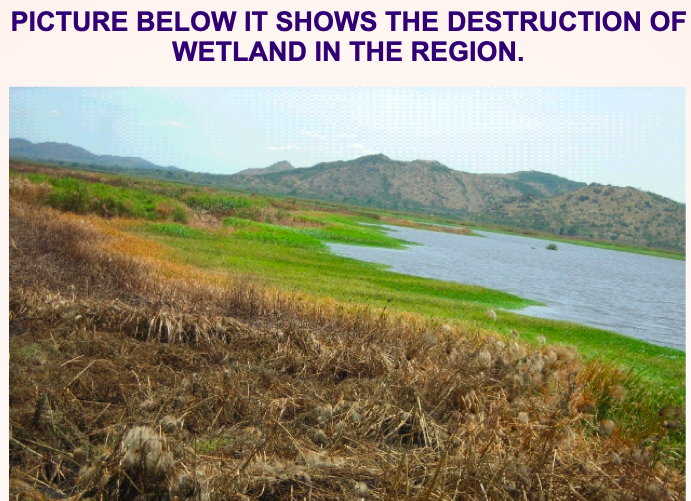
The Nyashishi wetland is located on the western side of Lake Victoria some 15 km from Mwanza, a port city of the lake. The area is characterized by a double maxima rainfall, with heavy rains occurring during October to December. The wetland is traversed by the Nyashishi River, which is an intermittent river draining stormy waters and domestic waste water into Lake Victoria. Increased human socio-economic activities in Mwanza, such as horticulture, overgrazing and discharge of industrial effluents, have degraded the Nyashishi wetland. As a result, vegetation specifically elephantiasis and papyrus that used to flourish in the wetland and provide fish breeding grounds have disappeared. The crocodiles, large lizards and a host of other creatures that used to populate those areas cannot be seen today. Since the wetland and the river are part of the Lake Victoria Basin, both have been subjected to floods and droughts, impacting livelihoods, public health and the environment. The root causes of floods are irregular seasonal and year to year variability in rainfall patterns, combined with mismanagement of land and water resources, leading to soil erosion and increased run-off. Therefore restoration efforts in the area are much needed. (1, 5)
Overview
Nature-based solution
- Blue infrastructure
- In-land wetlands, peatlands, swamps, and moors
Key challenges
- Climate action for adaptation, resilience and mitigation (SDG 13)
- Climate change adaptation
- Green space, habitats and biodiversity (SDG 15)
- Habitat and biodiversity restoration
- Green space creation and/or management
- Social justice, cohesion and equity (SDG 10)
- Environmental education
Focus
Project objectives
Implementation activities
Climate-focused activities
Climate change adaptation:
- Implement measures that prevent/manage desertification, soil erosion and landslides
Biodiversity conservation or restoration-focused activities
Biodiversity restoration:
- Rehabilitate and restore damaged or destroyed ecosystems
- Restore species (native, endangered, or unspecified)
- Public engagement
Main beneficiaries
- Non-government organisation/Civil Society
- Citizens or community groups
- Marginalized groups: Socio-economically disadvantaged populations (e.g. low-income households, unemployed)
Governance
Management set-up
- Led by non-government actors
Type of initiating organisation
- Non-government organisation/civil society
Participatory approaches/ community involvement
- Dissemination of information and education
- Joint implementation (e.g. tree planting)
Details on the roles of the organisations involved in the project
Project implemented in response to ...
Financing
Total cost
Source(s) of funding
- Funds provided by non-governmental organization (NGO)
- Multilateral funds/international funding
Type of funding
- Direct funding (grants, subsidies, or self-financed projects by private entities)
Non-financial contribution
- Provision of labour
- Provision of expertise
- Citizens (e.g. volunteering)
- Other
Impacts and Monitoring
Environmental impacts
- Environmental quality
- Improved soil quality
- Green space and habitat
- Increased green space area
- Reduced biodiversity loss
Economic impacts
- Unknown
Socio-cultural impacts
- Education
- Increased knowledge of locals about local nature
- Increased awareness of NBS and their benefits
Type of reported impacts
Presence of formal monitoring system
Presence of indicators used in reporting
Presence of monitoring/ evaluation reports
Availability of a web-based monitoring tool
References
2. SECCA (2015), Protection and Conservation of Nyashishi Wetlands Project Mwanza jan-December 2014, available at Source link (accessed 10.09.2021)
3. SECCA (2015), - Brochure, Protection and Conservation of the Nyashishi Wetland Project, available at Source link (accessed 10.09.2021)
4. (Please note that reference 4 has been used for geographical reasons to understand location of the wetland and surrounding communities) - The East African Community (EAC) Information Repository (EACIR), (no date), Summaries of research findings under buffering capacity of Wetlands sub-component, available at Source link (accessed 10.09.2021)
5. UNEP (2012), Lake Victoria Basin, a
