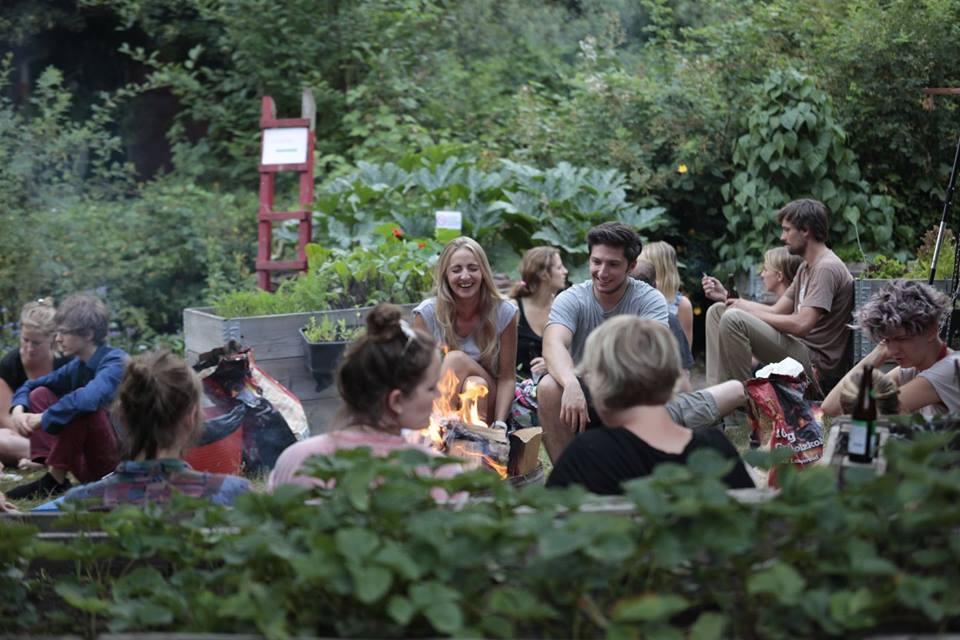
Urban gardening or gardening in the city is a form of agriculture that is about more than just producing food: community gardens involves also social, cultural and political components. It's about actively participating in urban development, creating new living spaces or making a contribution to biological diversity (ref. 3). The campus garden on a surface area of 1,200 sqm provided by the university was created by a group of students in 2013. It is open every day to everyone interested in gardening and serves as a place for recreation and exchange for students of different disciplines and citizens. Apart from herbs, vegetables and fruits, also flowers are planted. Seeds and materials used as plant beds, such as tires or rice bags are often donated from the city or local businesses (ref. 3 and 4).

Overview
Nature-based solution
- Community gardens and allotments
- Community gardens
Key challenges
- Green space, habitats and biodiversity (SDG 15)
- Habitat and biodiversity conservation
- Green space creation and/or management
- Regeneration, land-use and urban development
- Promote natural styles of landscape design for urban development
- Inclusive and effective governance (SDG 16)
- Effective management
- Social justice, cohesion and equity (SDG 10)
- Environmental education
- Social cohesion
- Social interaction
- Health and well-being (SDG 3)
- Enabling opportunities for physical activity
- Creation of opportunities for recreation
- Economic development and employment (SDG 8)
- Economic development: agriculture
- Sustainable consumption and production (SDG 12)
- Sustainable consumption
- Sustainable production
Focus
Project objectives
Implementation activities
Biodiversity conservation or restoration-focused activities
Biodiversity conservation:
- Protect and enhance urban habitats
- Preserve and strengthen existing habitats and ecosystems
- Create new habitats
- Reduce negative impacts and avoid the alteration/damage of ecosystem
- Protect species
- Undertake specific measures to protect species
- Means for conservation governance
- Raise public awareness
- Public engagement
- Create and use scientific knowledge for conservation
Main beneficiaries
- Researchers/University
- Citizens or community groups
Governance
Management set-up
- Led by non-government actors
Type of initiating organisation
- Non-government organisation/civil society
- Researchers/university
Participatory approaches/ community involvement
- Dissemination of information and education
- Joint implementation (e.g. tree planting)
- Co-management/Joint management
Details on the roles of the organisations involved in the project
Project implemented in response to ...
Financing
Total cost
Source(s) of funding
- Public local authority budget
- Corporate investment
- Funds provided by non-governmental organization (NGO)
Type of funding
- Earmarked public budget
- Direct funding (grants, subsidies, or self-financed projects by private entities)
- Donations
Non-financial contribution
- Provision of land
- Provision of goods
- Provision of labour
- Public authorities (e.g. land, utility services)
- Citizens (e.g. volunteering)
Impacts and Monitoring
Environmental impacts
- Environmental quality
- Improved air quality
- Green space and habitat
- Promotion of naturalistic styles of landscape design for urban development
- Increased green space area
- Enhanced support of pollination
Economic impacts
- Increase of green jobs (e.g. paid employment positions)
Socio-cultural impacts
- Social justice and cohesion
- Improved social cohesion
- Improved access to urban green space
- Increased opportunities for social interaction
- Increased involvement of locals in the management of green spaces
- Increased access to healthy/affordable food
- Health and wellbeing
- Improved physical health
- Gain in activities for recreation and exercise
- Education
- Increased knowledge of locals about local nature
Type of reported impacts
Presence of formal monitoring system
Presence of indicators used in reporting
Presence of monitoring/ evaluation reports
Availability of a web-based monitoring tool
References
2. GrüneBeete e.V. (2014). ‘GrüneBeete Campusgarten. Gemeinschaftlich gärtnern in Münster’. Münster: GrüneBeete e.V. Available at: Source link (Accessed 8 August 2020)
3. Stadt Münster (n.d.) Gutes Morgen Münster. Campusgarten GrüneBeete e.V. Available at: Source link (Accessed 8 August 2020)
4. die Urbanisten e.V. (2017). Campusgarten GrüneBeete, Münster. Available at: Source link (Accessed 8 August 2020)
5. Kulturquartier Münster GmbH. (2017). transition Münster. Available at: Source link (Accessed 8 August 2020)
6. Stiftungsgemeinschaft anstiftung & ertomis. (2017). anstiftung. Offene Werkstätten, Reparatur-Initiativen, Interkulturelle und Urbane Gemeinschaftsgärten. Available at: Source link (Accessed 8 August 2020)
7. Mitmache. (n.d). Intervention Flyer. Available at: Source link (Accessed 8 August 2020)