

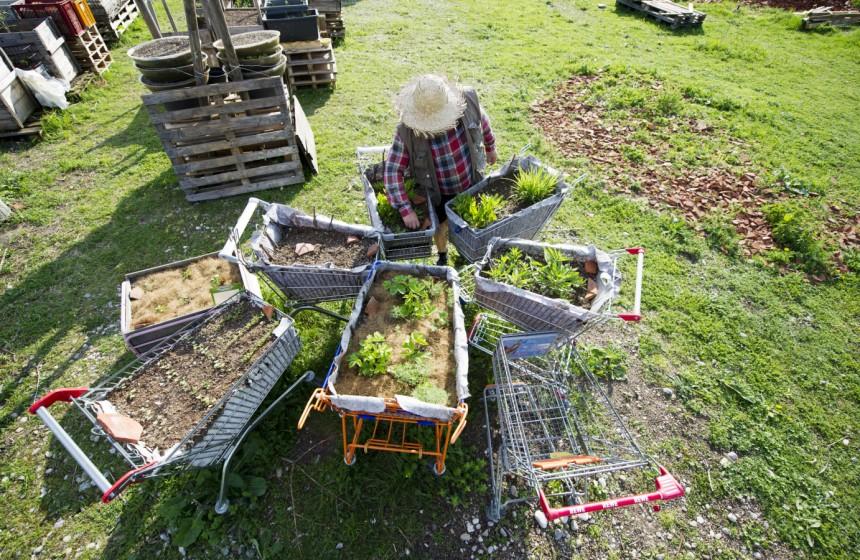
O'pflanzt is! is a community garden in the inner part of Munich. It was founded in summer 2011 by Vanessa Blind. Her vision was to create an urban, socio-ecological community garden - a place of planting, sowing and harvesting, a place for meeting and learning, a piece of nature in the city, a creative wilderness. The garden is a real community garden, as there are no individual beds, and decisions are made collectively. Sustainable production is one of the main goals of the project, which is why planting is done organically without synthetic fertilizer and only wood and recycled materials are used. (Reference 2) In 2018, the area of the garden had to be returned to its owners. The leaders of the garden, however, managed to find a new plot within a year and a half. (Reference 13)
Overview
Nature-based solution
- Community gardens and allotments
- Community gardens
Key challenges
- Climate action for adaptation, resilience and mitigation (SDG 13)
- Climate change adaptation
- Green space, habitats and biodiversity (SDG 15)
- Habitat and biodiversity conservation
- Green space creation and/or management
- Inclusive and effective governance (SDG 16)
- Inclusive governance
- Social justice, cohesion and equity (SDG 10)
- Environmental education
- Social interaction
- Sustainable consumption and production (SDG 12)
- Sustainable production
Focus
Project objectives
Implementation activities
Climate-focused activities
Climate change adaptation:
- Increase the use of climate-resilient plant species (resistant to drought, fire, and pests)
Biodiversity conservation or restoration-focused activities
Biodiversity conservation:
- Protect and enhance urban habitats
- Create new habitats
- Protect species
- Undertake specific measures to protect species
- Undertake specific measures to protect valued species
- Means for conservation governance
- Public engagement
- Capacity building
Main beneficiaries
- Citizens or community groups
- Marginalized groups: Elderly people, Socio-economically disadvantaged populations (e.g. low-income households, unemployed), People with functional diversities
Governance
Management set-up
- Led by non-government actors
Type of initiating organisation
- Non-government organisation/civil society
- Citizens or community group
Participatory approaches/ community involvement
- Crowd-sourcing/Crowd-funding/Participatory budget
- Dissemination of information and education
- Joint implementation (e.g. tree planting)
- Co-management/Joint management
Details on the roles of the organisations involved in the project
Project implemented in response to ...
Financing
Total cost
Source(s) of funding
- Public local authority budget
- Private Foundation/Trust
- Crowdfunding
- Commercial banks
Type of funding
- Direct funding (grants, subsidies, or self-financed projects by private entities)
- Donations
Non-financial contribution
- Provision of land
- Provision of labour
- Citizens (e.g. volunteering)
Impacts and Monitoring
Environmental impacts
- Green space and habitat
- Increased conservation or restoration of ecosystems
- Increased protection of threatened species
- Enhanced support of pollination
Economic impacts
- Increase in agricultural production (for profit or not)
Socio-cultural impacts
- Social justice and cohesion
- Fair distribution of social, environmental and economic benefits of the NBS project
- Increased opportunities for social interaction
- Increased involvement of locals in the management of green spaces
- Increased access to healthy/affordable food
- Increased sustainability of agriculture practices
- Education
- Increased support for education and scientific research
- Other
Type of reported impacts
Presence of formal monitoring system
Presence of indicators used in reporting
Presence of monitoring/ evaluation reports
Availability of a web-based monitoring tool
References
2. Source link. (2017). Historie. [online]. Available at: Source link. [Accessed: 28 Jul. 2020].
3. Source link. (2017). Die Vision. [online]. Available at: Source link. [Accessed: 28 Jul. 2020].
4. Source link. (2017). Warum Gärtern?. [online]. Available at: Source link. [Accessed: 28 Jul. 2020].
5. Source link. (2017). Gärtern ist politisch. [online]. Available at: Source link. [Accessed: 28 Jul. 2020].
6. Source link. (2017). Satzung. [online]. Available at: Source link. [Accessed: 28 Jul. 2020].
7. Haide, E. (2009). Urbane partizipative Gartenaktivitäten in München 2009. [online] Source link. [Accessed: 28 Jul. 2020].
8. Source link. (2017) O'Pflanzt is! [online] Available at: Source link [Accessed: 28 Jul. 2020].
9. Source link. (2017). Wir sind drin. [online]. Available at: Source link. [Accessed: 28 Jul. 2020].
10. Riedel, K. (2014) Urban Gardening in München: O' pflanzt is!. Süddeutsche Zeitung [online] Available at: Source link. [Accessed: 28 Jul. 2020]
11. SüSource link. (2017) Picture of the community garden. [image] Available at: Source link. [Accessed: 28 Jul. 2020]
12. Source link. (2017). Die Bienen: Stadtbiene 2.0. [online]. Available at: Source link. [Accessed: 28 Jul. 2020].
13. Source link. (2019) Gemeinschaftsgarten erblüht neu im Olympiapark. [online] Available at: Source link [Accessed: 28 Jul. 2020]
14. Source link (2020). O'pflantzt is! [online] Available at: Source link [Accessed: 28 Jul. 2020]