

Last updated: October 2021
In 2013, architecture firm BIG's design was chosen for a proposed Museum of the Human Body in Montpellier (Ref. 1). The plan was "An ambitious scenographic project resulting from a simple and clear spatial design. The alliance of its architectural, environmental, and functional qualities". "The gentle slopes of its roofs transform into a landscape intertwining vegetable and mineral terraces that provide direct access to pedestrians on the urban sidewalk and the park" (Ref. 2). It would have involved a "park of eight hectares" (Ref. 12, page 4). The project has not yet become a reality (as of August 2, 2020).

Green Roof at the Museum of the Human Body
Photographer: Bjarke Ingels Group (BIG), retrieved 08/28/2018 from Kathrine Kirkeby Thomsen
Overview
Nature-based solution
- Nature on buildings (external)
- Green roofs
- Other
- Grey infrastructure featuring greens
- Institutional green space
Key challenges
- Climate action for adaptation, resilience and mitigation (SDG 13)
- Climate change adaptation
- Green space, habitats and biodiversity (SDG 15)
- Green space creation and/or management
- Regeneration, land-use and urban development
- Regulation of built environment
- Health and well-being (SDG 3)
- Enabling opportunities for physical activity
- Improving mental health
- Improving physical health
- Creation of opportunities for recreation
- Economic development and employment (SDG 8)
- Real estate development
Focus
Creation of new green areas
Project objectives
"The museum’s roof functions as an ergonomic garden – a dynamic landscape of vegetation and mineral (made of concrete) surfaces that allow the park’s visitors to explore and express their bodies in various ways – from contemplation to the performance – from relaxing to exercising – from the soothing to the challenging." (Ref. 1, 12)
"Integration of the building into the environment, adaptation to climatic conditions" (Ref. 2)
"The 7,800 m² museum is conceived as a confluence of the park and the city" (Ref. 1)
Implementation activities
Green roof and terraces creation:
"the urban pavement and the parks turf flow together in a mutual embrace forming terraced pockets overlooking the park and elevating islands of nature above the city."(Ref. 1)
"Their roofs will slope up from the ground in alternate directions, creating accessible elevated areas of landscaping overlooking the park and surrounding city. Those that slope up from one side will be paved, while those coming from the other direction will be covered with turf." (Ref. 3)
Climate-focused activities
Climate change adaptation:
- Implement green walls or roofs to lower indoor temperature and provide insulation
Main beneficiaries
- Local government/Municipality
- Private sector/Corporate/Company
- Citizens or community groups
Governance
Management set-up
- Co-governance with government and non-government actors
Type of initiating organisation
- Local government/municipality
Participatory approaches/ community involvement
- Unknown
Details on the roles of the organisations involved in the project
Government actor: "Client: City of Montpellier" (Ref. 1)
Non government actor-- private sector: BIG (the architect's company)
Project implemented in response to ...
... an EU policy or strategy?
Unknown
... a national policy or strategy?
Unknown
... a local policy or strategy?
Unknown
Financing
Total cost
Unknown
Source(s) of funding
- Public local authority budget
Type of funding
- Earmarked public budget
Non-financial contribution
No
Impacts and Monitoring
Environmental impacts
- Unknown
Economic impacts
- Unknown
Socio-cultural impacts
- Unknown
Type of reported impacts
No impacts reported
Presence of formal monitoring system
Unknown
Presence of indicators used in reporting
No evidence in public records
Presence of monitoring/ evaluation reports
No evidence in public records
Availability of a web-based monitoring tool
No evidence in public records
References
1. McManus, David (2013). "Cité du Corps Humain Montpellier". Available at: (Accessed: August 2, 2020).
2. Huellas de arquitectura (2015). "LA CITÉ DU CORPS HUMAIN DE MONTPELLIER, FUSION ENTRE VILLE ET PARC". Available at: Source link (Accessed: August 2, 2020).
3. Etherington, Rose (2013). "BIG wins competition to design Museum of the Human Body in Montpellier". Available at: Source link (Accessed: August 2, 2020).
4. Source link (n.d). "L' architecture du XXIème siècle". Available at: Source link (Accessed: August 2, 2020).
5. RMA (n.d). Réseau des maisons de l'architecture. "languedoc-roussillon". Available at: Source link. Source link (Website not available in 2020).
6. Source link (2013). Actualiteés. "Cité du Corps Humain : Cinq cabinets d'architectes retenus". Available at: Source link (Accessed: August 2, 2020).
7. Lorfèvre, Gil (2013). "Montpellier : le casse-tête de la future Cité du corps humain". Available at: Source link (Accessed: August 2, 2020).
8. Midi Libre (2019). "Montpellier : Alex Larue propose de relancer le projet de la Cité du corps humain". Available at: Source link (Accessed: August 2, 2020).
9. Vrouillet, Sylvie (2014). "A Montpellier et Montpellier Agglo, le nouveau maire Philippe Saurel laisse déjà sa patte". La Gazette des Communes. Available at: Source link (Accessed: August 2, 2020).
10. Bouquet, Léa (2020). "Municipales 2020 à Montpellier : après son faible score, le candidat LR-UDI Alex Larue quitte la politique". France Info 3. Available at: Source link (Accessed: August 2, 2020).
11. Ingels, Bjarke and Pedersen, Andreas Klok (2013). "HUM - Cité du Corps Humain". (Document attached).
12. Ville de Montpellier (2012). "PROJET « CITÉ DU CORPS HUMAIN »ÉTUDE DE FAISABILITÉ ÉCONOMIQUE, JURIDIQUE ET FINANCIÈRE". (Document attached).
2. Huellas de arquitectura (2015). "LA CITÉ DU CORPS HUMAIN DE MONTPELLIER, FUSION ENTRE VILLE ET PARC". Available at: Source link (Accessed: August 2, 2020).
3. Etherington, Rose (2013). "BIG wins competition to design Museum of the Human Body in Montpellier". Available at: Source link (Accessed: August 2, 2020).
4. Source link (n.d). "L' architecture du XXIème siècle". Available at: Source link (Accessed: August 2, 2020).
5. RMA (n.d). Réseau des maisons de l'architecture. "languedoc-roussillon". Available at: Source link. Source link (Website not available in 2020).
6. Source link (2013). Actualiteés. "Cité du Corps Humain : Cinq cabinets d'architectes retenus". Available at: Source link (Accessed: August 2, 2020).
7. Lorfèvre, Gil (2013). "Montpellier : le casse-tête de la future Cité du corps humain". Available at: Source link (Accessed: August 2, 2020).
8. Midi Libre (2019). "Montpellier : Alex Larue propose de relancer le projet de la Cité du corps humain". Available at: Source link (Accessed: August 2, 2020).
9. Vrouillet, Sylvie (2014). "A Montpellier et Montpellier Agglo, le nouveau maire Philippe Saurel laisse déjà sa patte". La Gazette des Communes. Available at: Source link (Accessed: August 2, 2020).
10. Bouquet, Léa (2020). "Municipales 2020 à Montpellier : après son faible score, le candidat LR-UDI Alex Larue quitte la politique". France Info 3. Available at: Source link (Accessed: August 2, 2020).
11. Ingels, Bjarke and Pedersen, Andreas Klok (2013). "HUM - Cité du Corps Humain". (Document attached).
12. Ville de Montpellier (2012). "PROJET « CITÉ DU CORPS HUMAIN »ÉTUDE DE FAISABILITÉ ÉCONOMIQUE, JURIDIQUE ET FINANCIÈRE". (Document attached).
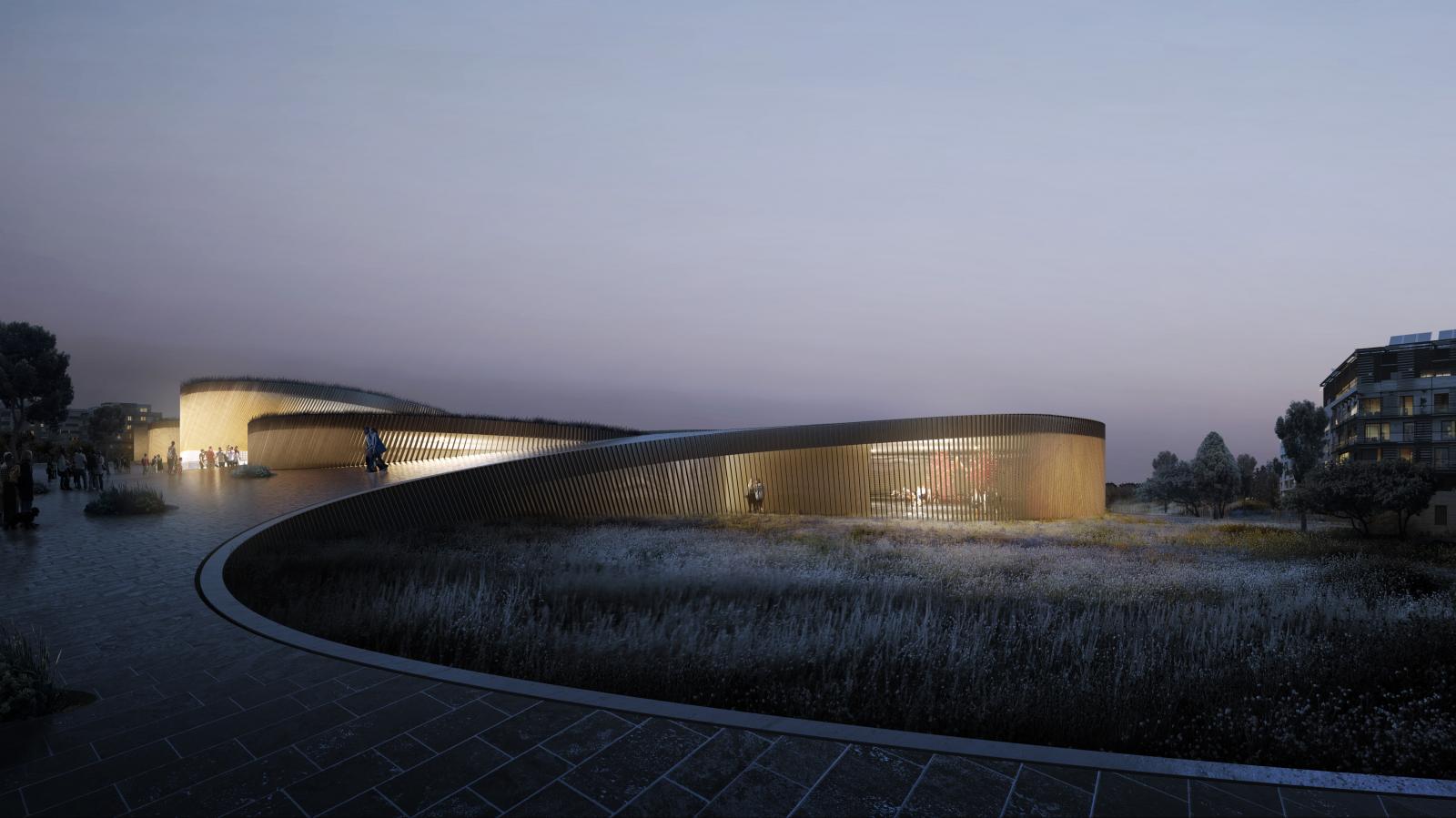
Green Roof at the Museum of the Human Body
Photographer: Bjarke Ingels Group (BIG), retrieved 08/28/2018 from Kathrine Kirkeby Thomsen
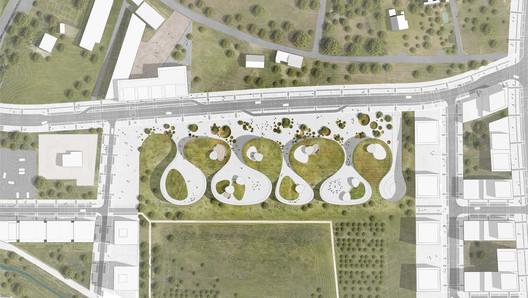
BIG selected to Design Human Body Museum in France
https://www.archdaily.com/450388/big-selected-to-design-human-body-museum-in-france/528da741e8e44e536800019b-big-selected-to-design-human-body-museum-in-france-photo