

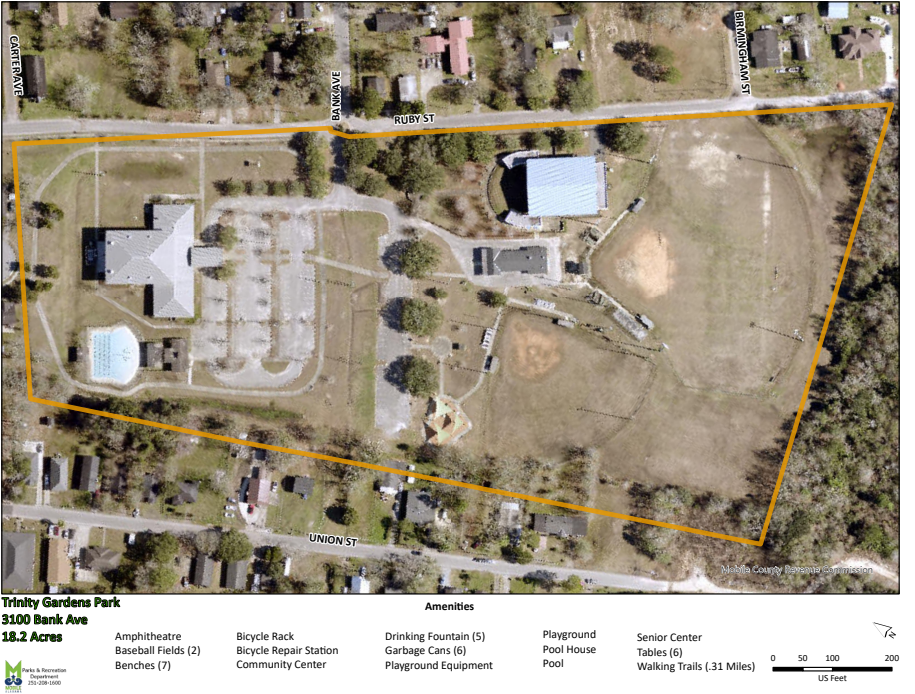
This series of projects in the Trinity Garden aims to improve sports fields, enhance drainage, and replace HVAC (Heating, Ventilation, and Air Conditioning) systems at the community center in the Trinity Garden community (Ref 1). The first project involves a complete renovation of the playground area at Trinity Gardens Park. The entire playground will be rebuilt with a new drainage system, along with the installation of a new play structure, benches, and trash receptacles (Ref 2). Another key component of the project includes the construction of a new natural baseball/football combo field, with a new infield, bases, outfield fencing, foul poles, and with improved drainage (drain piping, inlets, sodding, and irrigation) for the sports field (Ref 3). On the subject of recreation and public health, Councilman Fred Richardson emphasised the significance of Trinity Park, stating, “Good public parks are key to creating healthy children and, in turn, strong communities. I am so happy that we are able to bring these major improvements so local children will have a great place to come play, and their caregivers will have a place to watch them from” (Ref 2). Additionally, another major project on the agenda focuses on street and drainage improvements within the community. This will address issues on Warsaw Avenue and Collins Avenue, from Main Street to Jessie Street, aiming to resolve several hazardous open ditches that currently run through the neighborhood (Ref 2).
Overview
Nature-based solution
- Green areas for water management
- Sustainable urban drainage systems
- Parks and urban forests
- Large urban parks or forests
Key challenges
- Climate action for adaptation, resilience and mitigation (SDG 13)
- Climate change adaptation
- Green space, habitats and biodiversity (SDG 15)
- Green space creation and/or management
- Water management (SDG 6)
- Flood protection
- Stormwater and rainfall management and storage
- Health and well-being (SDG 3)
- Creation of opportunities for recreation
- Enabling opportunities for physical activity
- Improving physical health
- Social justice, cohesion and equity (SDG 10)
- Social interaction
Principal problems in Functional Urban Area (FUA)
- Climate-Related Hazards
- Urban flooding (stormwater)
- Land use and Socio-economic change
- Unequal availability and access to public green spaces
- Health, Well-being and Social cohesion
- Physical health harm (from pollution, wildfire, extreme temperature)
Key priorities
Focus
Project objectives
Implementation activities
Climate-focused activities
Climate change adaptation:
- Implement sustainable urban drainage schemes to manage stormwater
Main beneficiaries
- Citizens or community groups
- Young people and children
Governance
Management set-up
- Government-led
Type of initiating organisation
- Local government/municipality
Participatory approaches/ community involvement
- Unknown
Details on the roles of the organisations involved in the project
Project implemented in response to ...
Type of enablers
Financing
Total cost
Source(s) of funding
- Public local authority budget
Type of funding
- Direct funding (grants, subsidies, or self-financed projects by private entities)
Non-financial contribution
Impacts and Monitoring
Environmental impacts
- Environmental quality
- Improved soil quality
- Expected improved soil quality
- Water management and blue areas
- Increased protection against flooding
- Expected increased protection against flooding
- Improved stormwater management
- Expected improved stormwater management
- Green space and habitat
- Increased green space area
- Expected increased green space area
Economic impacts
- Unknown
Socio-cultural impacts
- Social justice and cohesion
- Improved liveability
- Expected improved liveability
- Improved access to urban green space
- Expected improved access to urban green space
- Increased opportunities for social interaction
- Expected increased opportunities for social interaction
- Health and wellbeing
- Gain in activities for recreation and exercise
- Expected gain in activities for recreation and exercise
- Improved physical health
- Expected improved physical health
- Reduced risk of heatstroke and/or dehydration
- Expected reduced risk of heatstroke and/or dehydration
- Safety
- Improved community safety to climate-related hazards
- Expected improved community safety to climate-related hazards
Type of reported impacts
Presence of formal monitoring system
Presence of indicators used in reporting
Presence of monitoring/ evaluation reports
Availability of a web-based monitoring tool
Potential risks of implementation and trade-offs
References
 Information about this nature-based solution was collected as part of the Naturescapes project funded by the European Union under Grant Agreement No 101084341.