

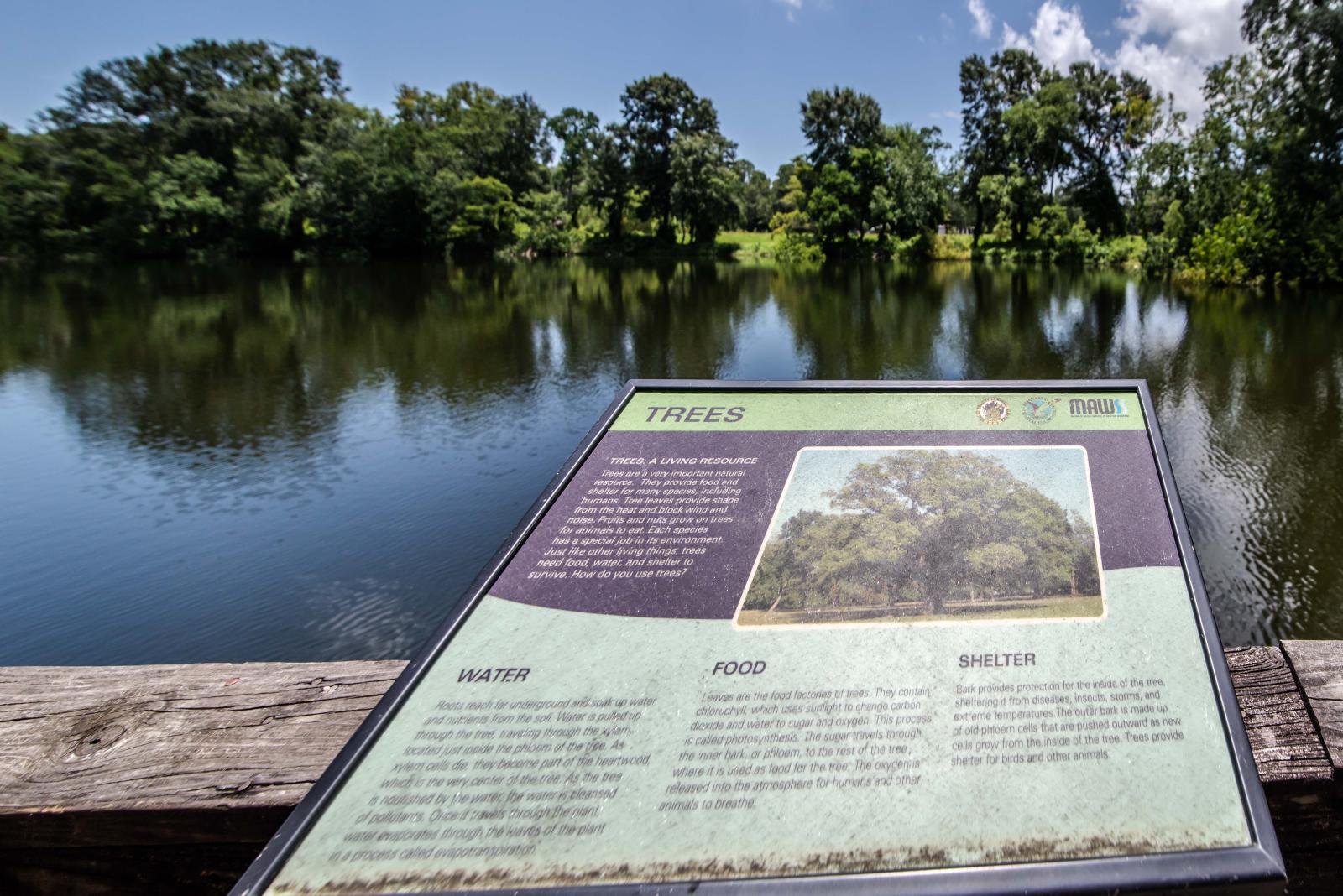
The project for Tricentennial Park involves a series of improvements aimed at enhancing its overall infrastructure and appeal. Among the planned upgrades is an enhancement of the pavilion, along with the addition of other site amenities (Ref 1). A lake is also being created as part of the project (Ref 2). Currently, work is underway on phase two, which includes landscaping, the construction of a group picnic pavilion, walking trails, a parking area, and even a misting machine to provide relief during hot weather (Ref 2). One of the key highlights of the project is the opening of a new playground in 2024, featuring a unique design. The park is laid out in a figure-eight pattern, and a sign within the park highlights its recognition for following “best practices in youth fitness,” encouraging children to stay active through sliding, swinging, spinning, climbing, brachiating, and balancing (Ref 2). This park is the first in Mobile designed exclusively for passive use, without ball fields, providing a space for families and individuals to enjoy the playgrounds (Ref 4). The park fosters social interaction, allowing children to build friendships and create lasting memories while spending time with their families (Ref 4). The park also boasts beautiful scenery, adding an aesthetic dimension to the overall experience (Ref 2). Tricentennial Park is part of the larger Three Mile Green Trail, a 6.5-mile linear park. A one-mile segment of the trail is located within Tricentennial Park. The trail will be expanded east to MLK Boulevard and west to Bush Park by 2024 (Ref 1).
Overview
Nature-based solution
- Blue infrastructure
- Lakes/ponds
- Riverbank/Lakeside greens
- Parks and urban forests
- Large urban parks or forests
Key challenges
- Climate action for adaptation, resilience and mitigation (SDG 13)
- Climate change adaptation
- Green space, habitats and biodiversity (SDG 15)
- Green space creation and/or management
- Health and well-being (SDG 3)
- Creation of opportunities for recreation
- Enabling opportunities for physical activity
- Improving physical health
- Social justice, cohesion and equity (SDG 10)
- Social interaction
- Environmental education
Principal problems in Functional Urban Area (FUA)
- Climate-Related Hazards
- Heat stress & Extreme temperatures
- Land use and Socio-economic change
- Unequal availability and access to public green spaces
- Health, Well-being and Social cohesion
- Physical health harm (from pollution, wildfire, extreme temperature)
Key priorities
Focus
Project objectives
Implementation activities
Climate-focused activities
Climate change adaptation:
- Increase urban vegetation cover to reduce urban heat island effect
Specification of climate or environmentally vulnerable communities
Main beneficiaries
- Citizens or community groups
- Young people and children
Governance
Management set-up
- Government-led
Type of initiating organisation
- Local government/municipality
Participatory approaches/ community involvement
- Unknown
Details on the roles of the organisations involved in the project
Project implemented in response to ...
Type of enablers
Financing
Total cost
Source(s) of funding
- Public local authority budget
Type of funding
- Earmarked public budget
Non-financial contribution
Impacts and Monitoring
Environmental impacts
- Climate change
- Lowered local temperature
- Expected lowered local temperature
- Green space and habitat
- Increased green space area
- Expected increased green space area
- Increased ecological connectivity across regeneration sites and scales
- Expected increased ecological connectivity across regeneration sites and scales
Economic impacts
- Unknown
Socio-cultural impacts
- Social justice and cohesion
- Improved liveability
- Expected improved liveability
- Improved access to urban green space
- Expected improved access to urban green space
- Increased opportunities for social interaction
- Expected increased opportunities for social interaction
- Health and wellbeing
- Gain in activities for recreation and exercise
- Expected gain in activities for recreation and exercise
- Improved physical health
- Expected improved physical health
- Reduced risk of heatstroke and/or dehydration
- Expected reduced risk of heatstroke and/or dehydration
- Education
- Increased knowledge of locals about local nature
- Expected increased knowledge of locals about local nature
Type of reported impacts
Presence of formal monitoring system
Presence of indicators used in reporting
Presence of monitoring/ evaluation reports
Availability of a web-based monitoring tool
Potential risks of implementation and trade-offs
References
 Information about this nature-based solution was collected as part of the Naturescapes project funded by the European Union under Grant Agreement No 101084341.