

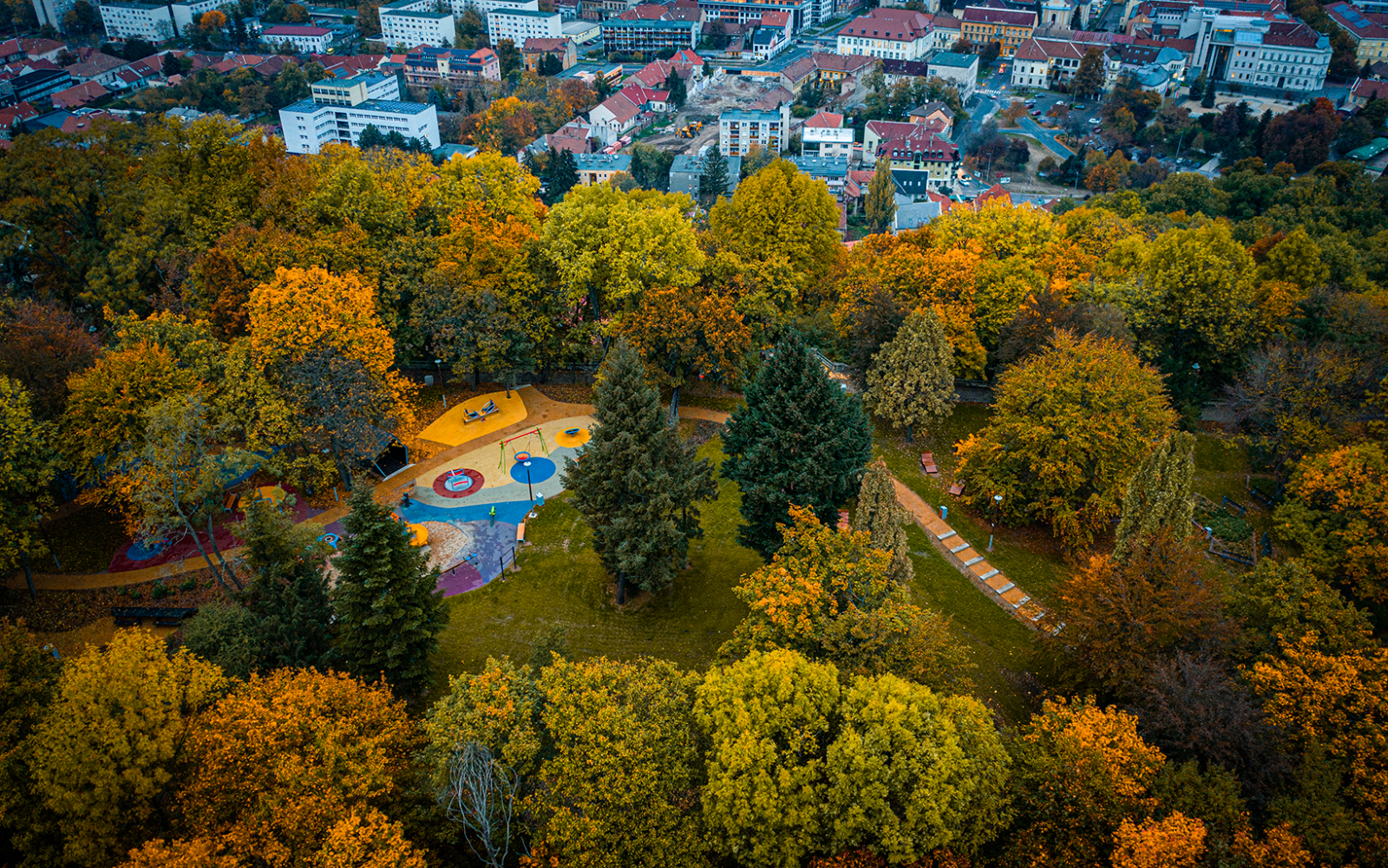
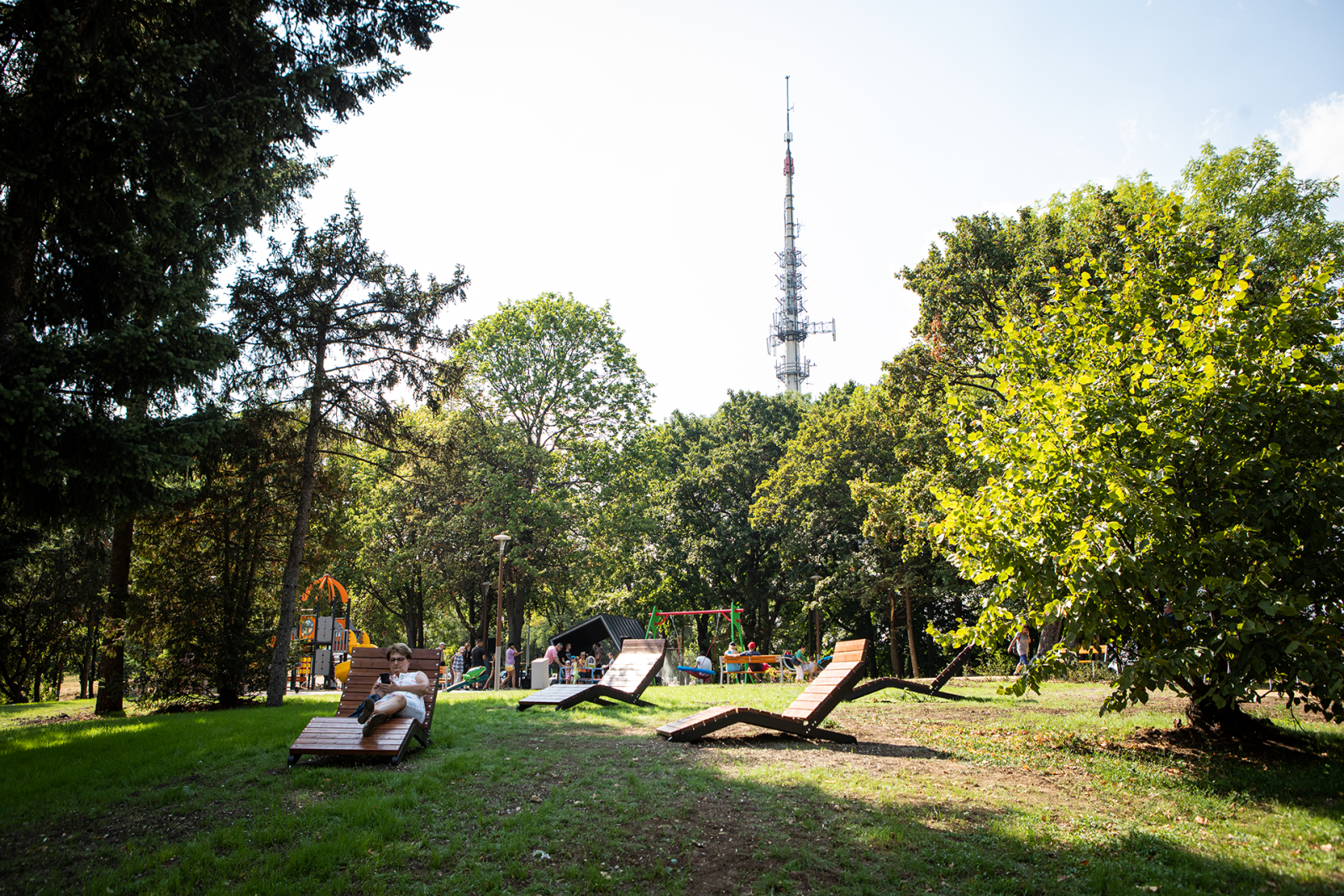
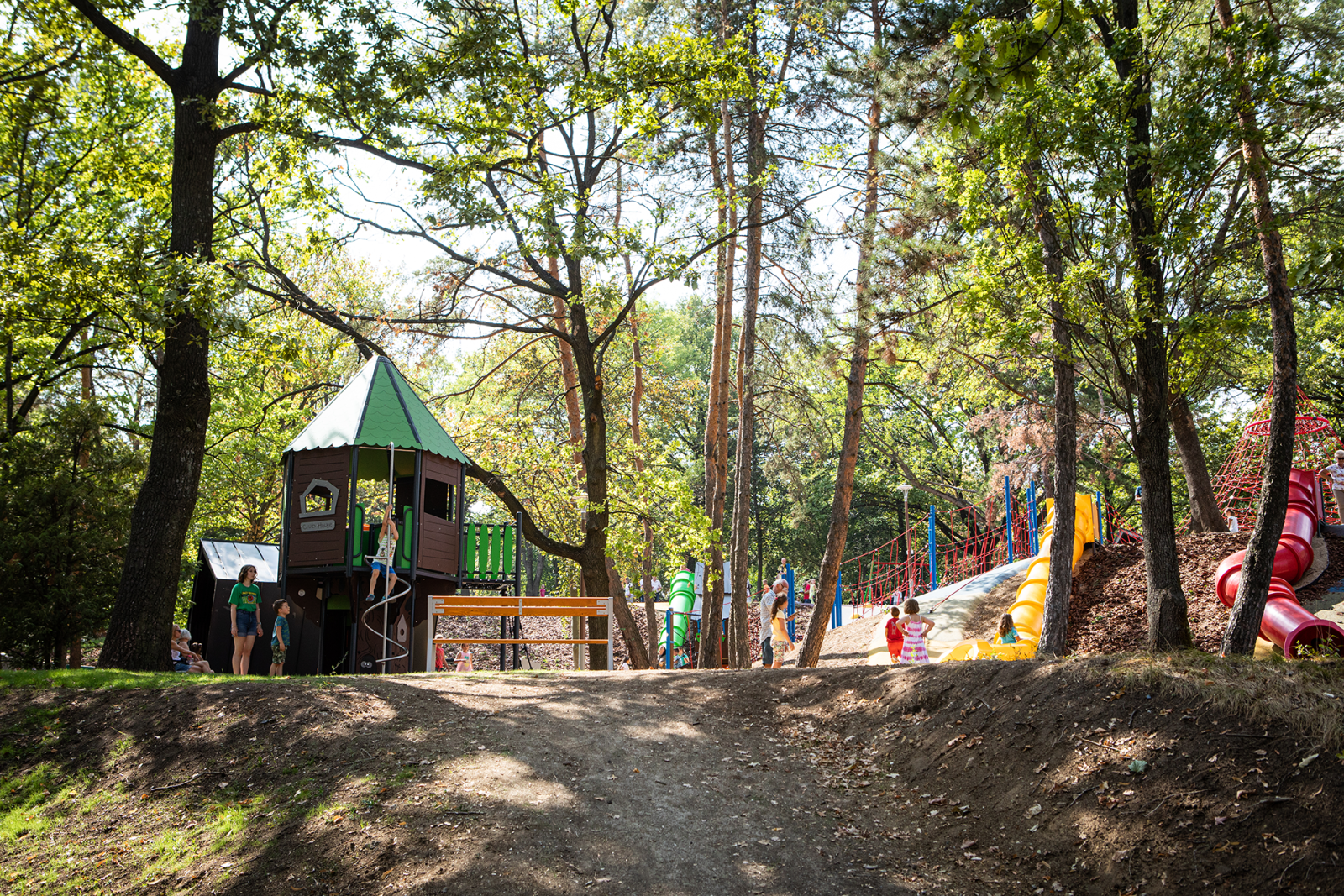
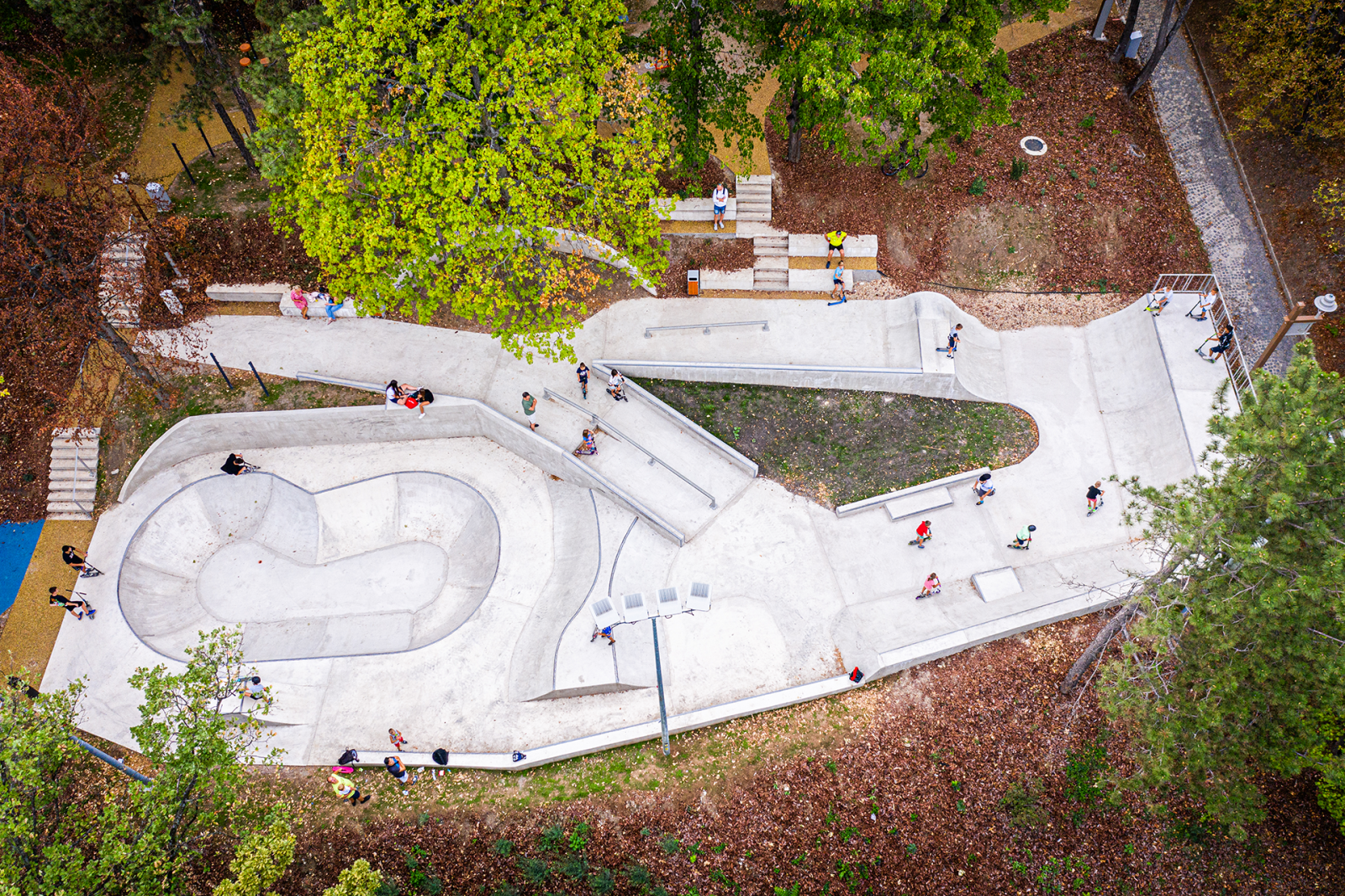
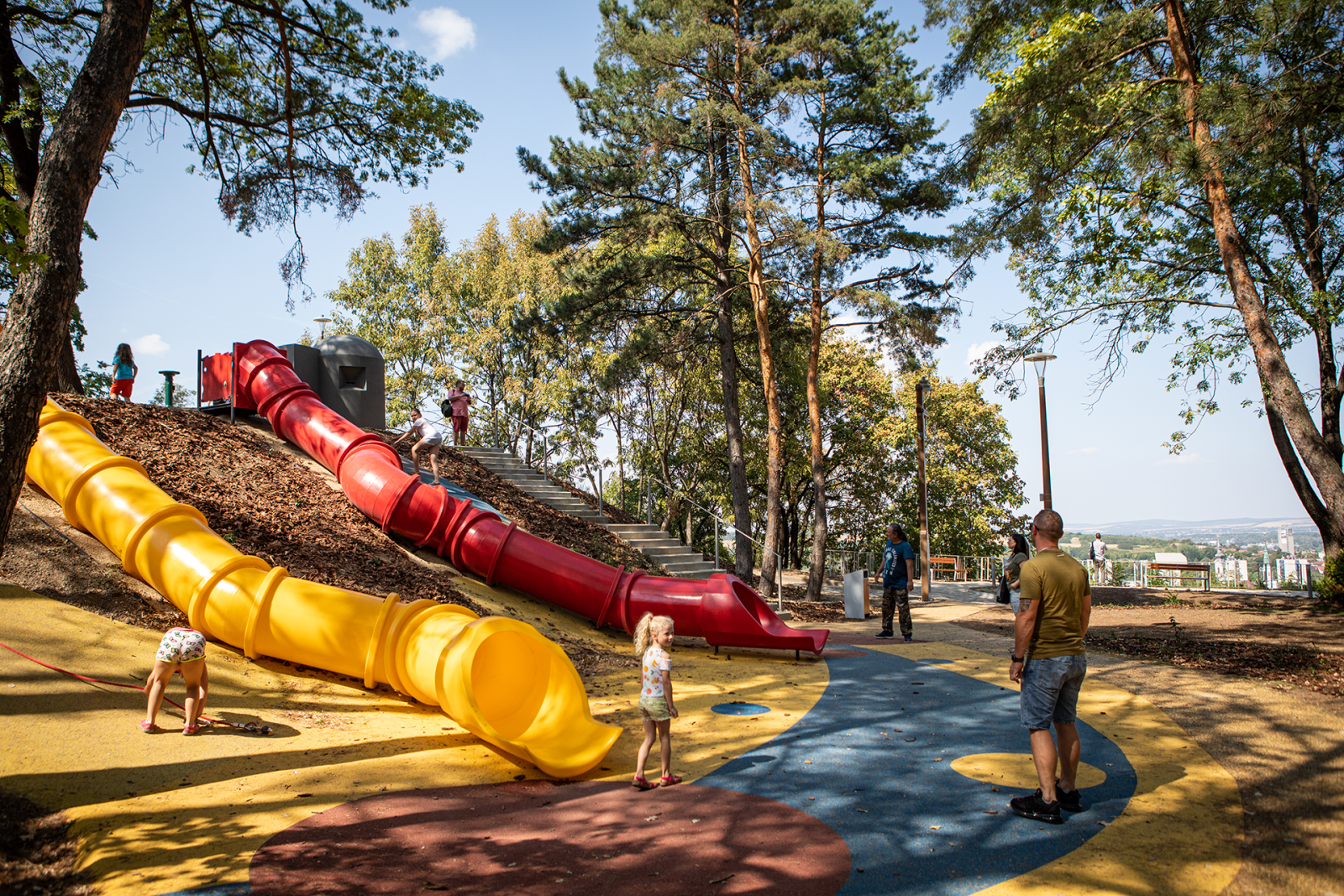
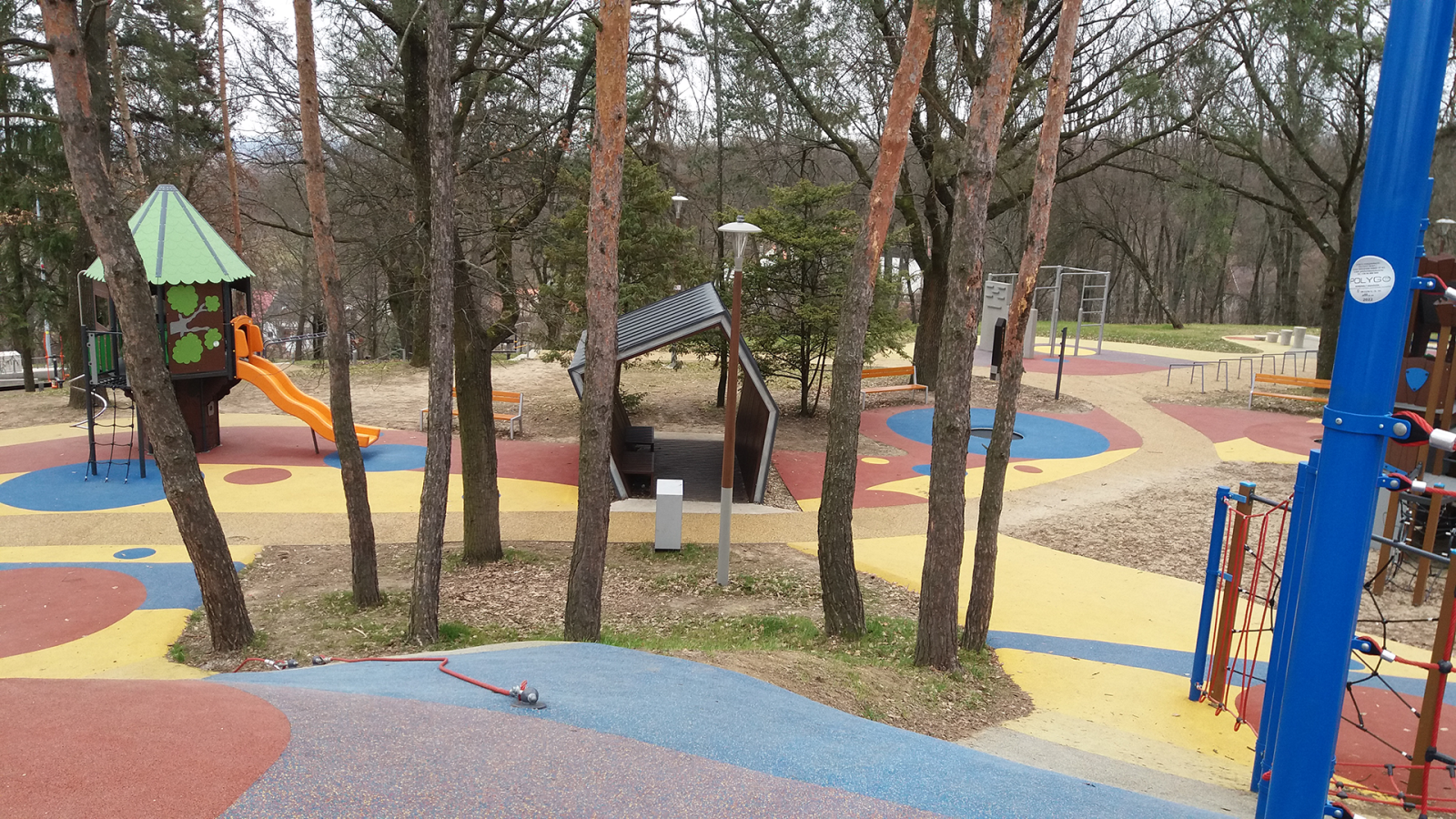
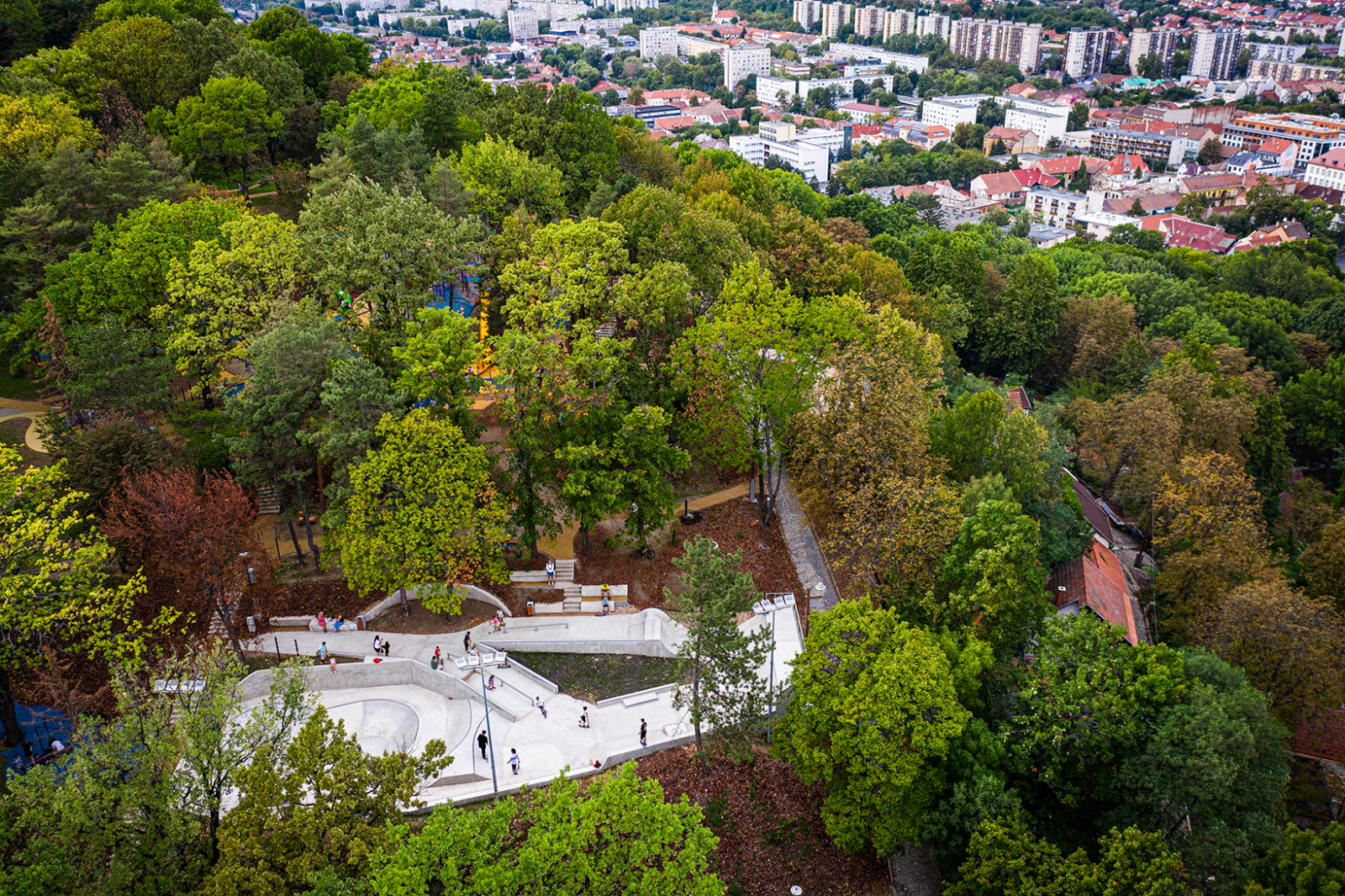
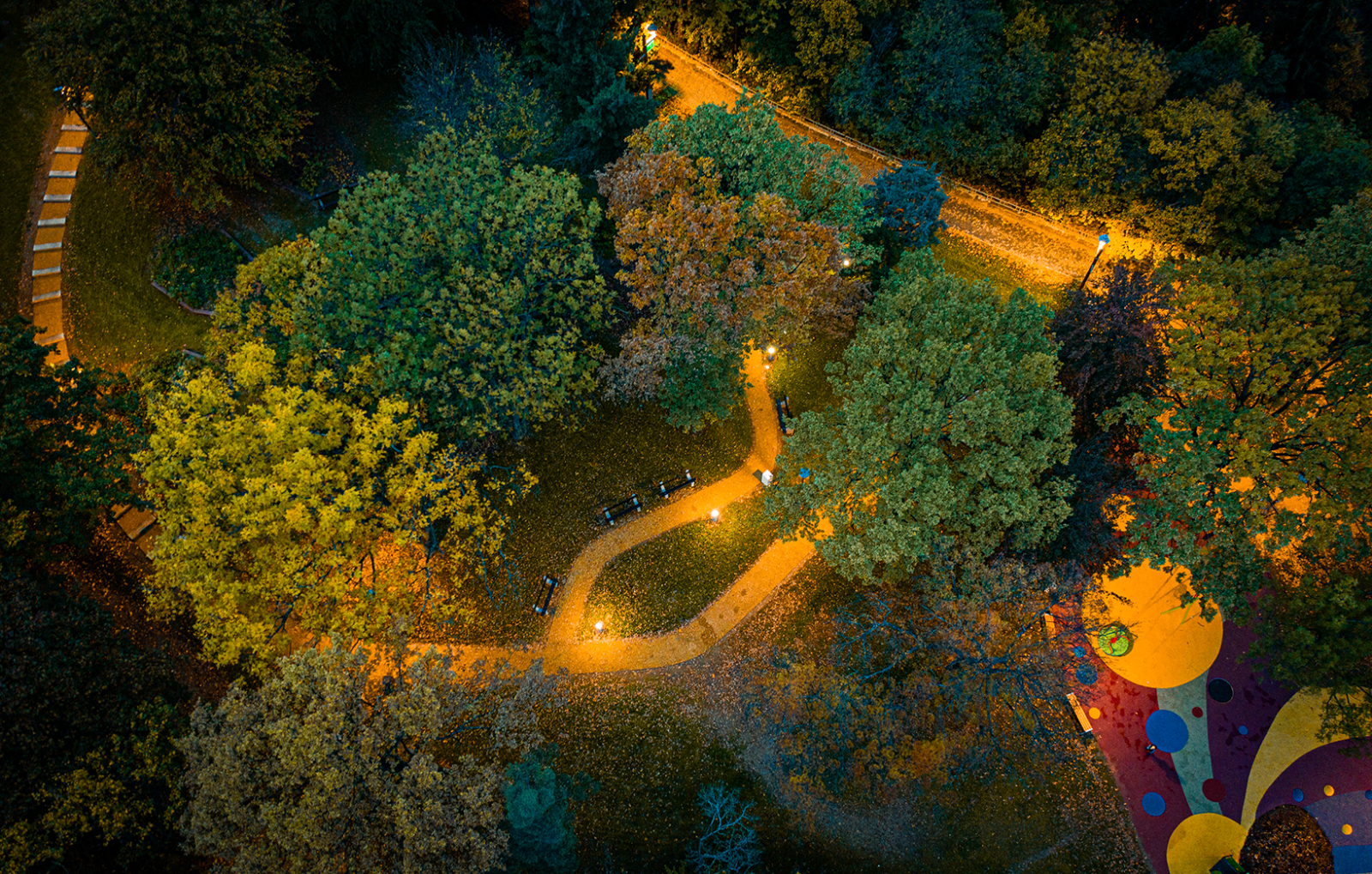
The "Active Recreational Green Area Development at Horváth-tető" in Miskolc is a project aimed at revitalizing a central yet underutilized urban space, commissioned by the Municipality of Miskolc in 2017. A distinctive feature of Miskolc is the Avas hill, located in the city center, which beautifully blends nature with urban elements. Despite its potential, the area had been neglected, particularly following the decline of vineyard culture and the reduced use of old wine cellars. To address this, a comprehensive development plan was initiated to rejuvenate the Avas region, with Horváth-tető at its core. The project aimed to transform the area into an outdoor recreational hub for all age groups. The hill's historic terraces, once popular promenades, were repurposed into distinct, multifunctional spaces. Sports enthusiasts can enjoy facilities such as street workout stations, an outdoor gym, a skate park, a climbing wall, and parkour elements. For those looking to relax, picnic areas, sunbathing spots, and a retro-style terrace are available. The entire development prioritizes accessibility, providing inclusive options for visitors with mobility challenges. The park also features significant landscaping, including the planting of trees, shrubs, perennials, ornamental grasses, and ferns, enhancing its overall appeal. Infrastructure improvements were made, including the restoration of stairs, paths, retaining walls, and the rainwater drainage system. A special shallow basin was designed to collect rainwater and support plant roots while also serving as a playful area for dogs within the dog park. Since its opening in 2022, the park has become a popular destination, offering a tranquil escape in a beautiful setting. It provides a wide range of recreational opportunities for people of all ages, making it a valuable addition to Miskolc’s urban landscape and connecting the historical Avas hill with modern city life.(Ref.1,2)
Overview
Nature-based solution
- Green areas for water management
- Sustainable urban drainage systems
- Other
- Parks and urban forests
- Large urban parks or forests
Key challenges
- Environmental quality
- Soil quality improvement
- Green space, habitats and biodiversity (SDG 15)
- Green space creation and/or management
- Regeneration, land-use and urban development
- Promote natural styles of landscape design for urban development
- Water management (SDG 6)
- Stormwater and rainfall management and storage
- Health and well-being (SDG 3)
- Creation of opportunities for recreation
- Enabling opportunities for physical activity
- Social justice, cohesion and equity (SDG 10)
- Social justice and equity
- Social interaction
Principal problems in Functional Urban Area (FUA)
- Environmental Degradation
- Biodiversity loss
- Soil degradation and loss
- Land use and Socio-economic change
- Unequal availability and access to public green spaces
- Health, Well-being and Social cohesion
- Inadequate access to recreational opportunities
- Disconnection from nature
Key priorities
Focus
Project objectives
Implementation activities
Main beneficiaries
- Citizens or community groups
- Marginalized groups: Children, young people or youth groups , People with functional diversities
Governance
Management set-up
- Government-led
Type of initiating organisation
- Local government/municipality
Participatory approaches/ community involvement
- Co-planning (e.g. stakeholder workshops, focus groups, participatory mapping)
Details on the roles of the organisations involved in the project
Project implemented in response to ...
Type of enablers
Financing
Total cost
Source(s) of funding
- Public national budget
- EU funds
Type of funding
- Earmarked public budget
- Direct funding (grants, subsidies, or self-financed projects by private entities)
Non-financial contribution
Impacts and Monitoring
Environmental impacts
- Environmental quality
- Improved soil quality
- Expected improved soil quality
- Water management and blue areas
- Improved stormwater management
- Expected improved stormwater management
- Green space and habitat
- Increased green space area
- Achieved increased green space area
- Increased number of species present
- Achieved increased number of species present
- Restoration of derelict areas
- Achieved restoration of derelict areas
Economic impacts
- Stimulate development in deprived areas
- Achieved stimulate development in deprived areas
Socio-cultural impacts
- Social justice and cohesion
- Improved access to urban green space
- Achieved improved access to urban green space
- Increased opportunities for social interaction
- Achieved increased opportunities for social interaction
- Health and wellbeing
- Gain in activities for recreation and exercise
- Achieved gain in activities for recreation and exercise
- Safety
- Increased perception of safety
- Achieved increased perception of safety
Type of reported impacts
Presence of formal monitoring system
Presence of indicators used in reporting
Presence of monitoring/ evaluation reports
Availability of a web-based monitoring tool
Potential risks of implementation and trade-offs
References



 Information about this nature-based solution was collected as part of the Naturescapes project funded by the European Union under Grant Agreement No 101084341.