

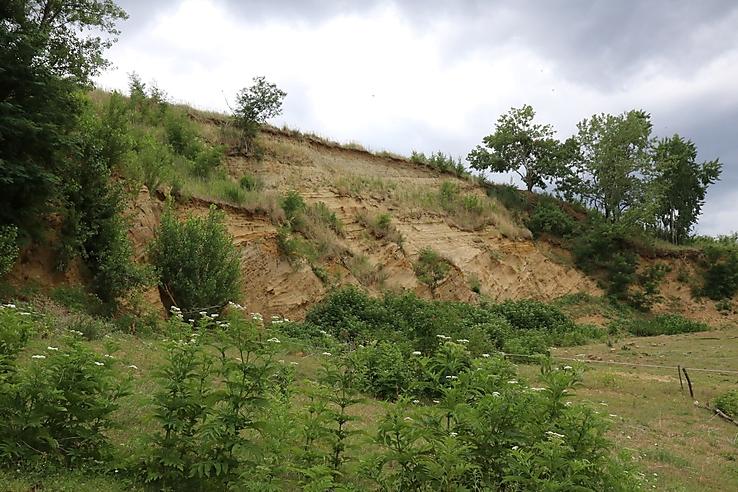
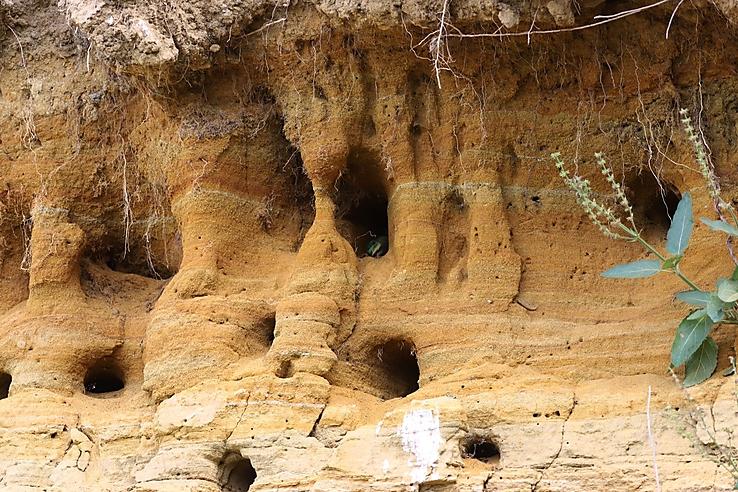
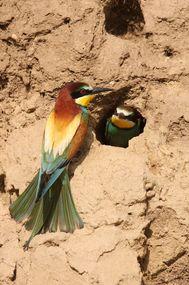
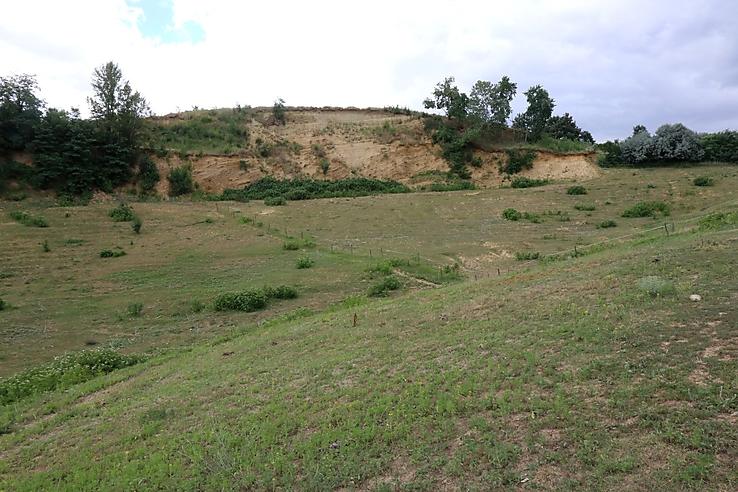
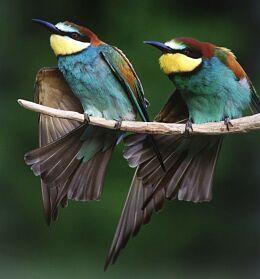
The Görömböly European Bee-eater Habitat Protection Project, launched in 2002 in Miskolc-Görömböly, Hungary, is a key conservation initiative dedicated to protecting 26.5 hectares of critical habitat for the highly protected European Bee-eater (Merops apiaster) and the Sand Martin, along with the diverse ecosystems thriving in this area. The site comprises three unique zones: an abandoned sand quarry, a young acacia woodland, and a quarry lake surrounded by marshlands. The sand quarry’s vertical walls provide nesting sites for 15-40 European Bee-eaters and Sand Martins each year, supporting Red-listed species vital to Hungary’s biodiversity. The acacia woodland serves as a feeding ground, while the quarry lake nurtures a rich aquatic ecosystem, hosting protected species like the European Bitterling fish, amphibians such as Green Toads, and a variety of waterfowl, including Mallards, Little Grebes, and occasionally Kingfishers. This project not only safeguards these vulnerable species but also fosters community engagement, offering residents the chance to learn about local wildlife and ecosystems. Additionally, the initiative promotes scientific study of the area’s ecological development, contributing valuable insights into species behavior and habitat evolution. With an emphasis on nature education and recreation, the project raises public awareness of environmental conservation. The Municipality of Miskolc plays a crucial role, having designated the area as a protected site and managing its regulatory enforcement and maintenance. (Ref.1,2,3)
Overview
Nature-based solution
- Blue infrastructure
- Lakes/ponds
- In-land wetlands, peatlands, swamps, and moors
- Parks and urban forests
- Large urban parks or forests
Key challenges
- Green space, habitats and biodiversity (SDG 15)
- Habitat and biodiversity restoration
- Habitat and biodiversity conservation
- Regeneration, land-use and urban development
- Rewilding
- Water management (SDG 6)
- Improvements to water quality
- Health and well-being (SDG 3)
- Creation of opportunities for recreation
- Social justice, cohesion and equity (SDG 10)
- Environmental education
Principal problems in Functional Urban Area (FUA)
- Environmental Degradation
- Biodiversity loss
- Health, Well-being and Social cohesion
- Inadequate access to recreational opportunities
- Disconnection from nature
Key priorities
Focus
Project objectives
Implementation activities
Biodiversity conservation or restoration-focused activities
Biodiversity conservation:
- Protect and enhance urban habitats
- Preserve and strengthen existing habitats and ecosystems
- Preserve and strengthen habitat connectivity
- Reduce negative impacts and avoid the alteration/damage of ecosystem
- Protect species
- Undertake specific measures to protect endangered species
- Means for conservation governance
- Raise public awareness
- Public engagement
- Create and use scientific knowledge for conservation
Biodiversity restoration:
- Rehabilitate and restore damaged or destroyed ecosystems
Main beneficiaries
- Researchers/University
- Citizens or community groups
Governance
Management set-up
- Government-led
Type of initiating organisation
- Local government/municipality
Participatory approaches/ community involvement
- Taskforce groups
- Dissemination of information and education
Details on the roles of the organisations involved in the project
Project implemented in response to ...
Type of enablers
Financing
Total cost
Source(s) of funding
- Public local authority budget
Type of funding
- Earmarked public budget
Non-financial contribution
- Provision of land
- Provision of expertise
- Public authorities (e.g. land, utility services)
- Other
Impacts and Monitoring
Environmental impacts
- Water management and blue areas
- Enhanced protection and restoration of freshwater ecosystems
- Achieved enhanced protection and restoration of freshwater ecosystems
- Green space and habitat
- Increase in protected green space areas
- Achieved increase in protected green space areas
- Increased number of protection areas
- Achieved increased number of protection areas
- Increased conservation or restoration of ecosystems
- Achieved increased conservation or restoration of ecosystems
- Reduced biodiversity loss
- Achieved reduced biodiversity loss
- Increased protection of threatened species
- Achieved increased protection of threatened species
- Reduced human-wildlife conflicts
- Achieved reduced human-wildlife conflicts
Economic impacts
- Unknown
Socio-cultural impacts
- Social justice and cohesion
- Increased opportunities for social interaction
- Achieved increased opportunities for social interaction
- Health and wellbeing
- Gain in activities for recreation and exercise
- Achieved gain in activities for recreation and exercise
- Education
- Increased support for education and scientific research
- Expected increased support for education and scientific research
- Increased knowledge of locals about local nature
- Expected increased knowledge of locals about local nature
- Increased awareness of NBS and their benefits
- Achieved increased awareness of NBS and their benefits
Type of reported impacts
Presence of formal monitoring system
Presence of indicators used in reporting
Presence of monitoring/ evaluation reports
Availability of a web-based monitoring tool
Potential risks of implementation and trade-offs
References

 Information about this nature-based solution was collected as part of the Naturescapes project funded by the European Union under Grant Agreement No 101084341.