

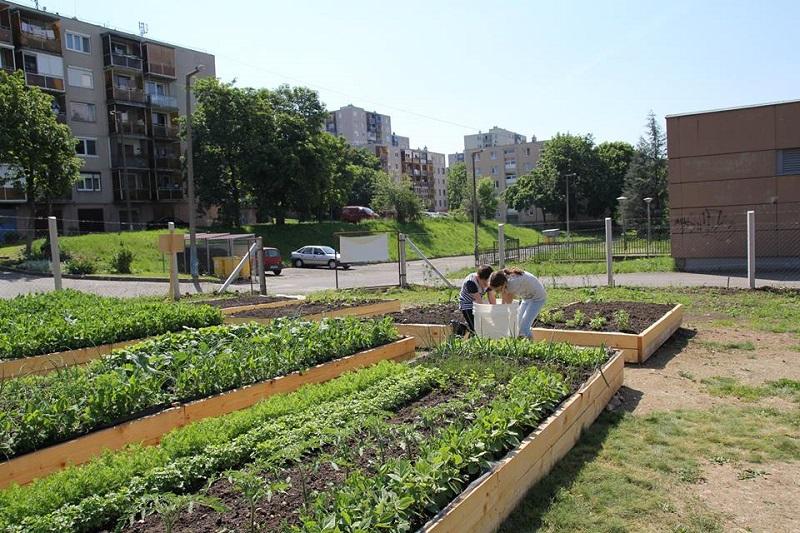
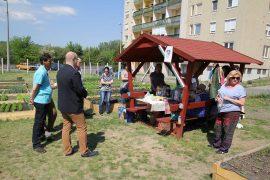
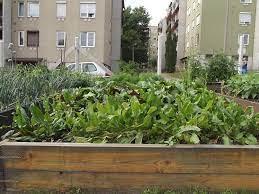
The Avas Tomato Community Garden, located in a formerly neglected area of the Avas hill of Miskolc, has transformed from an overgrown, rat-infested, and litter-strewn space into a thriving community garden. Just a few years ago, this site was a source of concern for local residents, plagued by issues such as homelessness and illegal dumping. Today, however, it stands as a flourishing green space with fresh garden beds, composting boxes, a pavilion offering shade to gardeners, and a renewed sense of community spirit. The seeds of the Avas Tomato Community Garden project were planted in the fall of 2014, led by Zsolt Jakab and Ákos Káli-Nagy. The initiative began with the establishment of the "Panelkertész" club, and by 2016, with the support of a local representative, the garden began to take shape. The gardening community that blossomed in the spring of 2017 was built upon the strong relationships within the established Avas neighborhood. Working together, members constructed the garden beds according to a precise schedule and, through frequent discussions, developed a close-knit community. The garden now consists of 20 large and 6 smaller beds, with 18 families actively growing vegetables, herbs, and spices, alongside raspberry and strawberry plants by the fence. The community has greatly benefited from both the professional support and supply donations provided by the Miskolc Ecological Institute Foundation. Additionally, the Dialóg Association has played a key role in organizing the garden users and fostering collaboration. Initially, Dialóg appointed a coordinator for the garden, but this responsibility has since been handed over to the gardeners themselves. Owned by the Municipality of Miskolc, the Avas Tomato Community Garden continues to thrive as a model of successful urban gardening, uniting people with a shared passion for gardening and a commitment to building a strong, supportive community. (Ref.1,2,3)

Overview
Nature-based solution
- Community gardens and allotments
- Community gardens
Key challenges
- Environmental quality
- Waste management
- Green space, habitats and biodiversity (SDG 15)
- Green space creation and/or management
- Regeneration, land-use and urban development
- Promote natural styles of landscape design for urban development
- Health and well-being (SDG 3)
- Creation of opportunities for recreation
- Social justice, cohesion and equity (SDG 10)
- Social justice and equity
- Social interaction
- Environmental education
- Sense of community and community engagement
- Sustainable consumption and production (SDG 12)
- Sustainable consumption
- Sustainable production
Principal problems in Functional Urban Area (FUA)
- Land use and Socio-economic change
- Limited economic opportunities and local livelihoods
- Unequal availability and access to public green spaces
- Health, Well-being and Social cohesion
- Inadequate access to recreational opportunities
- Disconnection from nature
- Poor community engagement
- Insecurity in public spaces
Key priorities
Focus
Project objectives
Implementation activities
Main beneficiaries
- Citizens or community groups
- Marginalized groups: Children, young people or youth groups , Elderly people, Socio-economically disadvantaged populations (e.g. low-income households, unemployed)
Governance
Management set-up
- Led by non-government actors
Type of initiating organisation
- Non-government organisation/civil society
- Citizens or community group
Participatory approaches/ community involvement
- Co-planning (e.g. stakeholder workshops, focus groups, participatory mapping)
- Dissemination of information and education
- Consultation (e.g. workshop, surveys, community meetings, town halls)
- Joint implementation (e.g. tree planting)
- Citizen oversight (e.g. boards, advisory)
Details on the roles of the organisations involved in the project
Project implemented in response to ...
Type of enablers
Financing
Total cost
Source(s) of funding
- Public local authority budget
- Corporate investment
Type of funding
- Earmarked public budget
- Direct funding (grants, subsidies, or self-financed projects by private entities)
Non-financial contribution
- Provision of land
- Provision of goods
- Provision of labour
- Provision of expertise
- Public authorities (e.g. land, utility services)
- Citizens (e.g. volunteering)
- Other
Impacts and Monitoring
Environmental impacts
- Environmental quality
- Improved waste management
- Achieved improved waste management
- Green space and habitat
- Increased green space area
- Achieved increased green space area
- Increased number of species present
- Achieved increased number of species present
- Restoration of derelict areas
- Achieved restoration of derelict areas
Economic impacts
- Generation of other type of work opportunities (e.g. voluntary, work for rehabilitation)
- Achieved generation of other type of work opportunities (e.g. voluntary, work for rehabilitation)
Socio-cultural impacts
- Social justice and cohesion
- Improved access to urban green space
- Achieved improved access to urban green space
- Increased visibility and opportunity for marginalised groups or indigenous peoples
- Achieved increased visibility and opportunity for marginalised groups or indigenous peoples
- Increased opportunities for social interaction
- Achieved increased opportunities for social interaction
- Increased involvement of locals in the management of green spaces
- Achieved increased involvement of locals in the management of green spaces
- Increased access to healthy/affordable food
- Achieved increased access to healthy/affordable food
- Education
- Increased awareness of NBS and their benefits
- Expected increased awareness of NBS and their benefits
- Safety
- Increased perception of safety
- Achieved increased perception of safety
Type of reported impacts
Presence of formal monitoring system
Presence of indicators used in reporting
Presence of monitoring/ evaluation reports
Availability of a web-based monitoring tool
Potential risks of implementation and trade-offs
References

 Information about this nature-based solution was collected as part of the Naturescapes project funded by the European Union under Grant Agreement No 101084341.