

Last updated: November 2021
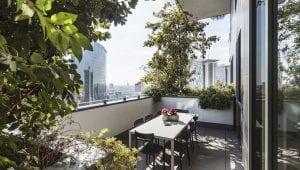
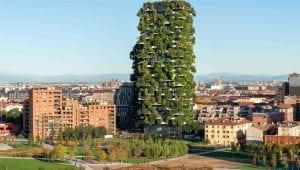
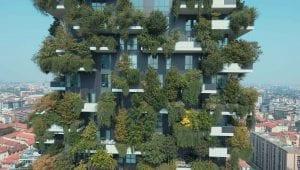
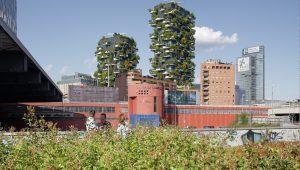
This NBS is part of the new Porta Nuova area, an extended urban transformation of a neglected area of Milan. It consists of two residential towers of 110 and 76 m height hosting 800 trees and over 20,000 plants from a wide range of shrubs and floral plants distributed according to the sun exposure of the facade. On flat land, each Vertical Forest equals, in amount of trees, an area of 20,000 square meters of forest. In terms of urban densification it is the equivalent of an area of a single family dwelling of nearly 75,000 sq.m (3).
https://www.stefanoboeriarchitetti.net/en/project/vertical-forest/
Overview
Nature-based solution
- Nature on buildings (external)
- Green roofs
- Green walls or facades
- Balcony greens
Key challenges
- Climate action for adaptation, resilience and mitigation (SDG 13)
- Climate change adaptation
- Climate change mitigation
- Green space, habitats and biodiversity (SDG 15)
- Habitat and biodiversity restoration
- Green space creation and/or management
- Environmental quality
- Air quality improvement
- Regeneration, land-use and urban development
- Regulation of built environment
- Sustainable consumption and production (SDG 12)
- Sustainable consumption
Focus
Creation of new green areas
Project objectives
The vegetal system of the Vertical Forest contributes to the construction of a microclimate, produces humidity, absorbs CO2 and dust particles and produces oxygen.
The Vertical Forest increases biodiversity. It promotes the formation of an urban ecosystem where various plant types create a separate vertical environment, but which works within the existing network, able to be inhabited by birds and insects (with an initial estimate of 1,600 specimens of birds and butterflies). In this way, it constitutes a spontaneous factor for repopulating the city’s flora and fauna (3).
Implementation activities
It took a total of 8 years to implement this NBS (including 3 years of designing phase). Once the structure of the two towers was finished, the tree-planting phase started (JUne-October 2013), in which trees were carried up using a restraint safety system and put in cement containers located in the outer side of cantilevered terraces. The installation of the irrigation system took several months, so for that time period plants were watered manually by staff. In 2014 first potential tenants were visiting the buildings, as the external walls were almost ultimate and some apartments were completed (1).
Climate-focused activities
Climate change adaptation:
- Implement green walls or roofs to lower indoor temperature and provide insulation
Climate change mitigation:
- Increase green urban nature for carbon storage (wetlands, tree cover)
Biodiversity conservation or restoration-focused activities
Biodiversity restoration:
- Restore species (native, endangered, or unspecified)
- Restore valued species
- Restore ecological connectivity
Main beneficiaries
- Citizens or community groups
- Other
Governance
Management set-up
- Led by non-government actors
Type of initiating organisation
- Private sector/corporate actor/company
Participatory approaches/ community involvement
- Other
Details on the roles of the organisations involved in the project
Client and Developer: Hines Italia SGR SpA per conto del Fondo Porta Nuova Isola
Architects:
Masterplan and Bosco Verticale: Boeri Studio (Stefano Boeri, Gianandrea Barreca, Giovanni La
Varra) now Stefano Boeri Architetti and Barreca & La Varra
Office building: William McDonough + Partners
Low-rise residential building: Lucien Lagrange Architects
Bosco Verticale’s Landscape and Botanical Consultants: Laura Gatti and Emanuela Borio
Landscape Architect of Public Spaces: Land
Coordination and Executive Architecture: Tekne
Structures, Geotechnics, Tunnelling, Wind, Acoustics related to vibrations and structure-borne noise, Advanced Technology: Arup (4).
Project implemented in response to ...
... an EU policy or strategy?
No
(It was a private company initiative as a re-qualification of the Porta Nuova Area, which was part of a city plan since 1953, but due to financial issues the Milan Municipality was not able to assess it (4).)
... a national policy or strategy?
No
(It was a requalification of the area already planned and that was stimulated by the imminent Expo Event in 2015 (4).)
... a local policy or strategy?
Yes
(The city of Milan was planning to renew this derelict area since the 50s, but could not due it due to financing shortages. Buldings were designed with the goal to introduce reforestation in that area of the city using efficiently the limited space available (1). The Initiative is called rehabilitation plan of the Porta Nuova Neighbourhoods and can be found at this link: http://www.porta-nuova.com/ )
Financing
Total cost
More than €4,000,000
Source(s) of funding
- Private Foundation/Trust
Type of funding
- Direct funding (grants, subsidies, or self-financed projects by private entities)
Non-financial contribution
No
Impacts and Monitoring
Environmental impacts
- Climate change
- Lowered local temperature
- Green space and habitat
- Increased conservation or restoration of ecosystems
- Increased number of species present
- Improved prevention or control of invasive alien species
Economic impacts
- Unknown
Socio-cultural impacts
- Unknown
Type of reported impacts
Achieved impacts
Presence of formal monitoring system
Yes
Presence of indicators used in reporting
Yes
Presence of monitoring/ evaluation reports
Yes
Availability of a web-based monitoring tool
Yes
References
1. Giacomello, E. and Valagussa, M. (2015). Vertical Greenery: Evaluating the High-Rise Vegetation of the Bosco Verticale,Milan. Chicago: Council on Tall Buildings and Hurban Habitat, 1-96, Available at Source link (Accessed 6-9-2020)
2. Stefano Boeri Architetti (2014), Bosco Verticale / Boeri Studio, Available at Source link (Accessed 6-9-2020)
3. Stefano Boeri Architetti (2014), Vertical Forest, Available at Source link (Accessed 6-9-2020)
4. Arup's publication: Source link (Website not available in 2020)
5. Designing Buildings (2017), CIBSE Case Study, Available at Source link (Accessed 6-9-2020)
6. Porta Nuova (no date), Brochure, Available at Source link (Accessed 6-9-2020)
7. Porta Nuova (no date), Porta Nuova Phylosophy, Available at Source link (Accessed 6-9-2020)
8. Sustainability Strategy for the Lombardia Region: Source link (Website not available in 2020)
9. Artribune (2017), Artribune's examples of other vertical forests, Available at Source link (Accessed 6-9-2020)
10. Green Roofs (no date), BOSCO VERTICALE (VERTICAL FOREST), MILAN, Available at Source link, (Accessed 21-9-2020)
2. Stefano Boeri Architetti (2014), Bosco Verticale / Boeri Studio, Available at Source link (Accessed 6-9-2020)
3. Stefano Boeri Architetti (2014), Vertical Forest, Available at Source link (Accessed 6-9-2020)
4. Arup's publication: Source link (Website not available in 2020)
5. Designing Buildings (2017), CIBSE Case Study, Available at Source link (Accessed 6-9-2020)
6. Porta Nuova (no date), Brochure, Available at Source link (Accessed 6-9-2020)
7. Porta Nuova (no date), Porta Nuova Phylosophy, Available at Source link (Accessed 6-9-2020)
8. Sustainability Strategy for the Lombardia Region: Source link (Website not available in 2020)
9. Artribune (2017), Artribune's examples of other vertical forests, Available at Source link (Accessed 6-9-2020)
10. Green Roofs (no date), BOSCO VERTICALE (VERTICAL FOREST), MILAN, Available at Source link, (Accessed 21-9-2020)
https://www.stefanoboeriarchitetti.net/en/project/vertical-forest/
https://www.stefanoboeriarchitetti.net/en/project/vertical-forest/
https://www.stefanoboeriarchitetti.net/en/project/vertical-forest/