

Last updated: October 2021
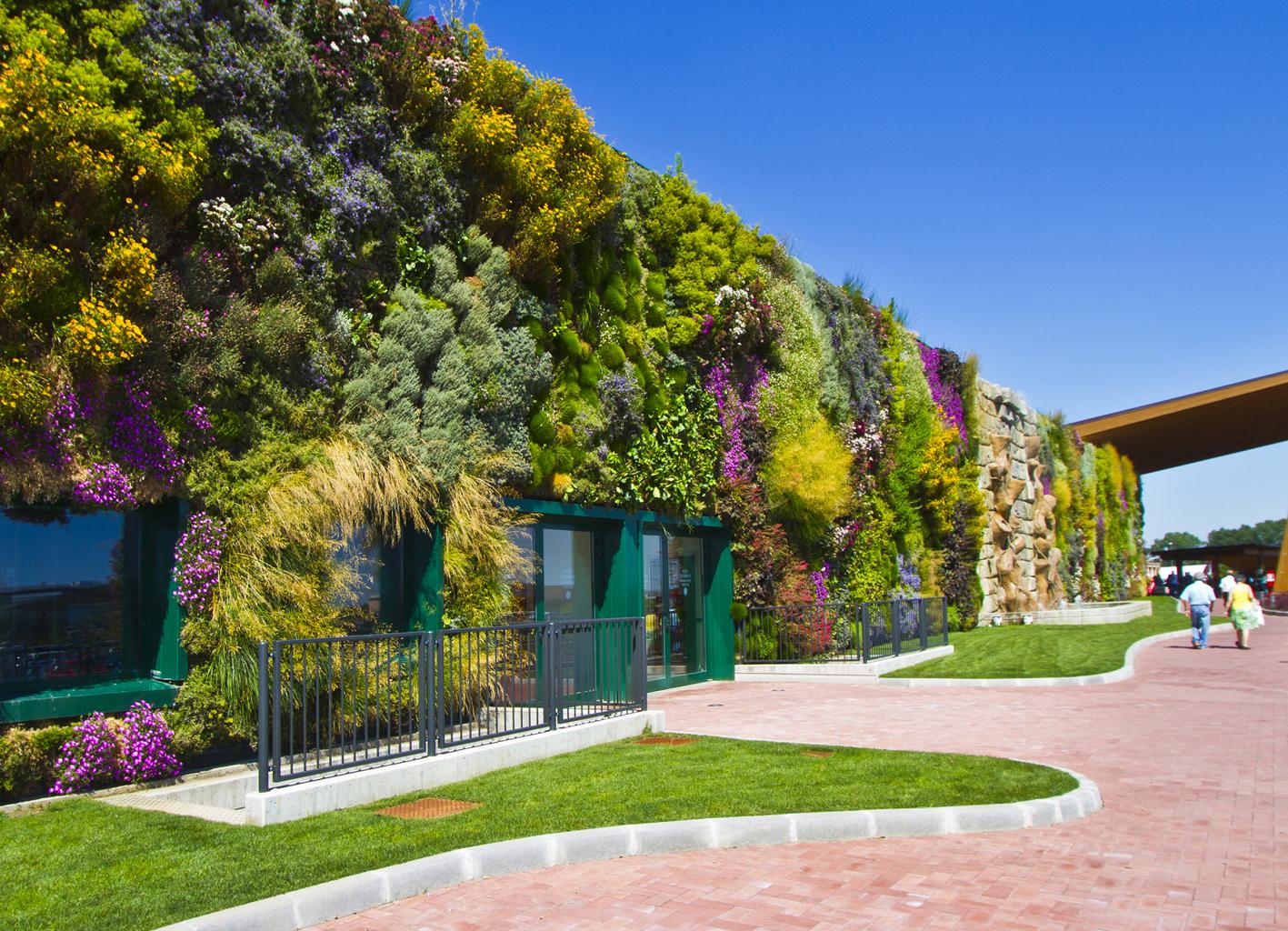
This vertical garden was created with the aim to integrate the shopping mall in the surrounding green. A total of 44.000 plants of 200 different species were used on a surface of 1.262 square meters, making it the largest living wall in the world (now in Italy) at the time it was created. The green wall has met large positive response both by the owners of the shopping mall, who noticed a decrease in their energy expenses, and by local residents, who can appreciate the aesthetic beauty of the wall and breathe fresher and cleaner air. (2,3)

https://fiordaliso.net/giardino-verticale/
Overview
Nature-based solution
- Nature on buildings (external)
- Green walls or facades
Key challenges
- Climate action for adaptation, resilience and mitigation (SDG 13)
- Climate change mitigation
- Green space, habitats and biodiversity (SDG 15)
- Green space creation and/or management
- Environmental quality
- Air quality improvement
Focus
Creation of new green areas
Project objectives
The intervention aimed at making the façade of the building better integrated to the green spaces in the neighbourhood in Southern Milan, while assessing the air quality issues the big city is currently facing thanks to the carbon-sequestration service plants could offer (2).
Implementation activities
"Over 44,000 plants were grown to cover the façade of the shopping center. Each of the plants took root in supported sections that were assembled like a big structure of LEGOS, fitting together to create a sturdy system that could be easily irrigated and taken care of. The plants snuggle together in metal containers that allow the roots to thrive. Although a little more expensive than traditional vertical gardens, Bollani’s metal container system makes for easier care." (1).
Climate-focused activities
Climate change mitigation:
- Install vertical or horizontal artificial surfaces that help with carbon storage and cooling
Main beneficiaries
- Private sector/Corporate/Company
- Citizens or community groups
Governance
Management set-up
- Led by non-government actors
Type of initiating organisation
- Private sector/corporate actor/company
Participatory approaches/ community involvement
- Unknown
Details on the roles of the organisations involved in the project
The project is the work of architect Francesco Bollani, in collaboration with a Montpellier architecture studio and Peverelli company (3).
Project implemented in response to ...
... an EU policy or strategy?
No
... a national policy or strategy?
No
... a local policy or strategy?
No
Financing
Total cost
Unknown
Source(s) of funding
- Corporate investment
Type of funding
- Direct funding (grants, subsidies, or self-financed projects by private entities)
Non-financial contribution
Unknown
Impacts and Monitoring
Environmental impacts
- Climate change
- Lowered local temperature
- Environmental quality
- Improved waste management
- Water management and blue areas
- Improved stormwater management
- Reduced risk of damages by drought
- Green space and habitat
- Increased green space area
- Increased number of species present
- Other
Economic impacts
- Reduce financial cost for urban management
Socio-cultural impacts
- Social justice and cohesion
- Improved liveability
- Cultural heritage and sense of place
- Increased sense of place identity, memory and belonging
- Increased appreciation for natural spaces
- Other
Type of reported impacts
Achieved impacts, No impacts reported
Presence of formal monitoring system
Yes
Presence of indicators used in reporting
No
Presence of monitoring/ evaluation reports
No evidence in public records
Availability of a web-based monitoring tool
No evidence in public records
References
1. Inhabitat (2012), Overview of the green wall, Available at Source link (Accessed 9-9-2020)
2. Fiordaliso (no date), NBS webpage, Available at Source link (Accessed 9-9-2020)
3.Tutto Green (2017), NBS description, Available at Source link (Accessed 9-9-2020)
4. Il Giorno (2012), Al Fiordaliso un giardino verticale da Guinness, Available at Source link (Accessed 9-9-2020)
5. Italy's largest green wall: Source link (Website not available in 2020)
6. Inhabitat (2012), Vertical garden, Available at Source link (Accessed 9-9-2020)
7. FiorieFoglie (2011), Interview to the designing architect, Available at Source link (Accessed 9-9-2020)
2. Fiordaliso (no date), NBS webpage, Available at Source link (Accessed 9-9-2020)
3.Tutto Green (2017), NBS description, Available at Source link (Accessed 9-9-2020)
4. Il Giorno (2012), Al Fiordaliso un giardino verticale da Guinness, Available at Source link (Accessed 9-9-2020)
5. Italy's largest green wall: Source link (Website not available in 2020)
6. Inhabitat (2012), Vertical garden, Available at Source link (Accessed 9-9-2020)
7. FiorieFoglie (2011), Interview to the designing architect, Available at Source link (Accessed 9-9-2020)

https://fiordaliso.net/giardino-verticale/
https://fiordaliso.net/giardino-verticale/