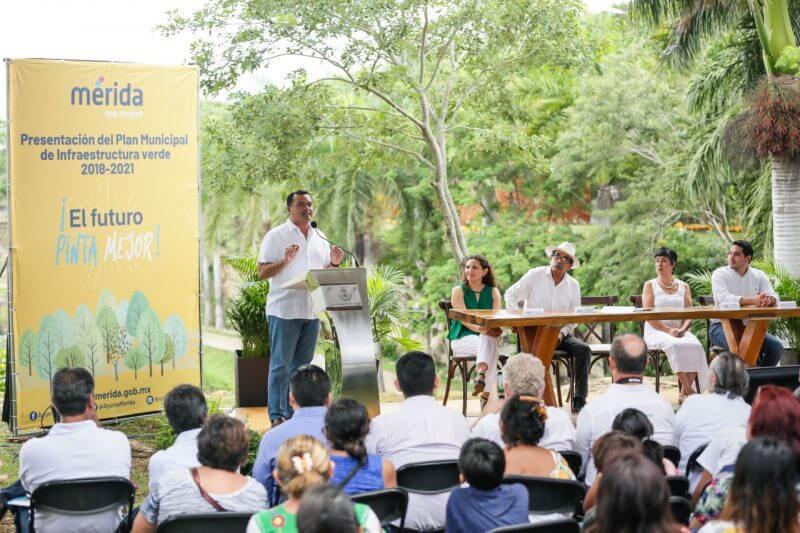
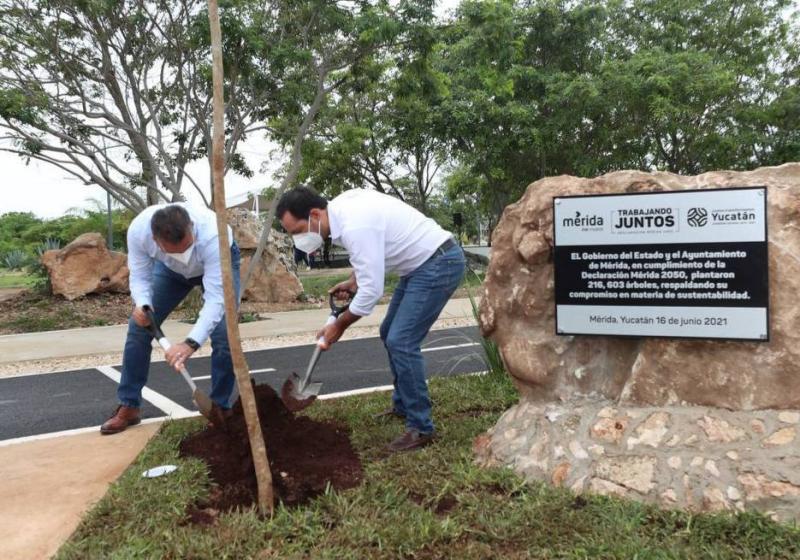
Mérida city developed a Municipal Green Infrastructure Plan (Plan Municipal de Infraestructura Verde), in order to "strengthen the green infrastructure system through planning, design and implementation of urban strategies at different scales of actions and projects that contribute to enriching ecosystem services in the public and private space of the Municipality of Mérida" (Ref. 1). The plan has four axes, providing a comprehensive and transdisciplinary approach to integrating nature-based solutions into city planning and the design of public spaces in order to provide climate change adaptation and mitigation benefits (Ref. 1). The Mérida Green Infrastructure Plan shares strong ties with a state-wide strategy, 'Arborizando Yucatán', which promotes reforestation efforts across the 106 municipalities of the state in order to "help reduce the effects of climate change, have more areas green and a better climate for the benefit of current and future generations of Yucatecans" (Refs. 3 & 4). At both the municipal and state level, the relevant administrations (Mérida City Council and the State Government, respectively) have signed an agreement (Declaration for Mérida 2050), whereby both pledged to plant at least 200,000 native trees in the City of Merida, running alongside both the Mérida Municipal Green Infrastructure Plan and the Aborising Yucatán Strategy (Ref. 2).
Overview
Nature-based solution
- Grey infrastructure featuring greens
- Alley or street trees and other street vegetation
- House gardens
- Green parking lots
- Parks and urban forests
- Pocket parks/neighbourhood green spaces
- Green corridors and green belts
Key challenges
- Climate action for adaptation, resilience and mitigation (SDG 13)
- Climate change adaptation
- Climate change mitigation
- Environmental quality
- Soil quality improvement
- Air quality improvement
- Green space, habitats and biodiversity (SDG 15)
- Habitat and biodiversity conservation
- Green space creation and/or management
- Regeneration, land-use and urban development
- Promote natural styles of landscape design for urban development
- Water management (SDG 6)
- Improvements to water quality
- Health and well-being (SDG 3)
- Improving physical health
- Inclusive and effective governance (SDG 16)
- Inclusive governance
- Effective management
- Economic development and employment (SDG 8)
- Tourism support
Focus
Project objectives
Implementation activities
Climate-focused activities
Climate change adaptation:
- Increase or improve urban vegetation cover to help reduce outdoor temperature
- Create or improve outdoor spaces to help people escape from urban heat
Climate change mitigation:
- Increase green urban nature for carbon storage (wetlands, tree cover)
Biodiversity conservation or restoration-focused activities
Biodiversity conservation:
- Protect and enhance urban habitats
- Create new habitats
- Preserve and strengthen habitat connectivity
- Means for conservation governance
- Raise public awareness
- Public engagement
Main beneficiaries
- Citizens or community groups
Governance
Management set-up
- Government-led
Type of initiating organisation
- Local government/municipality
Participatory approaches/ community involvement
- Dissemination of information and education
- Joint implementation (e.g. tree planting)
Details on the roles of the organisations involved in the project
Project implemented in response to ...
Financing
Total cost
Source(s) of funding
- Unknown
Type of funding
- Unknown
Non-financial contribution
Impacts and Monitoring
Environmental impacts
- Climate change
- Lowered local temperature
- Environmental quality
- Improved air quality
- Water management and blue areas
- Improved water quality
- Green space and habitat
- Increased green space area
- Increased ecological connectivity across regeneration sites and scales
- Increased number of species present
Economic impacts
- Unknown
Socio-cultural impacts
- Safety
- Decreased crime rates
- Social justice and cohesion
- Improved access to urban green space
- Health and wellbeing
- Improved mental health
- Cultural heritage and sense of place
- Improvement in people’s connection to nature
- Education
- Increased knowledge of locals about local nature
Type of reported impacts
Presence of formal monitoring system
Presence of indicators used in reporting
Presence of monitoring/ evaluation reports
Availability of a web-based monitoring tool
References
2. Gobierno del Estado de Yucatán (2021). Gobierno del Estado y Ayuntamiento de Mérida superan meta establecida de arborización al plantar 216,603 árboles dentro de la Declaración por Mérida 2050. Mérida: Gobierno del Estado de Yucatán. Source link
3. Redacción Novedades Yucatán (2019). Echa a andar Vila el programa “Arborizando Yucatán”: El Gobernador pone en marcha la siembra de 600 mil árboles en el interior del estado. Mérida: Novedades Yucatán. Source link
4. Notirasa (2019). Arranca la campaña "Arborizando Yucatán". Mérida: Cadina Rasa. Source link
5. Reporters Today GS (2019). Presentation of the Municipal Green Infrastructure Plan of Mérida. Mérida: Mayab SCP. Source link