

Last updated: October 2021
The 'Painting The Town Green' project worked in urban and suburban areas of Medway, Swale and Thanet. They improved or created green spaces in these areas, adding color and enhancing biodiversity together with locals from many different backgrounds. They specifically worked with schools, nurseries and community groups to improve neglected environments. The project aimed to increase participants' well-being as well as leaving improved spaces for local communities to enjoy (ref. 1).

Painting the Town Green
Katie Gurdler, retrieved 08/31/2018
Overview
Nature-based solution
- Grey infrastructure featuring greens
- Green playgrounds and school grounds
- Parks and urban forests
- Pocket parks/neighbourhood green spaces
Key challenges
- Green space, habitats and biodiversity (SDG 15)
- Habitat and biodiversity conservation
- Green space creation and/or management
- Social justice, cohesion and equity (SDG 10)
- Environmental education
- Social cohesion
- Social interaction
- Health and well-being (SDG 3)
- Creation of opportunities for recreation
Focus
Creation of new green areas, Maintenance and management of urban nature, Protection of natural ecosystems, Knowledge creation and awareness raising
Project objectives
The project objectives were:
- To improve local green spaces
- To Involve community members in (sub)urban green spaces
- To create settings in which children can learn from the improvement activities
- To increase participants' well-being as well as leaving improved spaces for local communities to enjoy
- To provide rich wildlife habitats
- To connect communities with each other, as well as to wildlife
(ref. 1, 2, 3)
Implementation activities
1. Planting activities, 2. Building structures for biodiversity, 3. Conduct both activities togeter with the local community on organised events (Ref 2, 3)
Biodiversity conservation or restoration-focused activities
Biodiversity conservation:
- Protect and enhance urban habitats
- Create new habitats
- Protect species
- Undertake specific measures to protect species
- Means for conservation governance
- Raise public awareness
- Public engagement
Main beneficiaries
- Public sector institution (e.g. school or hospital)
- Citizens or community groups
- Marginalized groups: Other
- Young people and children
Governance
Management set-up
- Led by non-government actors
Type of initiating organisation
- Non-government organisation/civil society
Participatory approaches/ community involvement
- Joint implementation (e.g. tree planting)
Details on the roles of the organisations involved in the project
The project was an initiative from the Kent Wildlife Trust, an independent charity that is connected to the national Royal Society of Wildlife Trusts (Ref 1, 3).
Project implemented in response to ...
... an EU policy or strategy?
Unknown
... a national policy or strategy?
Unknown
... a local policy or strategy?
Unknown
Financing
Total cost
€100,000 - €500,000
Source(s) of funding
- Other
Type of funding
- Direct funding (grants, subsidies, or self-financed projects by private entities)
Non-financial contribution
Type of non-financial contribution
- Provision of land
- Provision of labour
Who provided the non-financial contribution?
- Public authorities (e.g. land, utility services)
- Citizens (e.g. volunteering)
Impacts and Monitoring
Environmental impacts
- Environmental quality
- Improved waste management
- Green space and habitat
- Increased green space area
- Increased conservation or restoration of ecosystems
- Increased number of species present
- Enhanced support of pollination
- Restoration of derelict areas
Economic impacts
- Unknown
Socio-cultural impacts
- Social justice and cohesion
- Improved access to urban green space
- Increased opportunities for social interaction
- Increased involvement of locals in the management of green spaces
- Health and wellbeing
- Improved physical health
- Gain in activities for recreation and exercise
- Education
- Increased support for education and scientific research
Type of reported impacts
Achieved impacts
Presence of formal monitoring system
Unknown
Presence of indicators used in reporting
No evidence in public records
Presence of monitoring/ evaluation reports
No evidence in public records
Availability of a web-based monitoring tool
No evidence in public records
References
1: Kent Wildlife Trust. (n.d.). Painting the Town Green. Available at: Source link (Accessed 12 August 2020)
2: Kent Wildlife Trust. (2016). Blossoms shows the power of painting green. Available at: Source link (Accessed 12 August 2020)
3: Kent Wildlife Trust. (2016). Painting the town green. Available at: Source link (Accessed 12 August 2020)
4: Kent Wildlife Trust. (2010). A green infrastructure action plan for the four parishes. Available at: Source link (Accessed 12 August 2020)
5: Medway Council. (2007). Medway Wildlife, Countryside and Open Space Strategy 2008 - 2016- Uploaded in the sources section (Accessed 12 August 2020)
6: Kent Wildlife Trust. (n.d.) Painting the Town Green. Available at: Source link (Accessed 12 August 2020)
7: Big Lottery Fund. (n.d.). National Lottery Funded. Available at: Source link (Accessed 12 August 2020)
2: Kent Wildlife Trust. (2016). Blossoms shows the power of painting green. Available at: Source link (Accessed 12 August 2020)
3: Kent Wildlife Trust. (2016). Painting the town green. Available at: Source link (Accessed 12 August 2020)
4: Kent Wildlife Trust. (2010). A green infrastructure action plan for the four parishes. Available at: Source link (Accessed 12 August 2020)
5: Medway Council. (2007). Medway Wildlife, Countryside and Open Space Strategy 2008 - 2016- Uploaded in the sources section (Accessed 12 August 2020)
6: Kent Wildlife Trust. (n.d.) Painting the Town Green. Available at: Source link (Accessed 12 August 2020)
7: Big Lottery Fund. (n.d.). National Lottery Funded. Available at: Source link (Accessed 12 August 2020)
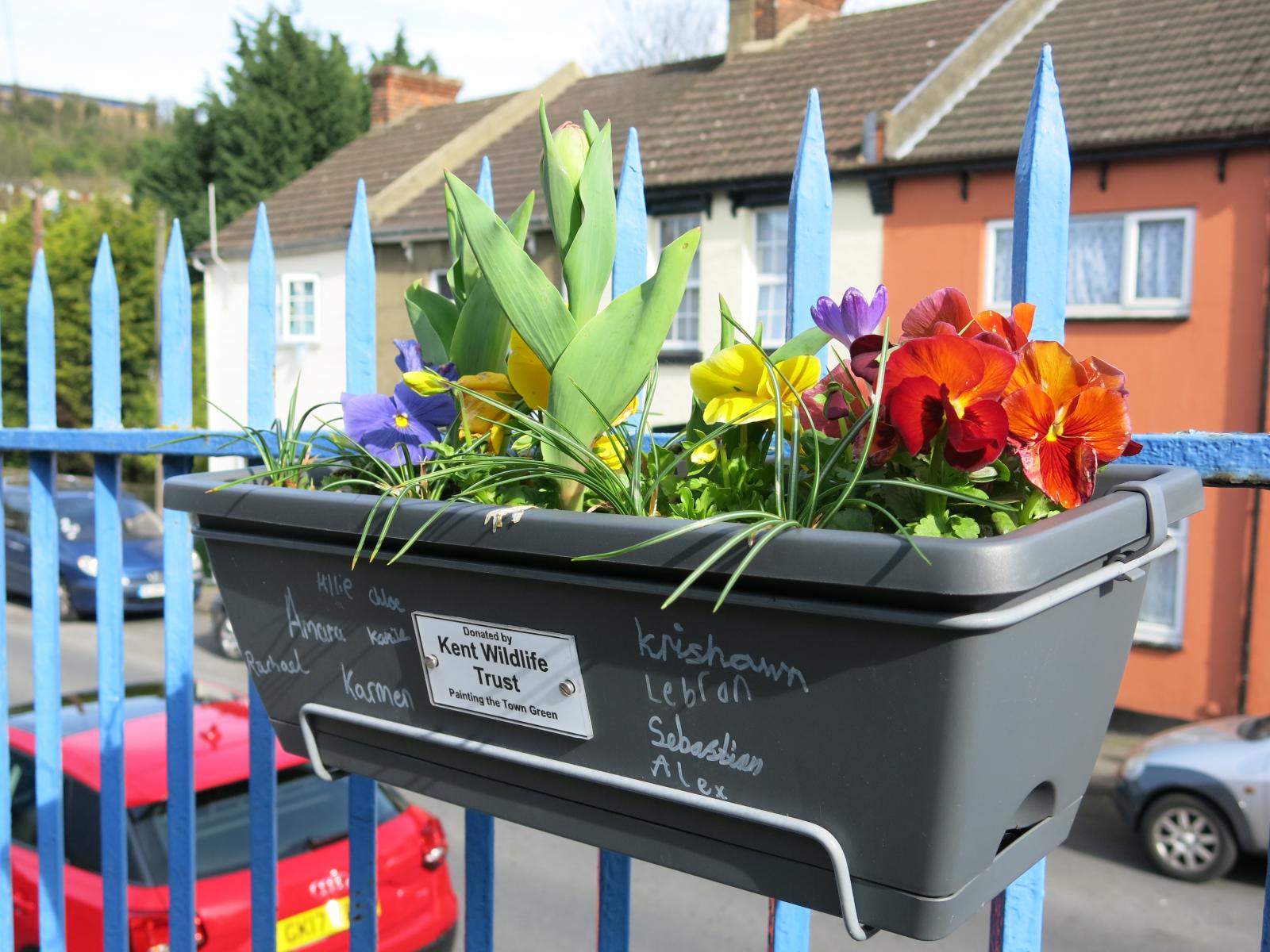
Painting the Town Green
Katie Gurdler, retrieved 08/31/2018