

Last updated: April 2022
Ekostaden Augustenborg is the collective name for a program to aims to transform Augustenborg into a more socially, economically and environmentally sustainable neighborhood. Ekostaden Augustenborg is one of Sweden´s largest urban sustainability projects. Aims and implemented measures were based on the wishes of local stakeholders and residents: No more flooding, green roofs, a musical theme playground, an open stormwater system (ref. 1).
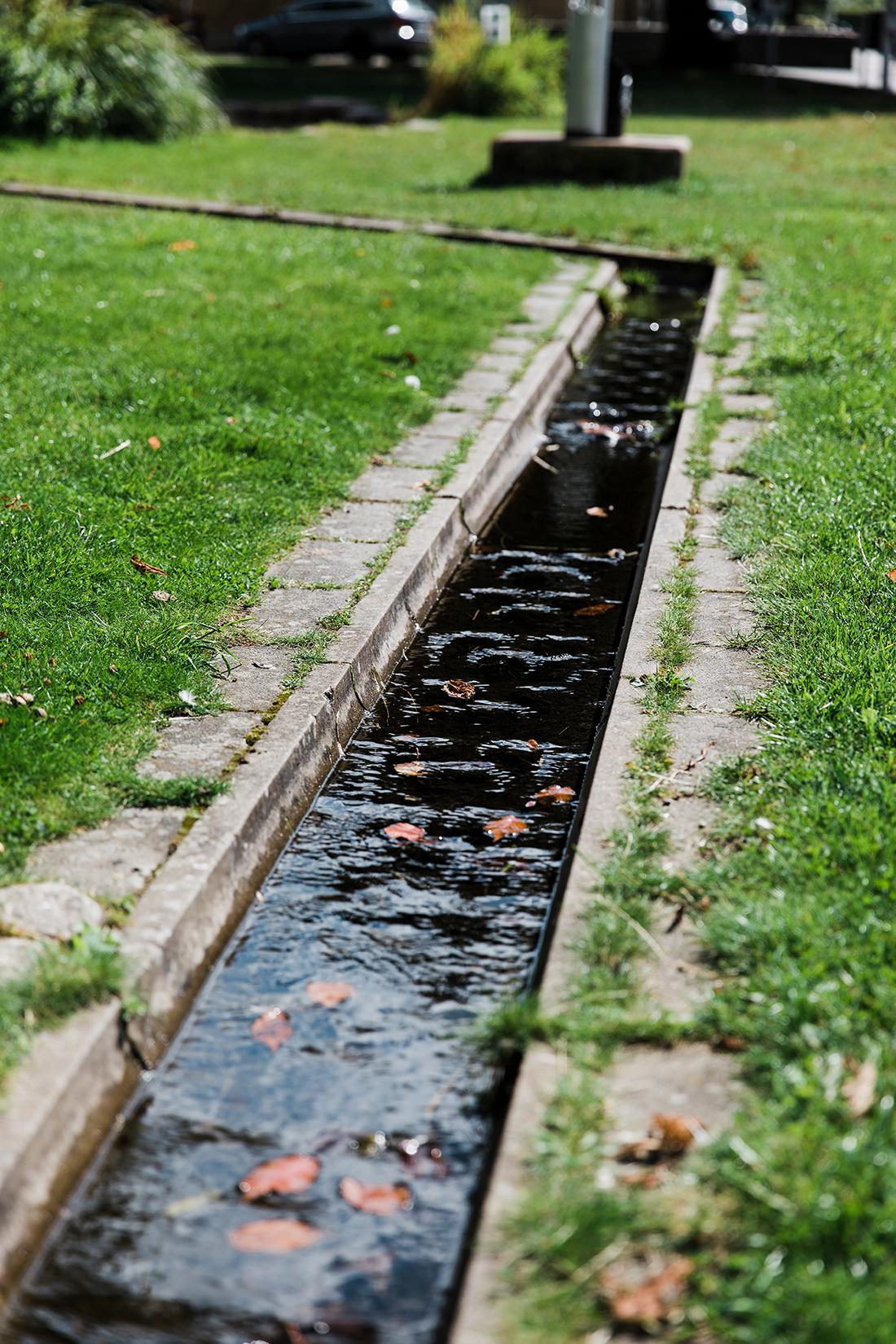
Stormwater Canal at the Eco City Augustenborg (2017)
Photographer: Sanna Dolck ([email protected]), retrieved 08/24/2018 from Linn Johansson
Overview
Nature-based solution
- Blue infrastructure
- Lakes/ponds
- Green areas for water management
- Sustainable urban drainage systems
- Nature on buildings (external)
- Green roofs
- Parks and urban forests
- Pocket parks/neighbourhood green spaces
Key challenges
- Green space, habitats and biodiversity (SDG 15)
- Habitat and biodiversity conservation
- Green space creation and/or management
- Regeneration, land-use and urban development
- Conversion of former industrial areas
- Water management (SDG 6)
- Stormwater and rainfall management and storage
- Improvements to water quality
- Inclusive and effective governance (SDG 16)
- Social justice, cohesion and equity (SDG 10)
- Social cohesion
- Social interaction
Focus
Creation of new green areas, Management and improved protection of rivers and other blue areas
Project objectives
The objectives of the intervention include reduction of floods, green roofs, open stormwater system, a musical theme playground. (ref. 1) The goals for the ponds and open water channels are to reduce flooding and increase the attractiveness in the area. It is seen as an integral part of the whole project aimed at social, economic and environmental sustainability.
(ref. 1, 2)
In 2001, the world's first botanical roof garden opened in Augustenborg with the aim of promoting the use of lightweight vegetation layers on roofs in Scandinavia. Creating green roofs in the area also aimed at reclaiming nature and achieving other benefits.
(ref. 1, 2)
The project was also set to involve the residents as much as possible in the idea phase and the implementation of the sub-projects (ref. 2).
Implementation activities
The storm water system has gone through a major change. Green roofs and open storm water channels leading into ponds have stopped the flooding in the area and have created a beautiful environment and a richer biodiversity. The MKB houses have 2 100 m2 green roofs, apart from the large facility at the Botanical Roof Garden covering 9 000 m2. Parks and traffic areas have been redesigned, the courtyards and the facades have been rebuilt and renewed after input from the residents. New apartments for senior citizens have been built with plenty of activities for the residents. The green areas have increased and have been enriched, without compromising the special style of the fifties. A large solar power station contributes energy to the area. The local school now has sustainable solutions and a local car pool is started (ref. 1)
Biodiversity conservation or restoration-focused activities
Biodiversity conservation:
- Protect and enhance urban habitats
- Preserve and strengthen existing habitats and ecosystems
- Protect species
- Undertake specific measures to protect species
Main beneficiaries
- Local government/Municipality
- Private sector/Corporate/Company
- Researchers/University
- Citizens or community groups
Governance
Management set-up
- Co-governance with government and non-government actors
Type of initiating organisation
- Local government/municipality
- Private sector/corporate actor/company
Participatory approaches/ community involvement
- Co-planning (e.g. stakeholder workshops, focus groups, participatory mapping)
- Taskforce groups
- Dissemination of information and education
- Consultation (e.g. workshop, surveys, community meetings, town halls)
- Joint implementation (e.g. tree planting)
Details on the roles of the organisations involved in the project
Ekostaden has been developed together with the MKB housing company, the Fosie disctrict and technical departments in Malmö. Approximately one fifth of the tenants in the area have participated in dialogue meetings about the project and some have become very active in the development of the area (ref. 1).
Project implemented in response to ...
... an EU policy or strategy?
Unknown
... a national policy or strategy?
Yes
(“The Ekostaden project started on March 18 1998 when the minister Anna Lindh from the Swedish government announced that Ekostaden Augustenborg was one of the Malmö projects which were granted funding from the government’s Local Investment Programme to make Augustenborg a more socially, economically and environmentally sustainable neighborhood.” (Ref. 1))
... a local policy or strategy?
Unknown
Financing
Total cost
More than €4,000,000
Source(s) of funding
- Public national budget
- Public local authority budget
- Corporate investment
- EU funds
Type of funding
- Direct funding (grants, subsidies, or self-financed projects by private entities)
Non-financial contribution
Type of non-financial contribution
- Other
Who provided the non-financial contribution?
- Citizens (e.g. volunteering)
Impacts and Monitoring
Environmental impacts
- Water management and blue areas
- Improved water quality
- Increased protection against flooding
- Improved stormwater management
- Green space and habitat
- Increased green space area
- Increased conservation or restoration of ecosystems
- Increased number of species present
Economic impacts
- Attraction of business and investment
- Generation of income from NBS
- Other
Socio-cultural impacts
- Social justice and cohesion
- Improved liveability
- Improved access to urban green space
- Increased opportunities for social interaction
- Health and wellbeing
- Gain in activities for recreation and exercise
- Cultural heritage and sense of place
- Promotion of cultural diversity
- Education
- Increased knowledge of locals about local nature
Type of reported impacts
Expected impacts, Achieved impacts
Presence of formal monitoring system
Unknown
Presence of indicators used in reporting
Yes
Presence of monitoring/ evaluation reports
Yes
Availability of a web-based monitoring tool
No evidence in public records
References
1. Malmö Stad. (n.d.). Ekostaden Augustenborg - on the way towards a sustainable neighbourhood. Malmö stad, MKB fastighets AB. Available at: Source link (Accessed 31 July 2020)
2. Malmö Stad. (2019). Ekostaden Augustenborg. Hållbar stadsutveckling. Malmö Stad. Available at: Source link (Accessed 31 July 2020)
3. VA Syd. (2015). Ekostaden Augustenborg - en dagvattenvandring. VA SYD. Available at: Source link (Accessed 31 July 2020)
4. Malmö Stad. (2003) Green plan for Malmö 2003. Summary. Malmö stad. Available at: Source link (Accessed 31 July 2020)
5. MKB. (2013). Ekostaden Augustenborg vill bli bäst på biologisk mångfald. Pressmeddelande. MKB Fastighets AB. Available at: Source link (Accessed 31 July 2020)
6. Malmö Stad. (n.d.) Klimatanpassningsprojekt. Miljöbyggstrategi för Malmö. Available at: Source link (Accessed 31 July 2020)
2. Malmö Stad. (2019). Ekostaden Augustenborg. Hållbar stadsutveckling. Malmö Stad. Available at: Source link (Accessed 31 July 2020)
3. VA Syd. (2015). Ekostaden Augustenborg - en dagvattenvandring. VA SYD. Available at: Source link (Accessed 31 July 2020)
4. Malmö Stad. (2003) Green plan for Malmö 2003. Summary. Malmö stad. Available at: Source link (Accessed 31 July 2020)
5. MKB. (2013). Ekostaden Augustenborg vill bli bäst på biologisk mångfald. Pressmeddelande. MKB Fastighets AB. Available at: Source link (Accessed 31 July 2020)
6. Malmö Stad. (n.d.) Klimatanpassningsprojekt. Miljöbyggstrategi för Malmö. Available at: Source link (Accessed 31 July 2020)
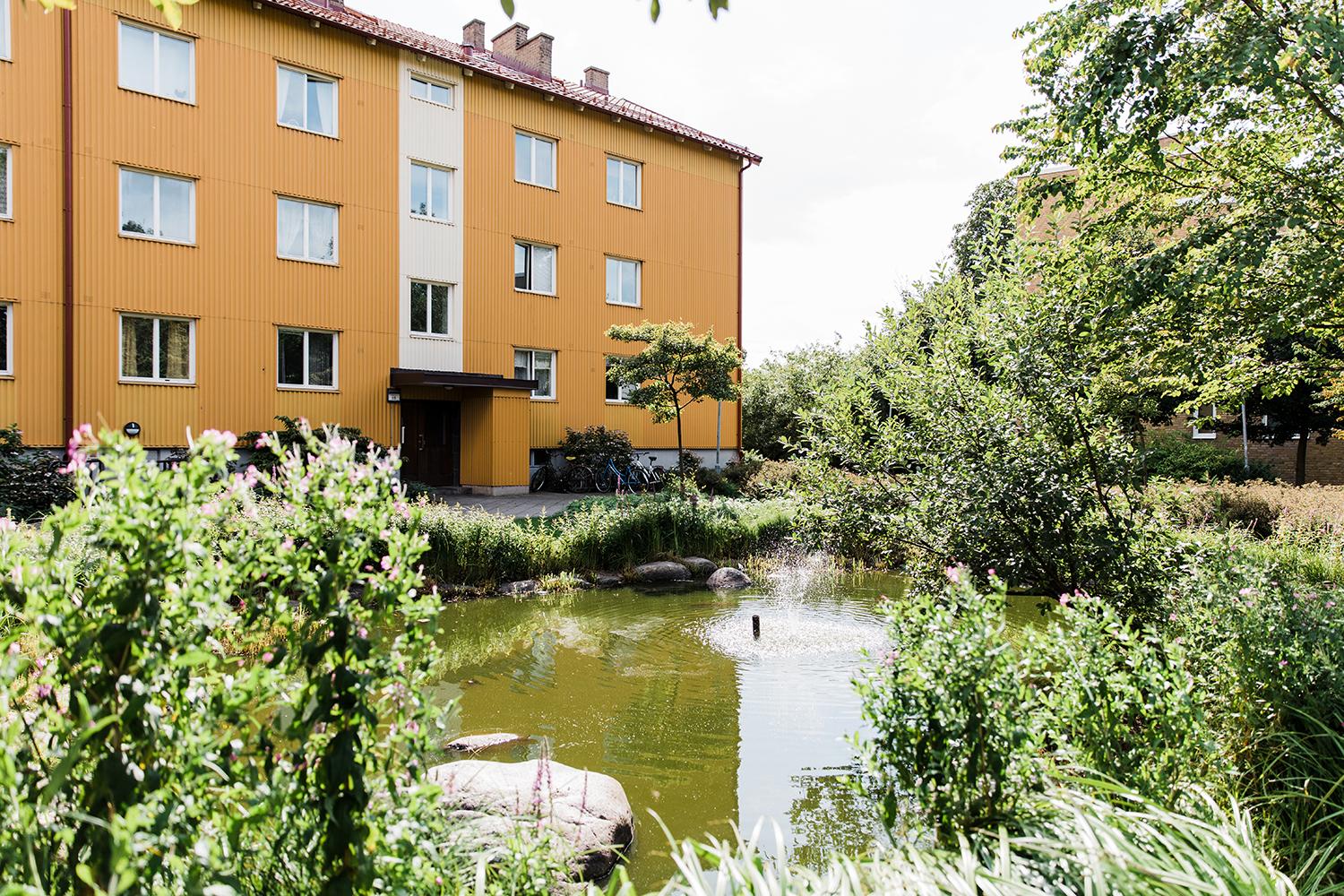
Pond at the Eco City Augustenborg (2017)
Photographer: Sanna Dolck ([email protected]), retrieved 08/24/2018 from Linn Johansson

Use of Solar Power at the Eco City Augustenborg (2017)
Photographer: Sanna Dolck ([email protected]), retrieved 08/24/2018 from Linn Johansson