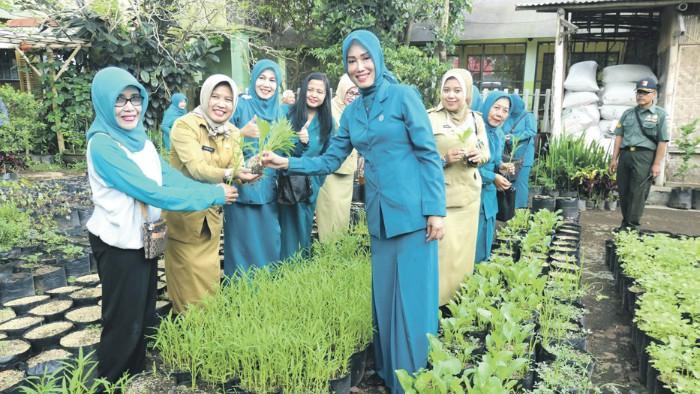
Kota Malang is a city for which urbanization coupled with climate change caused an increase in its vulnerability to the urban heat island effect. One of the solutions found to address this issue has been urban farming which has been recognised and acknowledged as a top strategy to improve cities' resilience associated with social and economic co-benefit. Nevertheless, urban farming inventory in Indonesia is still limited (1). Currently, there are 21 urban farming plots throughout Kota Malang, with 210 active urban farmers involved. The city has adopted this trend since 2013 as part of an initiative called Kawasan Rumah Pangan Lestari (Sustainable Food House Region) and the Initiative of Urban Farming Malang. Alongside the local government, the major stakeholder groups are the Department of Agriculture and Food Security of Malang, Family Welfare Empowerment (PKK) Malang and Bank Indonesia (BI) (Corporate Social Responsibility (CSR) program, which supports the local government in construction and development in Malang. In Kota Malang, urban farming comprises five types of urban farming: nursery, allotment, residential, institutional and rooftop farming based on its characteristics (1). A recent report showed that urban farming could contribute to community resilience for feeding potential and nutrient sufficiency, especially for targeted populations with the highest risk during emergencies such as the COVID-19 pandemic. In the case of Kota Malang, the cultivation of specific vegetables could feed up to 50,000 inhabitants aged 60-64 years old (1, 2).

Overview
Nature-based solution
- Community gardens and allotments
- Allotments
- Community gardens
Key challenges
- Climate action for adaptation, resilience and mitigation (SDG 13)
- Climate change adaptation
- Climate change mitigation
- Green space, habitats and biodiversity (SDG 15)
- Green space creation and/or management
- Inclusive and effective governance (SDG 16)
- Inclusive governance
- Social justice, cohesion and equity (SDG 10)
- Social cohesion
- Sustainable consumption and production (SDG 12)
- Sustainable consumption
- Sustainable production
Focus
Project objectives
Implementation activities
Climate-focused activities
Climate change adaptation:
- Increase or improve urban vegetation cover to help reduce outdoor temperature
Climate change mitigation:
- Sustainable agriculture practices to reduce energy use or carbon emissions
Main beneficiaries
- Local government/Municipality
- Citizens or community groups
- Food producers and cultivators (i.e. farmers, gardeners)
Governance
Management set-up
- Government-led
Type of initiating organisation
- Local government/municipality
- Public sector institution
Participatory approaches/ community involvement
- Joint implementation (e.g. tree planting)
- Co-management/Joint management
Details on the roles of the organisations involved in the project
Project implemented in response to ...
Financing
Total cost
Source(s) of funding
- Public local authority budget
- Corporate investment
Type of funding
- Earmarked public budget
- Direct funding (grants, subsidies, or self-financed projects by private entities)
Non-financial contribution
- Provision of labour
Impacts and Monitoring
Environmental impacts
- Climate change
- Lowered local temperature
- Green space and habitat
- Increased green space area
Economic impacts
- Increase in agricultural production (for profit or not)
- Generation of income from NBS
Socio-cultural impacts
- Social justice and cohesion
- Improved access to urban green space
- Increased involvement of locals in the management of green spaces
- Increased access to healthy/affordable food
- Other
Type of reported impacts
Presence of formal monitoring system
Presence of indicators used in reporting
Presence of monitoring/ evaluation reports
Availability of a web-based monitoring tool
References
2. Atmaja T., Kusyati N., Fukushi K. (2021), Community Resilience and Empowerment Through Urban Farming Initiative as Emergency Response, available at Source link (accessed 1-4-2023)
3. Nur Ahmad Said NST, Asep Nurjaman (2020), Food Security Improvement Policy in Urban Area Through Urban Farming Program in Malang (Studies in the Department of Agriculture and Food Security Malang), available at Source link (accessed 1-4-2023)
4. Giriwati N. S. S., Citraningrum A., and Setyabudi I. (2018), Urban farming: people preference towards verticulture model in small housing type- settlements in Malang as sustainable landscape movement, available at Source link (accessed 1-4-2023)
5. Indonesian Government (no date), KAWASAN RUMAH PANGAN LESTARI - KRPL, available at Source link (accessed 13-04-2023)