

Last updated: October 2021
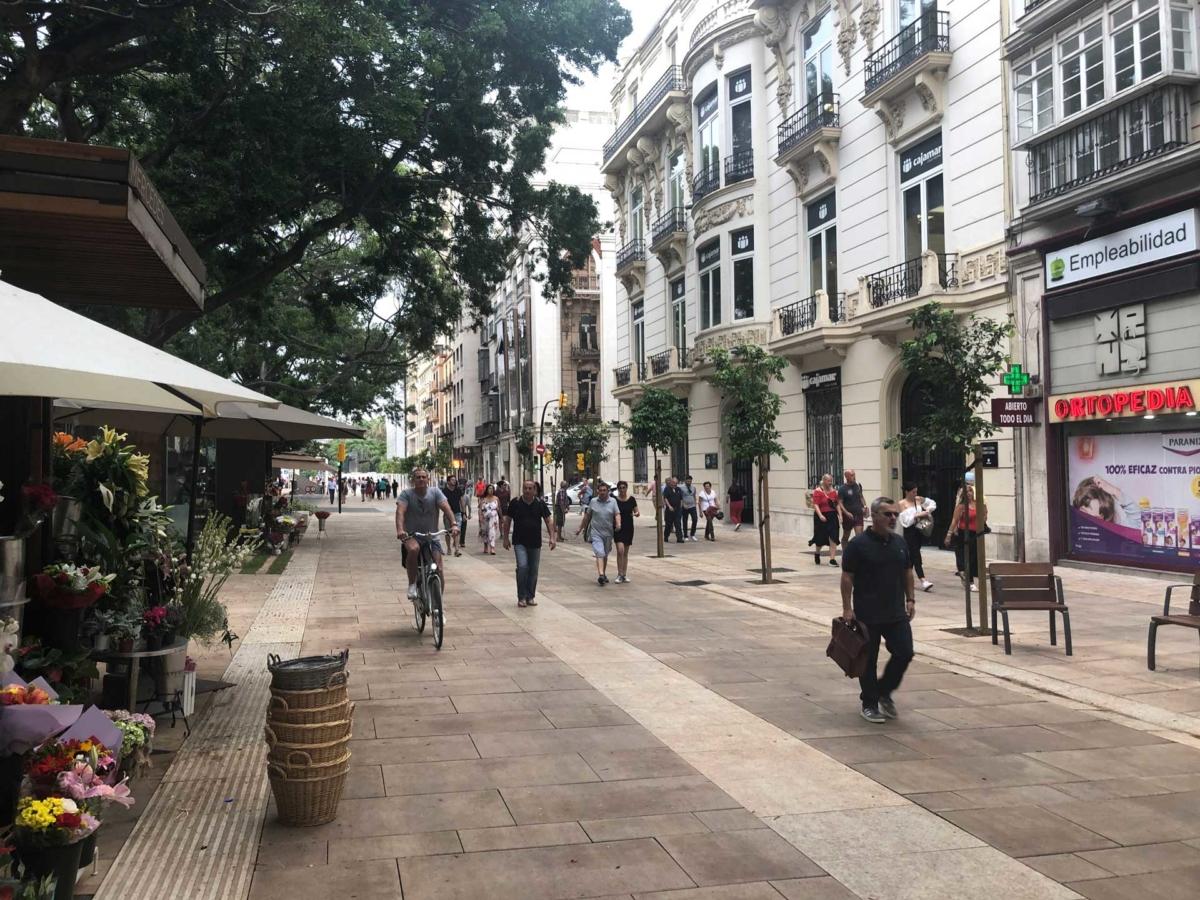
The rehabilitation of the main road Alameda Principal seeks to invert the previous distribution of use of space that saw 70% of it devoted to car usage and 30% to pedestrian use, after the intervention the situation should be 75% civilian and pedestrian space and 25% for cars. (Ref. 4,5) More public spaces, green areas, walks, bike lanes and leisure facilities will characterize this action, which also prioritizes highlighting the identity of this area of the city and value its architectural elements, patrimonial, wooded vault and cultural links. (Ref. 4)

Source: Ref. 8
Overview
Nature-based solution
- Grey infrastructure featuring greens
- Alley or street trees and other street vegetation
- Green areas for water management
- Sustainable urban drainage systems
Key challenges
- Water management (SDG 6)
- Stormwater and rainfall management and storage
- Green space, habitats and biodiversity (SDG 15)
- Green space creation and/or management
- Regeneration, land-use and urban development
- Regulation of built environment
- Inclusive and effective governance (SDG 16)
- Inclusive governance
- Social justice, cohesion and equity (SDG 10)
- Social justice and equity
- Social interaction
- Health and well-being (SDG 3)
- Enabling opportunities for physical activity
- Creation of opportunities for recreation
- Cultural heritage and cultural diversity
- Preservation of natural heritage
- Protection of historic and cultural landscape/infrastructure
- Preservation of historic traditions
Focus
Creation of new green areas
Project objectives
Transform a road space for greater pedestrian use (Ref. 4)
The recovery of this unique enclave as a meeting place. (Ref. 4)
Promote architectural and cultural values of the city. (Ref. 4)
Implementation activities
Phase 1: north section, phase 2: central spine and pedestrian zone, phase 3: south section (ref 4,5)
The sidewalks will be restructured to ensure universal accessibility and prioritize pedestrian access and mobility. (ref 4)
Public transport will continue to be prioritized, so the central lanes on the road will be dedicated to public transport (3 lanes) and 2 lanes will be for private cars. (ref 4,5)
The north pedestrian area will now have access to the Malaga metro (ref 4)
The central island between traffic (7 meters wide) along the length of the road will be a space for leisure and bicycle lanes. (ref 2)
In round areas Photocatalytic percolated concrete, which Resistance decontaminating properties; While the pedestrian zones will be paved with prefabricated elements (ref 2)
Installation of certain areas with draining pavements that will allow the regeneration of aquifers and provide for the care taking of the facilites. (ref 4)
The new Alameda will also enhance its plant heritage, made up of its characteristic ficus vault. (ref 4)
Generation of an area to protect plant elements, and trees should be able to grow without interference from furniture elements (ref 9)
The City Council will provide references to all the protected buildings, since 78 percent of the buildings that are located in the Alameda have historical heritage value and have some type of protection. In addition, the traces of the old San Lorenzo Fort will be marked on the pavement and reference will be made to the figure of Miguel de Cervantes. (ref 4)
Participatory process to collect ideas for the Alameda with 'neighbors, merchants in the area and inhabitants of the city of Malaga' (ref 10)
Main beneficiaries
- Local government/Municipality
- Citizens or community groups
Governance
Management set-up
- Government-led
Type of initiating organisation
- Local government/municipality
Participatory approaches/ community involvement
- Co-planning (e.g. stakeholder workshops, focus groups, participatory mapping)
- Consultation (e.g. workshop, surveys, community meetings, town halls)
Details on the roles of the organisations involved in the project
Local government of Malaga: Coordination of the project (Ref 3,10)
Municipal Management of Urbanism, Works and Infrastructures (within the local government): Implementation of project (ref 3,7,10)
Junta de Andalucia (regional government): assuming redevelopment of northern section of project (ref 4,7)
Arrabal-AID Association (social, non-profit organization): project support (ref 3,10)
Verosa company (construction company): contractor for renewing existing sanitation infrastructures in the subsoil (ref 7)
Acciona (infrastructure company), Sando (construction company): laying of the flooring (ref 14)
Project implemented in response to ...
... an EU policy or strategy?
Unknown
... a national policy or strategy?
Unknown
... a local policy or strategy?
Yes
(The restructuring of the Alameda is connected to the Metro expansion plan in the city of Malaga, which will connect this main pedestrian center to the city's metro system. (ref 3))
Financing
Total cost
More than €4,000,000
Source(s) of funding
- Public regional budget
- Public local authority budget
Type of funding
- Earmarked public budget
Non-financial contribution
Unknown
Impacts and Monitoring
Environmental impacts
- Water management and blue areas
- Improved stormwater management
- Green space and habitat
- Increased green space area
- Increased spread of native/heirloom/open-pollinated seed
Economic impacts
- Unknown
Socio-cultural impacts
- Social justice and cohesion
- Improved social cohesion
- Improved access to urban green space
- Increased opportunities for social interaction
- Increased involvement of locals in the management of green spaces
- Cultural heritage and sense of place
- Protection of natural heritage
- Protection of historic and cultural landscape / infrastructure
- Increased sense of place identity, memory and belonging
- Increased awareness of flora and fauna as culturally and historically meaningful
Type of reported impacts
Expected impacts, Achieved impacts
Presence of formal monitoring system
Unknown
Presence of indicators used in reporting
No evidence in public records
Presence of monitoring/ evaluation reports
No evidence in public records
Availability of a web-based monitoring tool
No evidence in public records
References
1. Ayuntamiento de Malaga. (2017). Nuevo Proyecto de la Alameda Principal. [Not available in 2020].
2. Ayuntamiento de Malaga. (2017). EL PROYECTO DE LA ALAMEDA RECUPERARÁ ESTE GRAN ESPACIO PARA LA CIUDADANÍA. [Not available in 2020].
3. Harrillo, Tamara. (2017). Alameda Principal Málaga Remodelación tras Obras del Metro. [Not available in 2020].
4. Andalucia Informacion. (2017). Así será la nueva Alameda Principal de Málaga a finales de 2018. Available at: Source link [Accessed: 19 September 2020].
5. Sau, Jose Antonio. (2017). Las obras para peatonalizar la Alameda empezarán en octubre. Available at: Source link [Accessed: 19 September 2020].
6. Ferrary, Miguel. (2017). Peatonalizar la Alameda y renovar Carretería, obras estrella para 2017. Retrieved July 19, 2017. Available at: Source link [Accessed: 19 September 2020].
7. Sanchez, S. (2019). La nueva Alameda Principal, a retazos. Source link. Available at: Source link [Accessed: 19 September 2020].
8. Navarro, M. (n.d.). La nueva Alameda Principal de Málaga es ya, casi, una realidad. Available at: Source link [Accessed: 19 September 2020].
9. Ayuntamiento de Malaga. (2019). Plan especial de control del aprovechamiento del espacio publico Alameda Principal. [Document provided].
10. La Alameda: Un proyecto de todos. (n.d.). La Alameda: Un proyecto de todos. Available at: Source link [Accessed: 19 September 2020].
11. La Alameda: Un proyecto de todos. (n.d.). La Alameda: Un proyecto de todos, Presentacion. Available at: Source link [Accessed: 20 September 2020].
12. Javier Albiñana. (2020). Las fotos de la Alameda Principal de Málaga. Source link. Available at: Source link [Accessed: 20 September 2020].
13. Pelaez, A. (2019). La nueva Alameda Principal ya está casi complete. Source link. Available at: Source link [Accessed: 20 September 2020].
14. Sanchez, S. (2020). La Alameda Principal gana más espacio peatonal. Source link. Available at: Source link [Accessed: 20 September 2020].
2. Ayuntamiento de Malaga. (2017). EL PROYECTO DE LA ALAMEDA RECUPERARÁ ESTE GRAN ESPACIO PARA LA CIUDADANÍA. [Not available in 2020].
3. Harrillo, Tamara. (2017). Alameda Principal Málaga Remodelación tras Obras del Metro. [Not available in 2020].
4. Andalucia Informacion. (2017). Así será la nueva Alameda Principal de Málaga a finales de 2018. Available at: Source link [Accessed: 19 September 2020].
5. Sau, Jose Antonio. (2017). Las obras para peatonalizar la Alameda empezarán en octubre. Available at: Source link [Accessed: 19 September 2020].
6. Ferrary, Miguel. (2017). Peatonalizar la Alameda y renovar Carretería, obras estrella para 2017. Retrieved July 19, 2017. Available at: Source link [Accessed: 19 September 2020].
7. Sanchez, S. (2019). La nueva Alameda Principal, a retazos. Source link. Available at: Source link [Accessed: 19 September 2020].
8. Navarro, M. (n.d.). La nueva Alameda Principal de Málaga es ya, casi, una realidad. Available at: Source link [Accessed: 19 September 2020].
9. Ayuntamiento de Malaga. (2019). Plan especial de control del aprovechamiento del espacio publico Alameda Principal. [Document provided].
10. La Alameda: Un proyecto de todos. (n.d.). La Alameda: Un proyecto de todos. Available at: Source link [Accessed: 19 September 2020].
11. La Alameda: Un proyecto de todos. (n.d.). La Alameda: Un proyecto de todos, Presentacion. Available at: Source link [Accessed: 20 September 2020].
12. Javier Albiñana. (2020). Las fotos de la Alameda Principal de Málaga. Source link. Available at: Source link [Accessed: 20 September 2020].
13. Pelaez, A. (2019). La nueva Alameda Principal ya está casi complete. Source link. Available at: Source link [Accessed: 20 September 2020].
14. Sanchez, S. (2020). La Alameda Principal gana más espacio peatonal. Source link. Available at: Source link [Accessed: 20 September 2020].
Source: Ref. 8

Source: Ref. 8

Source: Ref. 12, JAVIER ALBIÑANA

Source: Ref. 12, JAVIER ALBIÑANA

Source: Ref. 7, JAVIER ALBIÑANA