

Last updated: June 2024
The project is part of a bigger initiative aimed at restoring the coastal forest near the city of Mahajanga in western Madagascar. Alongside 2 international NGOs, the community located in the bay next to the city of Mahajanga implemented the intervention with the ultimate goal being to transition the land into a protected area as part of the greater "Mahajanga Green Belt Project". The regrowing forest will form the northwestern end of the greater Mahajanga Green Belt, with the southeast meets the Ankarafantsika National Park. The project also has a gendered aspect as it aimed to employ mostly the women in the suburbs of the city. (1,3)
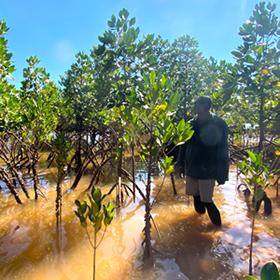
Northwestern Madagascar
https://edenprojects.org/madagascar/
Overview
Nature-based solution
- Blue infrastructure
- Coastlines
- Coastal wetland, mangroves and salt marshes
- Parks and urban forests
- Large urban parks or forests
- Green corridors and green belts
Key challenges
- Climate action for adaptation, resilience and mitigation (SDG 13)
- Climate change adaptation
- Coastal resilience and marine protection (SDG 14)
- Coastal protection / hazard mitigation
- Marine and coastal biodiversity protection
- Environmental quality
- Soil quality improvement
- Green space, habitats and biodiversity (SDG 15)
- Habitat and biodiversity restoration
- Water management (SDG 6)
- Flood protection
- Economic development and employment (SDG 8)
- Employment/job creation
Focus
Creation of new green areas, Coastal landscape management or protection, Ecological restoration of ecosystems, Knowledge creation and awareness raising
Project objectives
The main objectives of the intervention are as following:
1. To expand one of the world's richest and most distinctive tropical dry forests;
2. To contribute to saving critically endangered plants and animals by increasing the biodiversity in the area;
3. To contribute to the creation of the Mahajanga Green Belt;
4. To provide stability against erosion and improve ocean and coral reef health;
5. To reforest land devastated by slash and burn practices;
6. To protect against flooding;
7. To restore and expand vital animal habitat;
8. To raise awareness of a feminine way of responding to ecological crises and climate change (1,2,3,4).
Implementation activities
The restoration area is inhabited. It is a wide-open flat area covered by tropical secondary grasslands, which dominates, with very scattered palm trees. A fringe of the forest is found along the escarpments of the cliff overlooking the Indian Ocean. The first planted seedlings in 2017 were provided from a tree nursery in Mahajanga. The TreeSisters NGO funded nursery was constructed in 2018, with the seedlings from the new on-site nursery to be planted beginning January 2019.
The project started in Oct 2017.
In 2017-2018 the annual plan was to plant 30,000 dry deciduous seedlings and 170,000 mangrove propagules along the Western side of the degraded mangrove estuary system. The NGO organised as well community awareness/sensitization meetings. (4)
Climate-focused activities
Climate change adaptation:
- Implement measures that prevent/manage desertification, soil erosion and landslides
- Protect coastal and freshwater ecosystems to prevent coastal erosion and pollution
Biodiversity conservation or restoration-focused activities
Biodiversity restoration:
- Rehabilitate and restore damaged or destroyed ecosystems
- Restore species (native, endangered, or unspecified)
- Restore native species
- Restore valued species
Main beneficiaries
- Non-government organisation/Civil Society
- Citizens or community groups
- Marginalized groups: Socio-economically disadvantaged populations (e.g. low-income households, unemployed)
Governance
Management set-up
- Led by non-government actors
Type of initiating organisation
- Non-government organisation/civil society
Participatory approaches/ community involvement
- Dissemination of information and education
- Joint implementation (e.g. tree planting)
Details on the roles of the organisations involved in the project
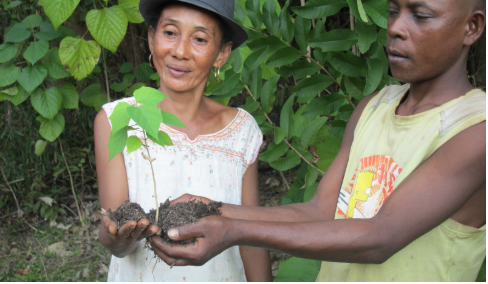
The initiative was funded and led by an NGO called TreeSisters as part of the Eden Reforestation Projects. TreeSisters is a global network of women who donate monthly to fund the restoration of tropical forests as a collective expression of planetary care. Alongside the TreeSisters, the project fell under the Eden Reforestation Projects, a partner of the intervention. Eden works directly with villages and communities suffering from extreme poverty resulting from the deforestation and destruction of the land that sustains them. The 2 NGOs were aided by the local community in their planting activities. (1,4)
Project implemented in response to ...
... an EU policy or strategy?
No
... a national policy or strategy?
Unknown
... a local policy or strategy?
Unknown
Financing
Total cost
Unknown
Source(s) of funding
- Funds provided by non-governmental organization (NGO)
Type of funding
- Donations
Non-financial contribution
Type of non-financial contribution
- Provision of land
- Provision of labour
- Provision of expertise
Who provided the non-financial contribution?
- Citizens (e.g. volunteering)
Impacts and Monitoring
Environmental impacts
- Climate change
- Enhanced carbon sequestration
- Water management and blue areas
- Increased protection against flooding
- Enhanced protection and restoration of coastal and marine ecosystems
- Green space and habitat
- Increased green space area
- Increased conversion of degraded land or soil
- Reduced biodiversity loss
- Increased number of species present
Economic impacts
- Increase of green jobs (e.g. paid employment positions)
- Generation of income from NBS
Socio-cultural impacts
- Social justice and cohesion
- Fair distribution of social, environmental and economic benefits of the NBS project
- Other
Type of reported impacts
Expected impacts, Achieved impacts
Presence of formal monitoring system
Yes
Presence of indicators used in reporting
Yes
Presence of monitoring/ evaluation reports
No evidence in public records
Availability of a web-based monitoring tool
No evidence in public records
References
1. TreeSisters (no date), Madagascar: Dry Deciduous, available at Source link, (accessed 25-9-2021)
2. Eden Reforestation Projects (no date), Planting in Madagascar, available at Source link, (accessed 25-9-2021)
3. The Guardian (2019), Can planting billions of trees save the planet?, available at Source link, (accessed 25-9-2021)
4. TreeSisters (2019), Madgascar: Dry Decidous, available at Source link (accessed 25-9-2021)
5. Wikipedia (no date), Eden Reforestation Projects, available at Source link (accessed 25-9-2021)
6. TreeSisters (no date), FAQ, available at Source link, (accessed 25-9-2021)
7. World Bank (2020), In Madagascar, women’s empowerment is gaining ground, available at Source link (accessed 25-9-2021)
8. Youtube (2020), Monitoring and Verification | Eden Reforestation Projects | Vlog, available at Source link, (accessed 25-9-2021)
2. Eden Reforestation Projects (no date), Planting in Madagascar, available at Source link, (accessed 25-9-2021)
3. The Guardian (2019), Can planting billions of trees save the planet?, available at Source link, (accessed 25-9-2021)
4. TreeSisters (2019), Madgascar: Dry Decidous, available at Source link (accessed 25-9-2021)
5. Wikipedia (no date), Eden Reforestation Projects, available at Source link (accessed 25-9-2021)
6. TreeSisters (no date), FAQ, available at Source link, (accessed 25-9-2021)
7. World Bank (2020), In Madagascar, women’s empowerment is gaining ground, available at Source link (accessed 25-9-2021)
8. Youtube (2020), Monitoring and Verification | Eden Reforestation Projects | Vlog, available at Source link, (accessed 25-9-2021)
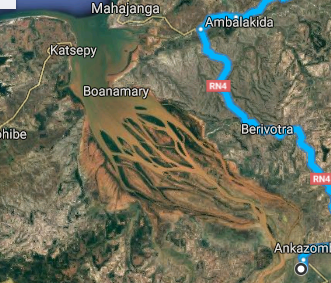
Aerial photo of the study area
https://treesisters.org/grow-forests/boeny-region-madgascar/madagascar-dry-deciduous
https://treesisters.org/grow-forests/boeny-region-madgascar/madagascar-dry-deciduous
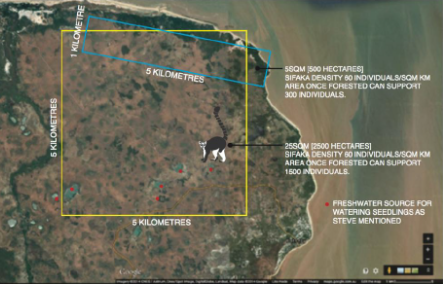
Aerial photo of the region where planting is done
https://treesisters.org/grow-forests/boeny-region-madgascar/madagascar-dry-deciduous
https://treesisters.org/grow-forests/boeny-region-madgascar/madagascar-dry-deciduous
Information about this nature-based solution was collected as part of the UNA global extension project funded by the British Academy.