

Last updated: October 2021
The intervention involves the transformation of a long-time fenced construction site, which was underdeveloped since 2011. The municipality, which owns the site, first agreed to support the cultural association KUD Obrat and their project idea with a lease for a month-long use, but later it prolonged its support based on local community’s response to the intervention. The place became a community space while the project enhances and promotes the possibilities for urban gardening as well as a more active inclusion of the inhabitants in decision-making regarding planning, development and management of the city (1).
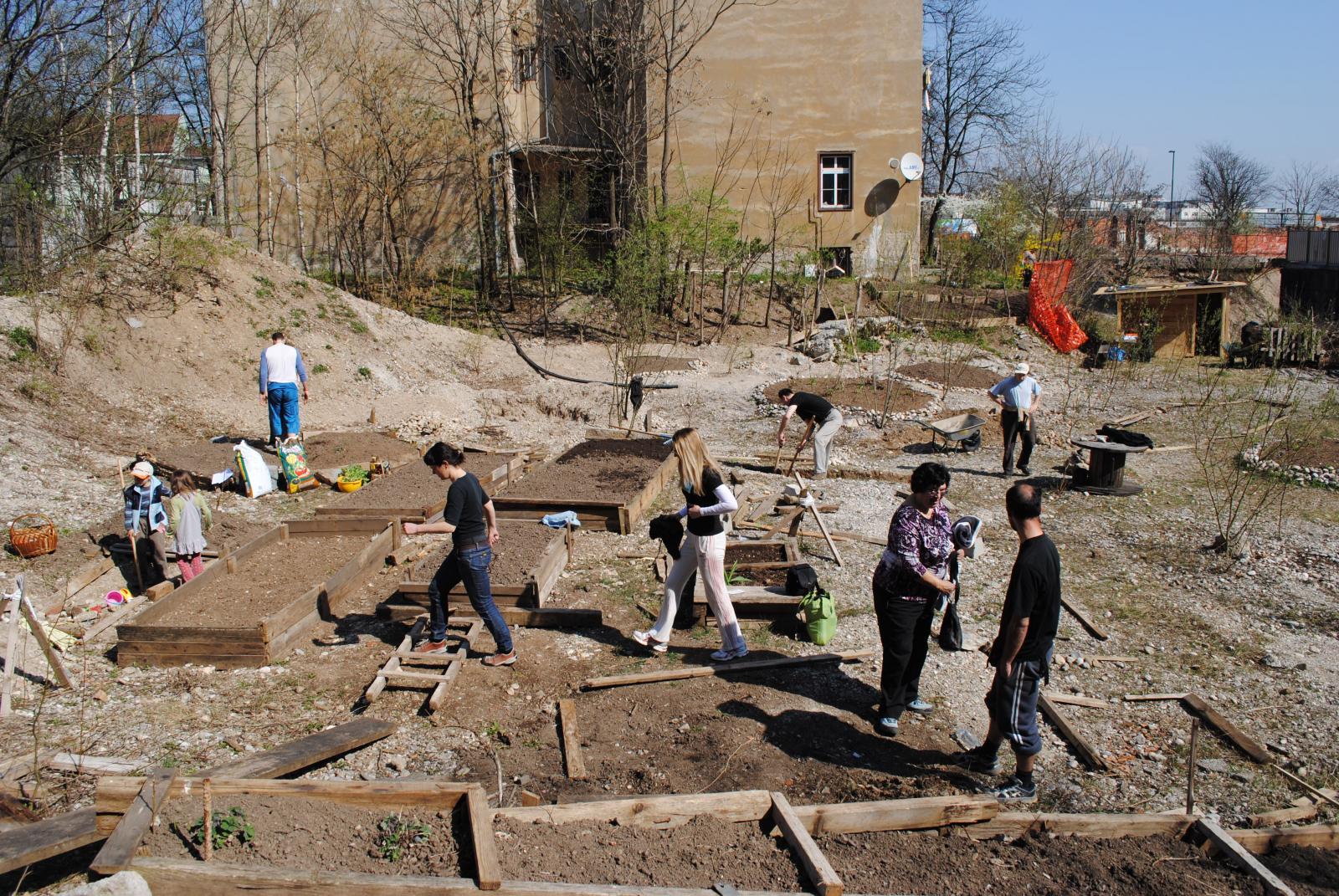
Urban Gardening in Ljubljana
Photographer Suzana Kajba (2011), retrieved 07/23/2018 from Polonca Lovsin
Overview
Nature-based solution
- Community gardens and allotments
- Allotments
- Community gardens
Key challenges
- Green space, habitats and biodiversity (SDG 15)
- Green space creation and/or management
- Inclusive and effective governance (SDG 16)
- Effective management
- Social justice, cohesion and equity (SDG 10)
- Environmental education
- Health and well-being (SDG 3)
- Creation of opportunities for recreation
- Economic development and employment (SDG 8)
- Economic development: agriculture
- Sustainable consumption and production (SDG 12)
- Sustainable production
Focus
Creation of new green areas, Transformation of previously derelict areas
Project objectives
Use of a long time closed construction site in the city centre for the development of communal gardens, education and recreation. (1)
Implementation activities
With the permission of the Municipality of Ljubljana, the site opened for temporary use for the duration of Bunker’s Garden By the Way programme (the second half of August 2010). A gate was installed to allow access to the land, the site was cleaned, learning about and preserving the trees and wild plants that had taken root there and carting in the first cubic meters of soil were done. The spring of 2011 brought new energy to the project when local residents responded to our invitation to “Make Your Own Garden”. The invitation anticipated the desire for small-plot gardening based on the rich local tradition of that practice. More than twenty people came to the meeting and that very day began enthusiastically setting up their vegetable beds. Thus the project got started and the gardening is still continuing. (1, 2 and 3)
Main beneficiaries
- Non-government organisation/Civil Society
- Citizens or community groups
Governance
Management set-up
- Led by non-government actors
Type of initiating organisation
- Non-government organisation/civil society
- Citizens or community group
Participatory approaches/ community involvement
- Co-planning (e.g. stakeholder workshops, focus groups, participatory mapping)
- Crowd-sourcing/Crowd-funding/Participatory budget
- Dissemination of information and education
- Consultation (e.g. workshop, surveys, community meetings, town halls)
- Joint implementation (e.g. tree planting)
Details on the roles of the organisations involved in the project
KUD Obrat (an association of citizens) started the initiatie and gained permission of the city to continue it as it is on the community owned land (1)
Project implemented in response to ...
... an EU policy or strategy?
Unknown
... a national policy or strategy?
Unknown
... a local policy or strategy?
Unknown
Financing
Total cost
Not applicable
Source(s) of funding
- Unknown
Type of funding
- Unknown
Non-financial contribution
Type of non-financial contribution
- Provision of land
- Provision of labour
Who provided the non-financial contribution?
- Public authorities (e.g. land, utility services)
- Citizens (e.g. volunteering)
- Other
Impacts and Monitoring
Environmental impacts
- Green space and habitat
- Increased green space area
- Increased number of species present
- Restoration of derelict areas
Economic impacts
- Increase in agricultural production (for profit or not)
Socio-cultural impacts
- Social justice and cohesion
- Improved social cohesion
- Increased involvement of locals in the management of green spaces
- Increased access to healthy/affordable food
- Increased sustainability of agriculture practices
- Cultural heritage and sense of place
- Improvement in people’s connection to nature
- Education
- Increased support for education and scientific research
- Increased knowledge of locals about local nature
- Increased awareness of NBS and their benefits
Type of reported impacts
Achieved impacts
Presence of formal monitoring system
Unknown
Presence of indicators used in reporting
No evidence in public records
Presence of monitoring/ evaluation reports
No evidence in public records
Availability of a web-based monitoring tool
No evidence in public records
References
1. KUD Obrat (2020). Beyond a Construction Site: A Community-Based Garden Intervention in a Degraded Urban Space in Ljubljana. available at Source link. Accessed on 5th November, 2020.
2. KUD Obrat (2020). Onkraj gradbišča. available at Source link. accessed on 5th November, 2020
3. Poljak Istenič Saša. (2016) Reviving Public Spaces through Cycling and Gardening. Etnološka Tribina 39, vol. 46., str. 157-175.
2. KUD Obrat (2020). Onkraj gradbišča. available at Source link. accessed on 5th November, 2020
3. Poljak Istenič Saša. (2016) Reviving Public Spaces through Cycling and Gardening. Etnološka Tribina 39, vol. 46., str. 157-175.
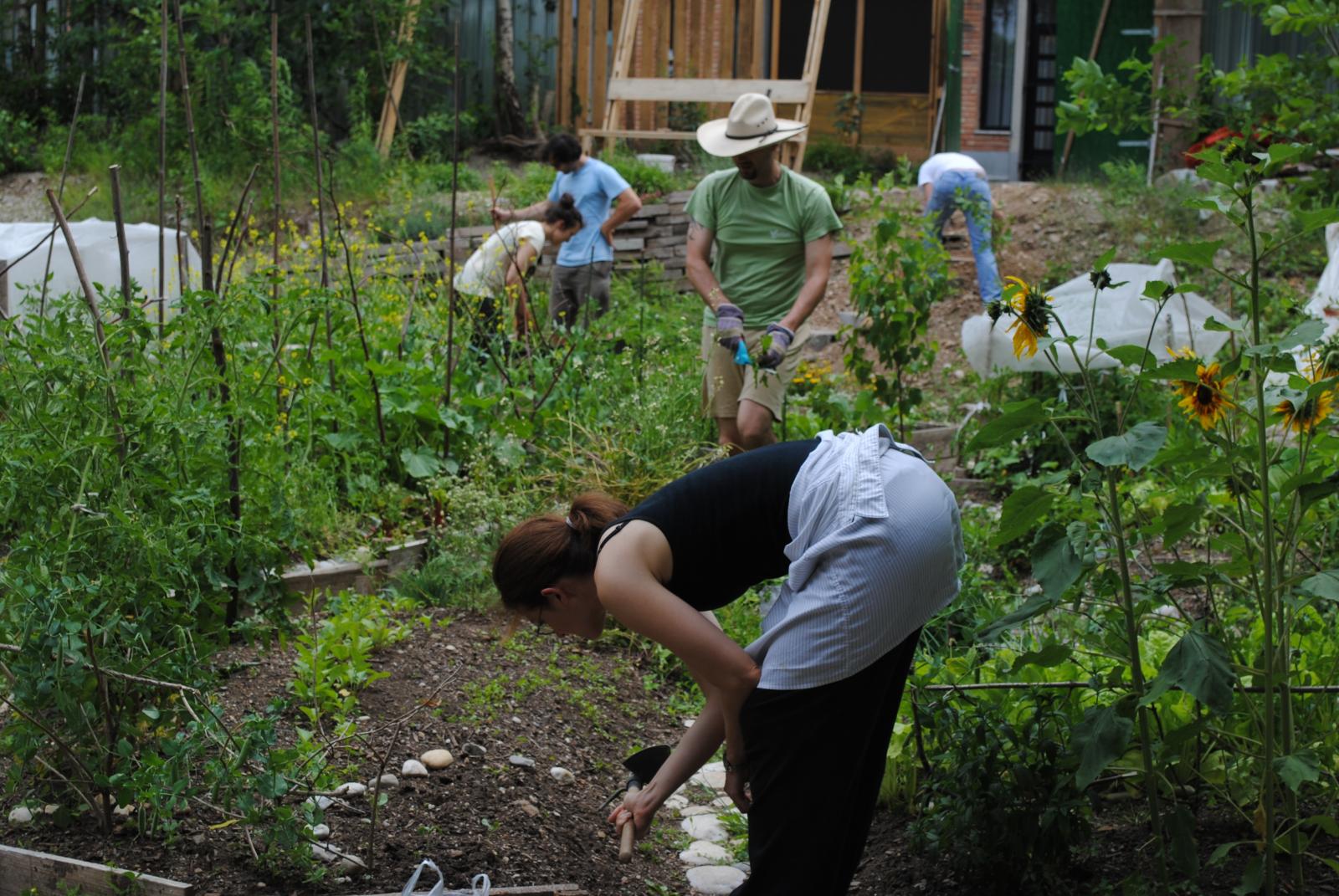
Urban Gardening in Ljubljana
Photographer: Gregor Gobec (2011), retrieved 07/23/2018 from Polonca Lovsin