

Last updated: October 2021
Revitalization of Rakova Jelša includes cleaning of the informal waste area and renovating it in a park which connects the city with the Marsh Landscape Park. In two phases, the park area was arranged together with the children's playground and the footbridge over Lahov graben. The possibility of regulated urban self-sufficient agriculture or gardens in the immediate vicinity of the city center means the added value of this area. (1)
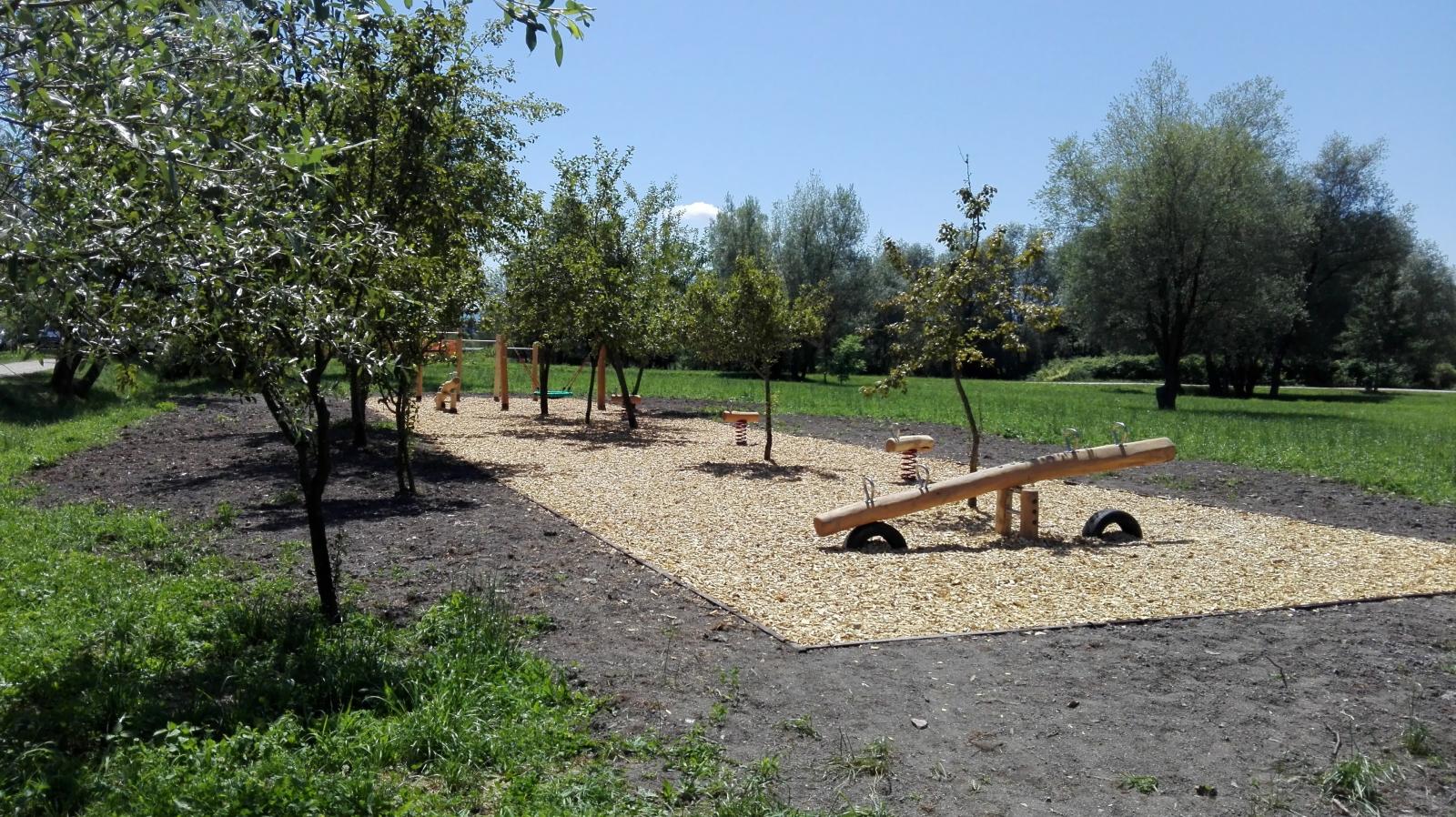
Revitalization of Rakova Jelša
City of Ljubljana Photo Archives, retrieved 09/04/2018 from Alja Bebar (Office for Public Relations)
Overview
Nature-based solution
- Parks and urban forests
- Large urban parks or forests
- Community gardens and allotments
- Other
Key challenges
- Climate action for adaptation, resilience and mitigation (SDG 13)
- Climate change mitigation
- Green space, habitats and biodiversity (SDG 15)
- Green space creation and/or management
- Environmental quality
- Air quality improvement
- Waste management
- Regeneration, land-use and urban development
- Promote natural styles of landscape design for urban development
- Health and well-being (SDG 3)
- Enabling opportunities for physical activity
- Improving mental health
- Creation of opportunities for recreation
Focus
Creation of new green areas, Transformation of previously derelict areas
Project objectives
The goal of the project was to link the city with Ljubljana Marsh Landscape Park on the N – S axis towards the Ljubljanica and to transform the degraded land into recreational areas by cleaning it up, greening it and adding street furniture. The aim was also to revitalize the whole neighbourhood which has a poor reputation due to immigrants who settled there and to include them in the governance of the area and to improve the quality of life in the area (1).
Implementation activities
The project includes setting up of a children's playground in the Rakova jelša park and a footbridge over Lahov graben, the arrangement of the city gardens and the Rakova jelša city / public orchard and arrangement of the park area with picnic areas and connected the city with the Ljubljansko barje landscape park. The implementation activities included, laying out of sandy footpaths between areas and new info boards, installment of wooden street furniture and a small children's playground. The project has set up a walking axis from the city to the entrance to the Landscape Park. A once degraded environment has been ecologically renaturalised, grass was cut and planted with native trees. Additonaly, another public orchard has been developed in Rakova Jelša as well as communal gardens were built. (1 and 3)
Climate-focused activities
Climate change mitigation:
- Increase green urban nature for carbon storage (wetlands, tree cover)
- Invest in public transport/bicycle infrastructure as a means to prevent car use
Main beneficiaries
- Citizens or community groups
- Young people and children
Governance
Management set-up
- Co-governance with government and non-government actors
Type of initiating organisation
- Local government/municipality
- Non-government organisation/civil society
Participatory approaches/ community involvement
- Co-planning (e.g. stakeholder workshops, focus groups, participatory mapping)
- Dissemination of information and education
- Consultation (e.g. workshop, surveys, community meetings, town halls)
- Joint implementation (e.g. tree planting)
Details on the roles of the organisations involved in the project
The initiative was introduced by an NGO, which is an indication of civil society's interest in the quality of urban green spaces. The project began to develop in the frame of the exhibition series entitled THE VISIONS EXIST by the Architects’ Society of Ljubljana, which draws attention to overlooked issues regarding Ljubljana and its numerous unused areas. Later on, the municipality took over the organization and investment of the project. The new park is located on city land. Other stakeholders were the Institute of the Republic of Slovenia for Nature Conservation, which offered suggestions for native tree species, and the Ljubljana Marsh Nature Park, which has prepared a permanent exhibition in the park about the pile dwellers on Ljubljana's marshes. (4)
Project implemented in response to ...
... an EU policy or strategy?
Yes
(Directly related to European Green Capital status of Ljubljana in 2016 and the 7th EAP(1). )
... a national policy or strategy?
Unknown
... a local policy or strategy?
Yes
(In the Urban Master Plan of Ljubljana (The City of Ljubljana, 2010), 83% of all city development is directed towards the renewal of existing developed areas and brown fields (4).)
Financing
Total cost
€500,000 - €2,000,000
Source(s) of funding
- Public local authority budget
Type of funding
- Earmarked public budget
Non-financial contribution
Type of non-financial contribution
- Provision of labour
Who provided the non-financial contribution?
- Public authorities (e.g. land, utility services)
Impacts and Monitoring
Environmental impacts
- Environmental quality
- Improved air quality
- Improved waste management
- Green space and habitat
- Increased green space area
- Increased conservation or restoration of ecosystems
- Reduced biodiversity loss
- Increased number of species present
- Restoration of derelict areas
Economic impacts
- Unknown
Socio-cultural impacts
- Safety
- Increased perception of safety
- Decreased crime rates
- Social justice and cohesion
- Improved social cohesion
- Improved access to urban green space
- Increased opportunities for social interaction
- Health and wellbeing
- Improved physical health
- Gain in activities for recreation and exercise
- Cultural heritage and sense of place
- Improvement in people’s connection to nature
Type of reported impacts
Achieved impacts
Presence of formal monitoring system
Unknown
Presence of indicators used in reporting
No evidence in public records
Presence of monitoring/ evaluation reports
No evidence in public records
Availability of a web-based monitoring tool
No evidence in public records
References
1. Green Ljubljana. (2016) Rakova Jelša. available at Source link. [site under construction as on 5th November, 2020]
2. Száraz, L. and Nastran, M. (2015) Ljubljana, Case Study City Portrait; part of a GREEN SURGE study on urban green infrastructure planning and governance in 20 European cities. available at Source link. accessed on 5th November, 2020.
3. Ljubljana Municipality. (2016) Rakova Jelša. available at Source link. accessed on 5th November, 2020.
4. Nastran Mojca and Regina Helene (2016) Advancing urban ecosystem governance in Ljubljana. Environmental Science & Policy Volume 62, August 2016, Pages 123-126. available at Source link. accessed on 5th November, 2020.
5. BigSee (n.d.) City park Rakova Jelša. available at Source link. accessed on 5th November, 2020.
2. Száraz, L. and Nastran, M. (2015) Ljubljana, Case Study City Portrait; part of a GREEN SURGE study on urban green infrastructure planning and governance in 20 European cities. available at Source link. accessed on 5th November, 2020.
3. Ljubljana Municipality. (2016) Rakova Jelša. available at Source link. accessed on 5th November, 2020.
4. Nastran Mojca and Regina Helene (2016) Advancing urban ecosystem governance in Ljubljana. Environmental Science & Policy Volume 62, August 2016, Pages 123-126. available at Source link. accessed on 5th November, 2020.
5. BigSee (n.d.) City park Rakova Jelša. available at Source link. accessed on 5th November, 2020.