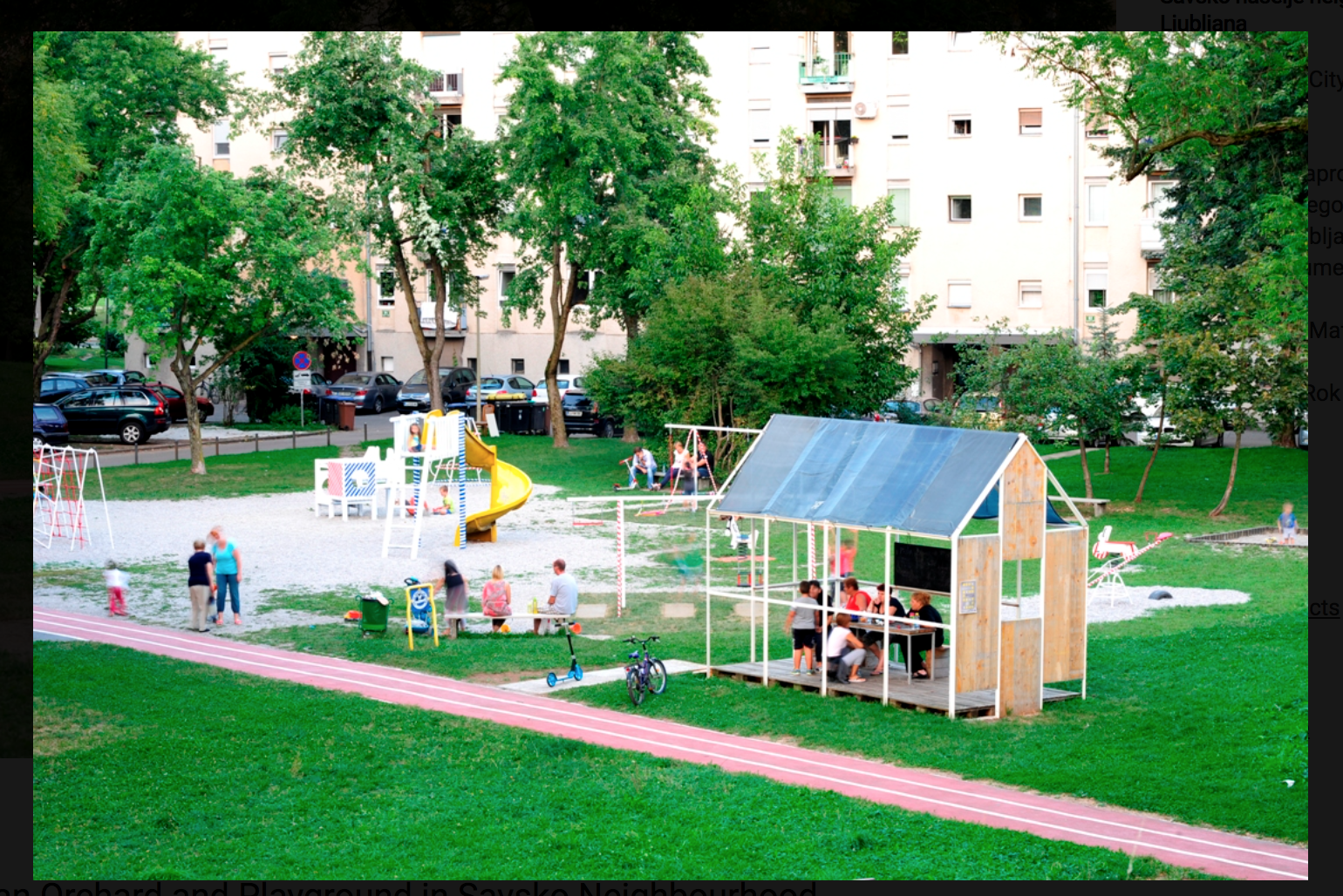
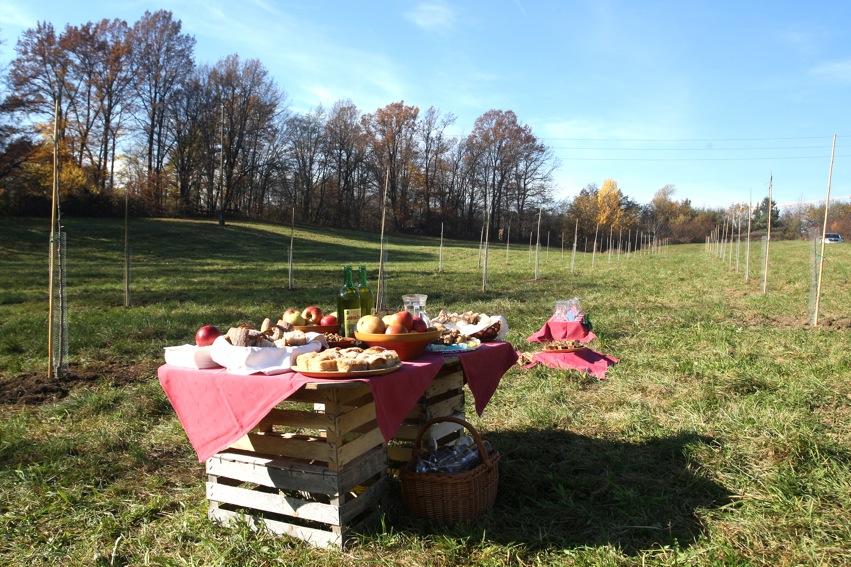
As part of the title Green Capital of Europe, Ljubljana planted the first public orchard. The public orchard is open to citizens and visitors of the city, where fruits are available from mid-summer to late autumn. One part of the orchard includes a plantation of old varieties of apple, plum and pear, while the other includes trees species little known. The public orchard and nectar garden are intended for residents, passersby, volunteers, groups of pre-schoolers, families and educational organisations. The nectar garden is enriched by an innovative didactic adventure trail that winds around the nectar garden. Next to the nectar garden is a hotel for insects and bird feeder intended to promote biodiversity and raise awareness about nature conservation. Nearby is also a renovated playground for children. Three such orchards have been created in Rakovi jelši, Savski naselj and Puhtejeva ulica. The arrangement of the public orchard is one of the goals set in the environmental protection program for the City of Ljubljana 2014 - 2020. (1, 2 and 3)
Overview
Nature-based solution
- Grey infrastructure featuring greens
- Green playgrounds and school grounds
- Parks and urban forests
- Pocket parks/neighbourhood green spaces
- Community gardens and allotments
- Allotments
- Other
Key challenges
- Green space, habitats and biodiversity (SDG 15)
- Habitat and biodiversity conservation
- Green space creation and/or management
- Regeneration, land-use and urban development
- Promote natural styles of landscape design for urban development
- Social justice, cohesion and equity (SDG 10)
- Environmental education
- Health and well-being (SDG 3)
- Enabling opportunities for physical activity
- Creation of opportunities for recreation
- Economic development and employment (SDG 8)
- Economic development: agriculture
- Sustainable consumption and production (SDG 12)
- Sustainable production
Focus
Project objectives
Implementation activities
Biodiversity conservation or restoration-focused activities
Biodiversity conservation:
- Protect and enhance urban habitats
- Create new habitats
- Protect species
- Undertake specific measures to protect species
- Undertake specific measures to protect valued species
- Means for conservation governance
- Raise public awareness
- Public engagement
- Create and use scientific knowledge for conservation
Main beneficiaries
- Public sector institution (e.g. school or hospital)
- Researchers/University
- Citizens or community groups
Governance
Management set-up
- Co-governance with government and non-government actors
Type of initiating organisation
- Local government/municipality
- Non-government organisation/civil society
- Citizens or community group
Participatory approaches/ community involvement
- Co-planning (e.g. stakeholder workshops, focus groups, participatory mapping)
- Dissemination of information and education
- Consultation (e.g. workshop, surveys, community meetings, town halls)
- Joint implementation (e.g. tree planting)
Details on the roles of the organisations involved in the project
Project implemented in response to ...
Financing
Total cost
Source(s) of funding
- Public local authority budget
Type of funding
- Earmarked public budget
Non-financial contribution
- Provision of labour
- Public authorities (e.g. land, utility services)
- Citizens (e.g. volunteering)
Impacts and Monitoring
Environmental impacts
- Climate change
- Lowered local temperature
- Green space and habitat
- Promotion of naturalistic styles of landscape design for urban development
- Increased number of protection areas
- Increased green space area
- Increase in protected green space areas
- Increased number of species present
- Increased protection of threatened species
- Enhanced support of pollination
Economic impacts
- Increase in agricultural production (for profit or not)
Socio-cultural impacts
- Social justice and cohesion
- Increased access to healthy/affordable food
- Increased sustainability of agriculture practices
- Health and wellbeing
- Gain in activities for recreation and exercise
- Education
- Increased support for education and scientific research
- Increased knowledge of locals about local nature
Type of reported impacts
Presence of formal monitoring system
Presence of indicators used in reporting
Presence of monitoring/ evaluation reports
Availability of a web-based monitoring tool
References
2. Green Ljubljana. (2016) Public Orchard. available on Source link. [site under construction as on 4th November, 2020].
3. Green Ljubljana. (2016) Nectar Garden. available on Source link. [site under construction as on 4th November, 2020].
4. Municipality Ljubljana. (2014) Integrated Environmental Management.
available on Source link. accessed on 4th November, 2020.
5. Source link (2015) ProstoRoz. available on Source link. accessed on 4th November, 2020.
6. Prostoroz (n.d.) Urban Orchard and Playground in Savsko Neighbourhood. available at Source link. accessed on 4th November, 2020.