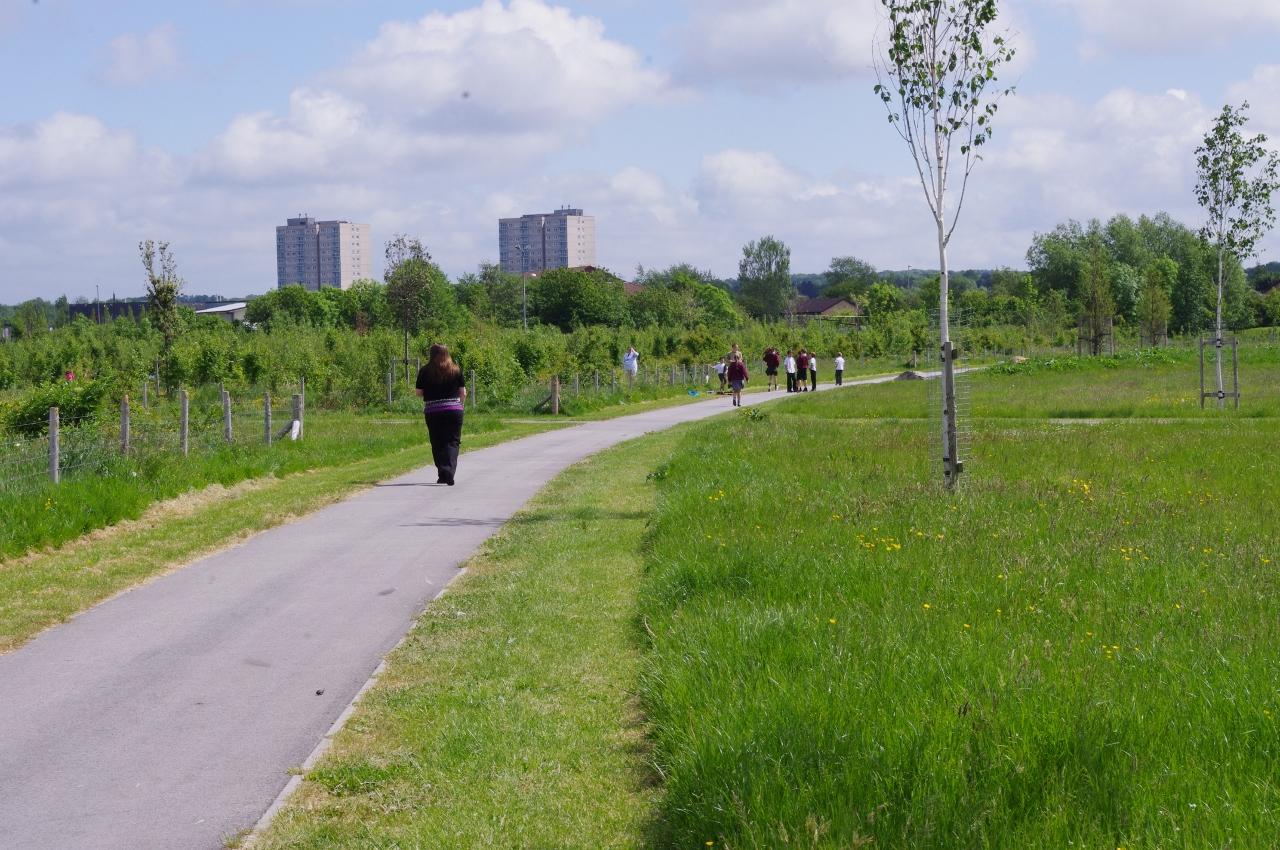
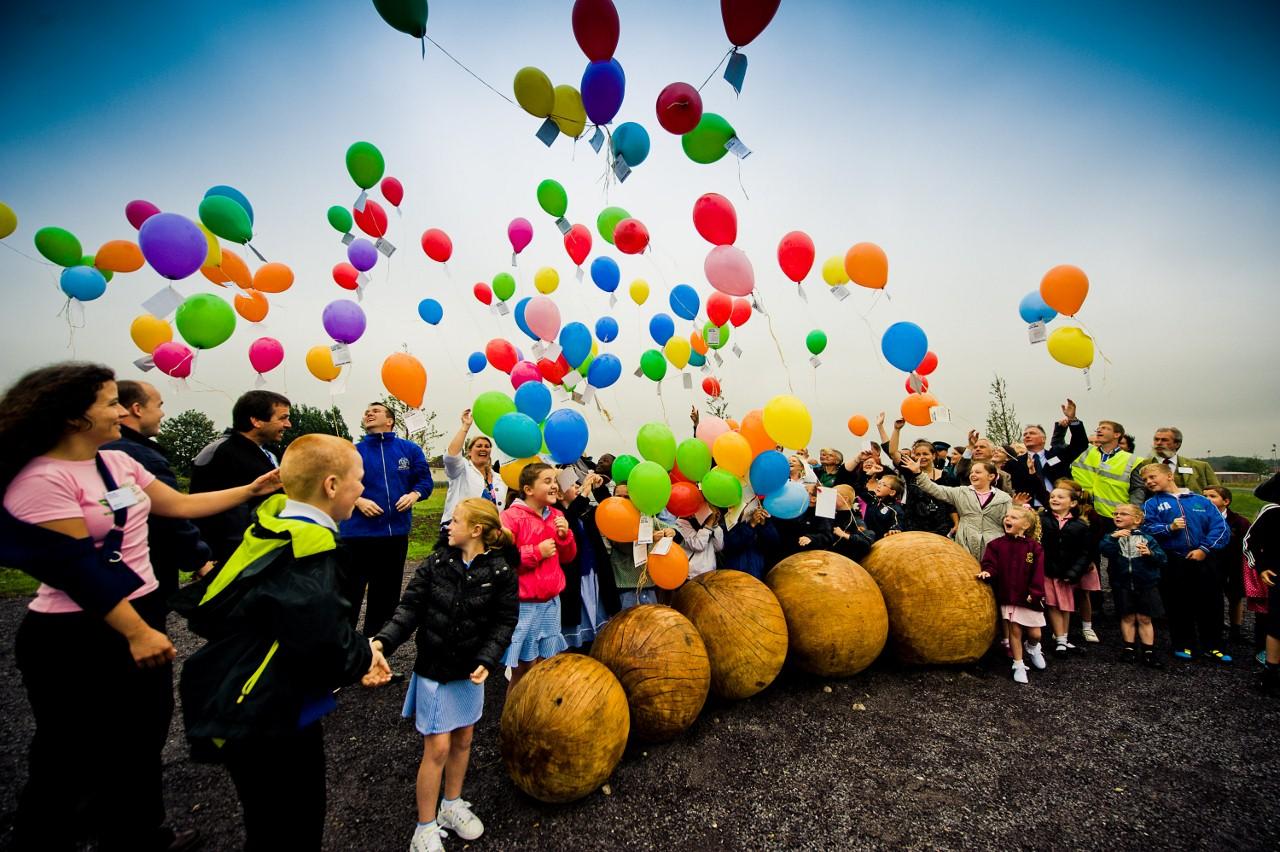
The Mab Lane Community Woodland was planted on a former playing field at Mab lane and Croxdale Road West in Liverpool. It is a part of the larger Mersey Forest initiative which has been increasing the amount of woodland and green spaces across Cheshire and Merseyside since 1991. The new woodland which has a network of native trees, wildflower meadows a community orchard as well as seasonal wetland areas and footpaths, was officially opened by the local community in 2010. It also includes new pathways for walkers and cyclists and areas for family picnics (Ref. 2, 10). Mab Lane Community Woodland is a partnership project involving the Forestry Commission, Northwest Development Agency, Mersey Forest, Big Lottery, Riverside Group, Liverpool City Council and the Local Community (Ref. 10).
Overview
Nature-based solution
- Parks and urban forests
- Large urban parks or forests
Key challenges
- Climate action for adaptation, resilience and mitigation (SDG 13)
- Climate change adaptation
- Water management (SDG 6)
- Flood protection
- Improvements to water quality
- Green space, habitats and biodiversity (SDG 15)
- Habitat and biodiversity conservation
- Green space creation and/or management
- Environmental quality
- Air quality improvement
- Regeneration, land-use and urban development
- Conversion of former industrial areas
- Promote natural styles of landscape design for urban development
- Health and well-being (SDG 3)
- Enabling opportunities for physical activity
- Creation of opportunities for recreation
- Sustainable consumption and production (SDG 12)
- Sustainable production
Focus
Project objectives
Implementation activities
Climate-focused activities
Climate change adaptation:
- Increase or improve urban vegetation cover to help reduce outdoor temperature
- Create or improve outdoor spaces to help people escape from urban heat
Biodiversity conservation or restoration-focused activities
Biodiversity conservation:
- Protect and enhance urban habitats
- Create new habitats
- Preserve and strengthen habitat connectivity
- Means for conservation governance
- Manage biological resources for conservation and sustainable use
- Raise public awareness
- Public engagement
- Create and use scientific knowledge for conservation
- Capacity building
Main beneficiaries
- Citizens or community groups
Governance
Management set-up
- Co-governance with government and non-government actors
Type of initiating organisation
- National government
- Local government/municipality
Participatory approaches/ community involvement
- Co-planning (e.g. stakeholder workshops, focus groups, participatory mapping)
- Dissemination of information and education
- Consultation (e.g. workshop, surveys, community meetings, town halls)
- Joint implementation (e.g. tree planting)
Details on the roles of the organisations involved in the project
Project implemented in response to ...
Financing
Total cost
Source(s) of funding
- EU funds
- Public national budget
- Public local authority budget
- Corporate investment
- Funds provided by non-governmental organization (NGO)
- Other
Type of funding
- Earmarked public budget
- Direct funding (grants, subsidies, or self-financed projects by private entities)
- Donations
- Other
Non-financial contribution
- Provision of labour
- Citizens (e.g. volunteering)
Impacts and Monitoring
Environmental impacts
- Climate change
- Lowered local temperature
- Strengthened capacity to address climate hazards/natural disasters
- Enhanced carbon sequestration
- Environmental quality
- Improved air quality
- Improved soil quality
- Water management and blue areas
- Improved water quality
- Increased protection against flooding
- Green space and habitat
- Increased green space area
- Increased conservation or restoration of ecosystems
- Increase in protected green space areas
- Restoration of derelict areas
Economic impacts
- Stimulate development in deprived areas
- Attraction of business and investment
Socio-cultural impacts
- Safety
- Increased perception of safety
- Social justice and cohesion
- Improved access to urban green space
- Increased opportunities for social interaction
- Increased involvement of locals in the management of green spaces
- Health and wellbeing
- Gain in activities for recreation and exercise
Type of reported impacts
Presence of formal monitoring system
Presence of indicators used in reporting
Presence of monitoring/ evaluation reports
Availability of a web-based monitoring tool
References
2. The Mersey Forest. (no date). Mab Lane Community Woodland. Available at: Source link. Accessed August 3, 2020.
3. The Mersey Forest. (no date). Available at: Source link
4. The Mersey Forest. 2010. Mab Lane Community Woodland takes root. Available at: Source link. Accessed August 3, 2020.
5. Nature connected. (no date). Available at: Source link. Accessed August 3, 2020.
6. Mersey Forest. (no date). Nature at work Liverpool Action Plan. Accessed: Source link
7. Mersey Forest. (no date). Mab Lane Community Woodland. Accessed: Source link. Accessed August 3, 2020.
8. Ecosystems Knowledge Network. (2020). The Mersey Forest. Available at: Source link. Accessed August 3, 2020.
9. The Mersey Forest. (2014). The Mersey Forest Plan. Available at: Source link.
10. Woodland Trust. (no date). Mab Lane (WCG). Available at: Source link. Accessed August 3, 2020.