

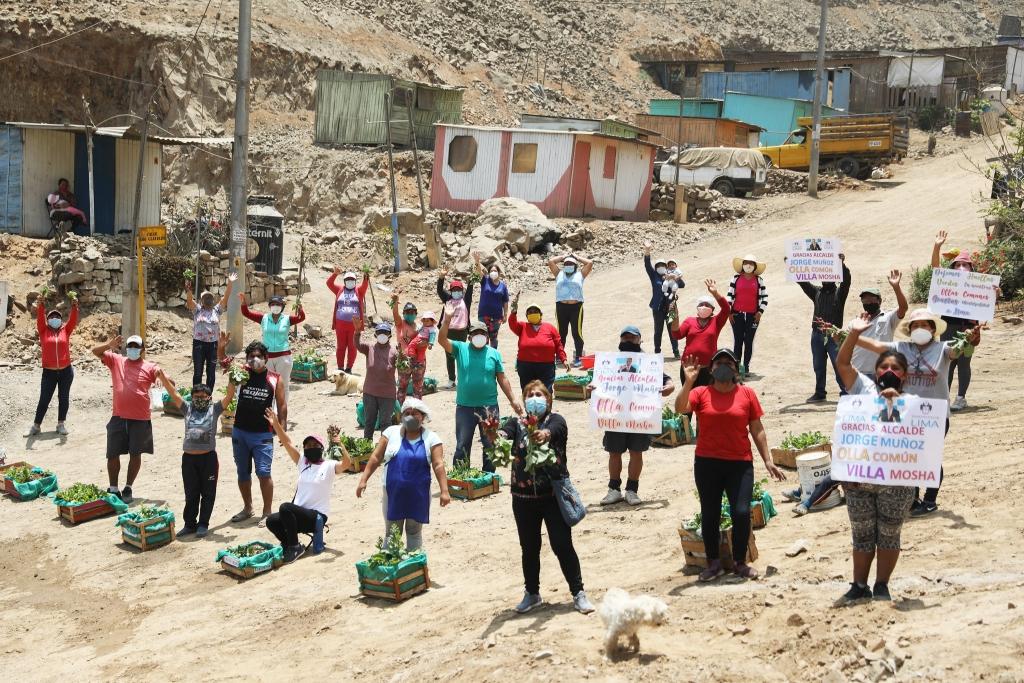
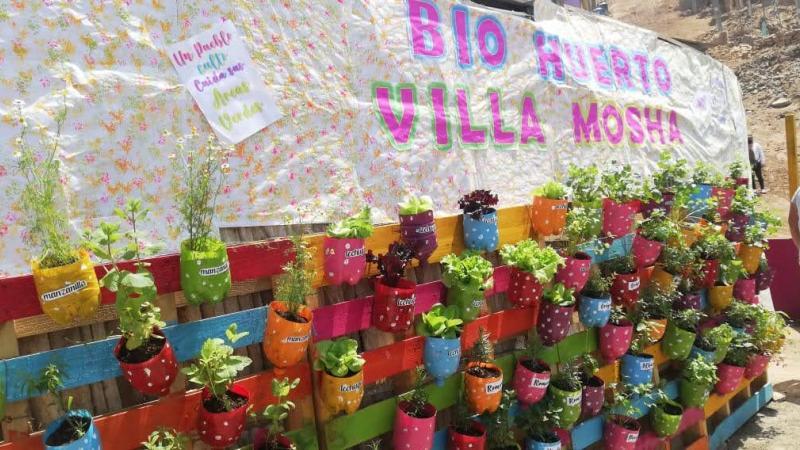
According to the FAO, in 2022, 16.6 million Peruvians faced moderate or severe food insecurity, representing an increase of 1.5 million compared to the previous year (3). This situation was exacerbated by the health crisis, inflation, and job losses, leaving three out of ten Peruvians in poverty in 2021. The situation was particularly critical in Metropolitan Lima and Callao, with 14% of families reporting difficulties in acquiring protein-rich foods due to their precarious economic situation (2). In response to this food crisis, the Municipality of Lima implemented the "Lima te Cuida" (Lima Takes Care of You) initiative, in which residents from vulnerable areas got training to create urban gardens and produce organic compost to help the community kitchens in these areas become self-sustainable (1, 2). An example of this initiative is the community garden in A.H. Villa Mosha in San Juan de Lurigancho, where a community garden has been built, and community members have been trained in small-scale planting, cultivation, care, and harvesting of various foods (2). This initiative has been supported by the MUSA project "Mujeres Unidas por la Seguridad Alimentaria y Ambiental" (Women United for Food and Environmental Security) as part of the project "Alimentando a Lima desde Adentro" (ALDA) (Feeding Lima from within), which has had an impact in eight districts of Lima to strengthen food security (3). In addition to promoting urban agriculture, the project seeks to influence public policy through training and development of proposals to promote urban agriculture at the local level (4).
Overview
Nature-based solution
- Community gardens and allotments
- Community gardens
Key challenges
- Green space, habitats and biodiversity (SDG 15)
- Green space creation and/or management
- Inclusive and effective governance (SDG 16)
- Inclusive governance
- Social justice, cohesion and equity (SDG 10)
- Environmental education
- Environmental and climate justice
- Sense of community and community engagement
- Economic development and employment (SDG 8)
- Economic development: agriculture
- Sustainable consumption and production (SDG 12)
- Sustainable production
- Food scarcity / security
Principal problems in Functional Urban Area (FUA)
- Land use and Socio-economic change
- Agriculture/ crop production
- Limited economic opportunities and local livelihoods
- Resource Scarcity and Competition
- Food insecurity due to disruptions in food production and distribution
Key priorities
Focus
Project objectives
Implementation activities
Specification of climate or environmentally vulnerable communities
Main beneficiaries
- Citizens or community groups
- Marginalized groups: Women, Socio-economically disadvantaged populations (e.g. low-income households, unemployed), Homeless people & people living in informal settlements
Governance
Management set-up
- Government-led
Type of initiating organisation
- Local government/municipality
Participatory approaches/ community involvement
- Deliberative decision-making processes (e.g., consensus building, deliberative polling)
- Dissemination of information and education
- Joint implementation (e.g. tree planting)
- Co-management/Joint management
Details on the roles of the organisations involved in the project
Project implemented in response to ...
Type of enablers
Financing
Total cost
Source(s) of funding
- Public local authority budget
Type of funding
- Earmarked public budget
Non-financial contribution
- Provision of land
- Provision of goods
- Provision of expertise
- Public authorities (e.g. land, utility services)
- Citizens (e.g. volunteering)
Impacts and Monitoring
Environmental impacts
- Green space and habitat
- Increased green space area
- Achieved increased green space area
- Increased number of species present
- Achieved increased number of species present
Economic impacts
- Increase in agricultural production (for profit or not)
- Achieved increase in agricultural production (for profit or not)
Socio-cultural impacts
- Social justice and cohesion
- Improved access to urban green space
- Achieved improved access to urban green space
- Increased involvement of locals in the management of green spaces
- Achieved increased involvement of locals in the management of green spaces
- Expected increased involvement of locals in the management of green spaces
- Increased access to healthy/affordable food
- Achieved increased access to healthy/affordable food
- Education
- Increased awareness of NBS and their benefits
- Expected increased awareness of NBS and their benefits
- Other
Type of reported impacts
Presence of formal monitoring system
Presence of indicators used in reporting
Presence of monitoring/ evaluation reports
Availability of a web-based monitoring tool
Potential risks of implementation and trade-offs
References
 Information about this nature-based solution was collected as part of the Naturescapes project funded by the European Union under Grant Agreement No 101084341.