

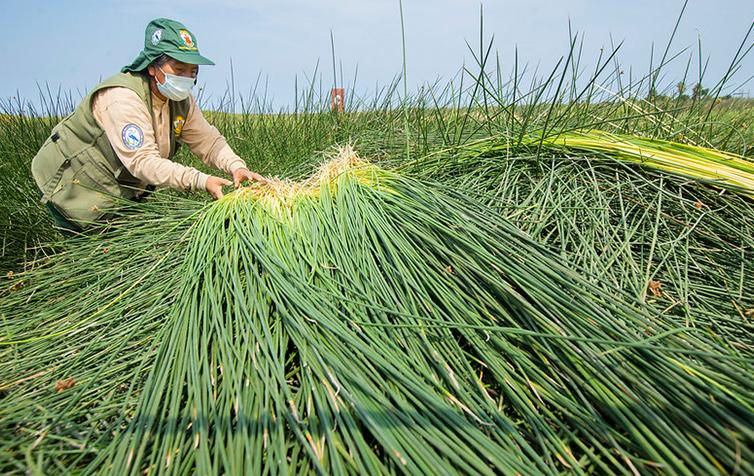
The "Ventanilla Wetlands" Regional Conservation Area (ACR) is an area of 275.45 hectares protected and administered by the Regional Management of Natural Resources and Environmental Management of the Regional Government of Callao (1, 2). It was established on December 20, 2006, by Supreme Decree No. 074-2006-AG, to conserve a representative sample of the coastal wetlands of the Subtropical Pacific Desert (2). With an ecosystem shaped by various hydrological and ecological processes, the "Ventanilla Wetlands" ACR is home to 126 bird species and 27 native plant species, making it an ideal area for ecotourism, recreational, educational, scientific, and cultural activities, thanks to its landscapes and biodiversity (2). However, the Ventanilla Wetlands face several challenges due to urban growth, water pollution, waste, traffic and plane overflights from the National Police and Navy, leading to a decline in bird populations due to noise exposure (5). This area is fed by the hydrological system of the Chillón River, by surface waters from the Sedapal oxidation ponds, and by water seepage from nearby human settlements and populations adjacent to the wetland. The Ventanilla Wetlands are also influenced by the marine system, especially in the northwest zone. This gives the ACR area lagoon-like characteristics, meaning that its waters are slightly brackish despite being separated from the sea. The internal hydrological system supports the growth of species such as cattails, bulrushes, and reeds. In total, there are 27 native plant species, which serve the function of filtering and purifying the wetland's water. Additionally, the flora provides protection and food for various fauna species, particularly birds, with 126 species recorded, including resident and migratory birds from the Andes, local areas, and the Northern and Southern Hemispheres. Moreover, this protected natural area is home to five reptile species, including endemic species from Lima that are endangered (3).
Overview
Nature-based solution
- Blue infrastructure
- In-land wetlands, peatlands, swamps, and moors
Key challenges
- Climate action for adaptation, resilience and mitigation (SDG 13)
- Climate change mitigation
- Environmental quality
- Waste management
- Green space, habitats and biodiversity (SDG 15)
- Green space creation and/or management
- Habitat and biodiversity conservation
- Water management (SDG 6)
- Improvements to water quality
- Health and well-being (SDG 3)
- Creation of opportunities for recreation
- Social justice, cohesion and equity (SDG 10)
- Environmental education
- Economic development and employment (SDG 8)
- Tourism support
Principal problems in Functional Urban Area (FUA)
- Environmental Degradation
- Biodiversity loss
- Soil degradation and loss
- Poor water quality
- Physical water retention and availability
- Land use and Socio-economic change
- Rapid urbanization
Key priorities
Focus
Project objectives
Implementation activities
Climate-focused activities
Climate change mitigation:
- Protect and restore in-land wetlands, peatlands, swamps, and moors aiming at sequestering carbon dioxide and storing it in their soil
Specification of climate or environmentally vulnerable communities
Biodiversity conservation or restoration-focused activities
Biodiversity conservation:
- Protect and enhance urban habitats
- Preserve and strengthen existing habitats and ecosystems
- Promote environmentally-sound development in and around protected areas
- Preserve and strengthen habitat connectivity
- Reduce negative impacts and avoid the alteration/damage of ecosystem
- Protect species
- Undertake specific measures to protect native species
- Undertake specific measures to protect endangered species
- Means for conservation governance
- Raise public awareness
Main beneficiaries
- Researchers/University
- Citizens or community groups
- Marginalized groups: Children, young people or youth groups , Socio-economically disadvantaged populations (e.g. low-income households, unemployed)
Governance
Management set-up
- Government-led
Type of initiating organisation
- Regional government
Participatory approaches/ community involvement
- Dissemination of information and education
Details on the roles of the organisations involved in the project
Project implemented in response to ...
Type of enablers
Financing
Total cost
Source(s) of funding
- Public local authority budget
Type of funding
- Earmarked public budget
Non-financial contribution
Impacts and Monitoring
Environmental impacts
- Water management and blue areas
- Improved water quality
- Achieved improved water quality
- Green space and habitat
- Increased green space area
- Achieved increased green space area
- Increase in protected green space areas
- Achieved increase in protected green space areas
- Reduced biodiversity loss
- Achieved reduced biodiversity loss
- Increased number of species present
- Achieved increased number of species present
- Increased protection of threatened species
- Achieved increased protection of threatened species
Economic impacts
- Generation of other type of work opportunities (e.g. voluntary, work for rehabilitation)
- Achieved generation of other type of work opportunities (e.g. voluntary, work for rehabilitation)
- More sustainable tourism
- Achieved more sustainable tourism
Socio-cultural impacts
- Social justice and cohesion
- Improved access to urban green space
- Achieved improved access to urban green space
- Health and wellbeing
- Gain in activities for recreation and exercise
- Achieved gain in activities for recreation and exercise
- Cultural heritage and sense of place
- Preserved spiritual and religious values
- Achieved preserved spiritual and religious values
- Education
- Increased support for education and scientific research
- Achieved increased support for education and scientific research
- Increased knowledge of locals about local nature
- Achieved increased knowledge of locals about local nature
Type of reported impacts
Presence of formal monitoring system
Presence of indicators used in reporting
Presence of monitoring/ evaluation reports
Availability of a web-based monitoring tool
Potential risks of implementation and trade-offs
References
 Information about this nature-based solution was collected as part of the Naturescapes project funded by the European Union under Grant Agreement No 101084341.