

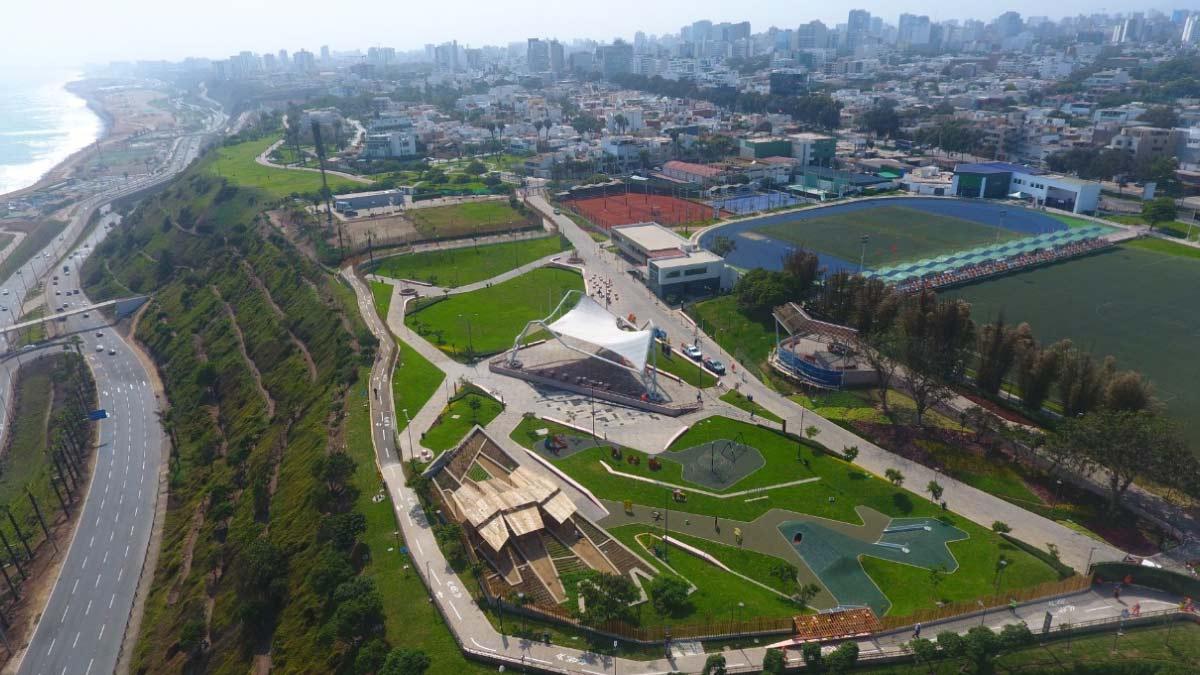
In Peru, there is a significant gap in the coverage of public spaces for social interaction, environmental awareness, and cultural expression in urban areas, reaching 23.10% (3). To address this issue and commemorate the 200th anniversary of Peru's independence, the national project "Proyecto Especial Bicentenario" (Special Bicentenary Project) was launched. As part of this project, 26 Cultural and Ecological Parks are being developed throughout the country (2, 5). This initiative aims to strengthen the role of municipalities in sustainable urban planning, prioritising the well-being of citizens and promoting citizen participation (1, 3). These parks combine ecological elements with cultural infrastructure, fostering a connection between people and nature and their Peruvian identity (5). By offering recreational and educational spaces, the goal is to raise public awareness of the importance of local biodiversity and strengthen community ties (1, 5). To ensure that these spaces meet the needs of each community, a citizen participation campaign called "Ideas for My Bicentennial Cultural Park" was implemented, allowing citizens to propose ideas from various perspectives, such as design, culture, citizenship, and the environment (5). The San Isidro Bicentennial Park, inaugurated in 2020, is an example of this initiative. With its 20,000 square meters of green areas, cultural activities, family recreation zones, and a neighbourhood gathering centre, this park has become a new green lung for the city and a meeting place for people of all ages, with a focus on inclusion for children and the elderly (2, 4, 5). Additionally, it features a municipal community garden of 250 m2 that promotes urban agriculture and offers workshops to teach citizens about sustainable farming practices (6).
Overview
Nature-based solution
- Community gardens and allotments
- Community gardens
- Parks and urban forests
- Large urban parks or forests
Key challenges
- Green space, habitats and biodiversity (SDG 15)
- Green space creation and/or management
- Cultural heritage and cultural diversity
- Promotion of cultural diversity
- Health and well-being (SDG 3)
- Creation of opportunities for recreation
- Improving mental health
- Inclusive and effective governance (SDG 16)
- Inclusive governance
- Social justice, cohesion and equity (SDG 10)
- Social cohesion
- Social interaction
- Environmental education
- Sense of community and community engagement
- Sustainable consumption and production (SDG 12)
- Sustainable production
Principal problems in Functional Urban Area (FUA)
- Land use and Socio-economic change
- Unequal availability and access to public green spaces
- Health, Well-being and Social cohesion
- Inadequate access to recreational opportunities
- Disconnection from nature
- Loss of sense of place and identity
- Social fragmentation and isolation
- Poor community engagement
Key priorities
Focus
Project objectives
Implementation activities
Main beneficiaries
- Citizens or community groups
- Young people and children
- Marginalized groups: Children, young people or youth groups , Elderly people
Governance
Management set-up
- Government-led
Type of initiating organisation
- Local government/municipality
Participatory approaches/ community involvement
- Deliberative decision-making processes (e.g., consensus building, deliberative polling)
- Consultation (e.g. workshop, surveys, community meetings, town halls)
- Citizen monitoring and review
Details on the roles of the organisations involved in the project
Project implemented in response to ...
Type of enablers
Financing
Total cost
Source(s) of funding
- Public local authority budget
Type of funding
- Earmarked public budget
Non-financial contribution
Impacts and Monitoring
Environmental impacts
- Green space and habitat
- Increased green space area
- Achieved increased green space area
- Increased number of species present
- Achieved increased number of species present
Economic impacts
- Increase in agricultural production (for profit or not)
- Achieved increase in agricultural production (for profit or not)
- Attraction of business and investment
- Expected attraction of business and investment
Socio-cultural impacts
- Social justice and cohesion
- Improved access to urban green space
- Achieved improved access to urban green space
- Increased opportunities for social interaction
- Expected increased opportunities for social interaction
- Increased involvement of locals in the management of green spaces
- Expected increased involvement of locals in the management of green spaces
- Increased access to healthy/affordable food
- Achieved increased access to healthy/affordable food
- Increased sustainability of agriculture practices
- Achieved increased sustainability of agriculture practices
- Health and wellbeing
- Gain in activities for recreation and exercise
- Achieved gain in activities for recreation and exercise
- Enhanced cognitive restoration, relaxation and stress relief
- Expected enhanced cognitive restoration, relaxation and stress relief
- Cultural heritage and sense of place
- Improvement in people’s connection to nature
- Expected improvement in people’s connection to nature
- Increased sense of place identity, memory and belonging
- Expected increased sense of place identity, memory and belonging
- Increased awareness of flora and fauna as culturally and historically meaningful
- Expected increased awareness of flora and fauna as culturally and historically meaningful
- Education
- Increased knowledge of locals about local nature
- Expected increased knowledge of locals about local nature
Type of reported impacts
Presence of formal monitoring system
Presence of indicators used in reporting
Presence of monitoring/ evaluation reports
Availability of a web-based monitoring tool
Potential risks of implementation and trade-offs
References


 Information about this nature-based solution was collected as part of the Naturescapes project funded by the European Union under Grant Agreement No 101084341.