

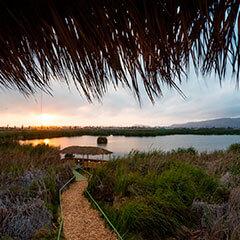
The Pantanos de Villa Wildlife Refuge is a natural oasis in the heart of Lima. It is considered a marsh of international Ramsar importance, as it is home to a large number of species of flora and fauna. It includes 5 bodies of water with about 210 species of birds, 13 species of fish, and 5 species of amphibians and reptiles, among others (1). It was created in 2006, by Supreme Decree N°055-2006-AG, which established the definitive category for the Pantanos de Villa, under the name of The Pantanos de Villa Wildlife Refuge (2). This protected area was established over an area of 263.27 ha, and its main goal is to conserve a representative sample of the Marshes of the Subtropical Pacific Desert, including important plant communities, as well as migratory and resident avifauna, focusing mainly on species with some degree of threat (1, 2, 6). In 2016, a Master Plan was approved aimed at strengthening the conservation of the biological diversity of this coastal marsh and ensuring conditions to promote inter-institutional cooperation and participatory management, including neighbours, authorities, municipalities and interested institutions (2). This Master Plan establishes environmental, economic and cultural indicators defined to be met over 5 years. These are focused on protecting water resources, conserving migratory and resident bird species, ensuring the conservation of the cattail, promoting tourism and recreational activities, fostering environmental awareness activities and engaging citizens in the management of the Refuge (2) This plan seeks to confront a series of threats that endanger the conservation of this ecosystem. Among the main problems are the illegal extraction of natural resources, such as cattail; the improper use of the space for activities such as bonfires, consumption of illicit substances and pet walks; the change in land use due to urban expansion; pollution from effluent discharges and solid waste disposal; and illegal fishing (2)
Overview
Nature-based solution
- Blue infrastructure
- In-land wetlands, peatlands, swamps, and moors
Key challenges
- Green space, habitats and biodiversity (SDG 15)
- Habitat and biodiversity conservation
- Water management (SDG 6)
- Improvements to water quality
- Inclusive and effective governance (SDG 16)
- Effective management
- Social justice, cohesion and equity (SDG 10)
- Environmental education
- Economic development and employment (SDG 8)
- Tourism support
Principal problems in Functional Urban Area (FUA)
- Environmental Degradation
- Biodiversity loss
- Poor water quality
- Land use and Socio-economic change
- Rapid urbanization
- Resource Scarcity and Competition
- Over-exploitation of natural resources (water resources, overgrazing, fisheries, mangroves, fore products)
- Other
Key priorities
Focus
Project objectives
Implementation activities
Biodiversity conservation or restoration-focused activities
Biodiversity conservation:
- Protect and enhance urban habitats
- Preserve and strengthen existing habitats and ecosystems
- Promote environmentally-sound development in and around protected areas
- Reduce negative impacts and avoid the alteration/damage of ecosystem
- Protect species
- Undertake specific measures to protect species
- Undertake specific measures to protect native species
- Undertake specific measures to protect endangered species
- Means for conservation governance
- Manage biological resources for conservation and sustainable use
- Raise public awareness
- Public engagement
- Capacity building
Main beneficiaries
- Local government/Municipality
- Public sector institution (e.g. school or hospital)
- Researchers/University
- Citizens or community groups
- Young people and children
Governance
Management set-up
- Government-led
Type of initiating organisation
- National government
- Local government/municipality
Participatory approaches/ community involvement
- Dissemination of information and education
- Joint implementation (e.g. tree planting)
- Co-management/Joint management
- Citizen oversight (e.g. boards, advisory)
- Citizen monitoring and review
Details on the roles of the organisations involved in the project
Project implemented in response to ...
Type of enablers
Financing
Total cost
Source(s) of funding
- Public local authority budget
- Corporate investment
Type of funding
- Earmarked public budget
- Membership or entrance fees
Non-financial contribution
- Provision of labour
- Provision of expertise
- Public authorities (e.g. land, utility services)
- Citizens (e.g. volunteering)
Impacts and Monitoring
Environmental impacts
- Water management and blue areas
- Enhanced protection and restoration of coastal and marine ecosystems
- Expected enhanced protection and restoration of coastal and marine ecosystems
- Green space and habitat
- Increase in protected green space areas
- Achieved increase in protected green space areas
- Reduced biodiversity loss
- Achieved reduced biodiversity loss
- Increased number of species present
- Achieved increased number of species present
- Increased presence and recovery of wild species
- Achieved increased presence and recovery of wild species
Economic impacts
- Generation of other type of work opportunities (e.g. voluntary, work for rehabilitation)
- Achieved generation of other type of work opportunities (e.g. voluntary, work for rehabilitation)
- More sustainable tourism
- Achieved more sustainable tourism
- Generation of income from NBS
- Achieved generation of income from NBS
Socio-cultural impacts
- Social justice and cohesion
- Increased involvement of locals in the management of green spaces
- Achieved increased involvement of locals in the management of green spaces
- Health and wellbeing
- Gain in activities for recreation and exercise
- Achieved gain in activities for recreation and exercise
- Education
- Increased support for education and scientific research
- Achieved increased support for education and scientific research
- Increased knowledge of locals about local nature
- Achieved increased knowledge of locals about local nature
Type of reported impacts
Presence of formal monitoring system
Presence of indicators used in reporting
Presence of monitoring/ evaluation reports
Availability of a web-based monitoring tool
Potential risks of implementation and trade-offs
References
 Information about this nature-based solution was collected as part of the Naturescapes project funded by the European Union under Grant Agreement No 101084341.