

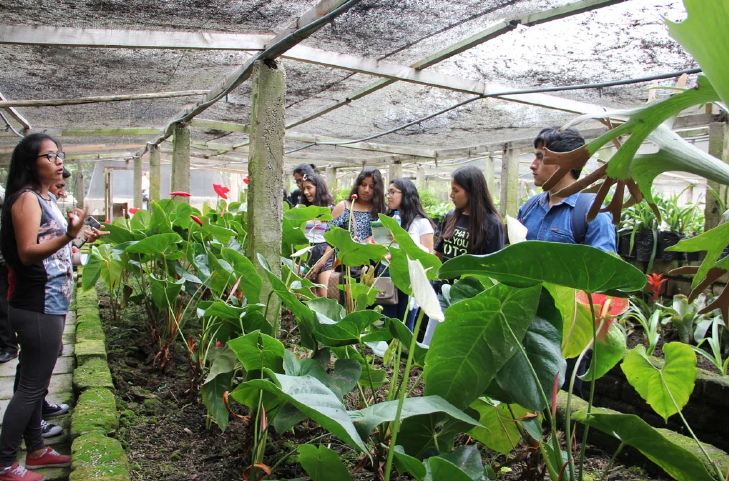
Peru is classified as one of the 17 most biodiverse countries in the world, so biodiversity and its conservation are important national aspects (2, 3, 4). However, one-third of the native flora currently assessed is threatened (3, 4). Thus, the creation of the Botanical Garden represents the opening of a space to learn about, study and conserve the national flora by strengthening Peruvian society's awareness of its value (4, 5). The Botanical Garden is in its early stages of development and is not open to the public yet, but its development and implementation have the support of several associations such as the British Council, Concytec, the Ministry of Environment, the Ministry of Culture, the British Embassy and the Asociación Pro Jardín Botánico Nacional de Lima (1). The initiative has been incorporated as part of the Bicentennial City project of the Ministry of Environment in Ancon (6). The implementation began in 2021 on a 10-hectare plot of land donated by the Universidad Nacional Agraria La Molina (UNALM) in Lima (3), and it will be carried out in several stages. An Inter-Institutional Committee has been established to oversee its development (3). In addition, it is planned to extend the idea of botanical gardens to other regions of the country, creating a network that will allow the conservation and study of flora in different contexts (4, 5), as the purpose of its development is to condense in one place all the biological richness of the country (7). With this project, they aim to strengthen the conservation of plant species, the generation of inputs for education, and as a source of cultural spaces and for the well-being of its citizens, among others (1, 2). The Botanical Garden is intended to house a select sample of the more than 25,000 species in Peru, emphasising those that are endemic, threatened and of social, cultural and economic relevance (8).
Overview
Nature-based solution
- Grey infrastructure featuring greens
- Institutional green space
- Parks and urban forests
- Botanical gardens
Key challenges
- Green space, habitats and biodiversity (SDG 15)
- Habitat and biodiversity conservation
- Cultural heritage and cultural diversity
- Preservation of natural heritage
- Health and well-being (SDG 3)
- Creation of opportunities for recreation
- Social justice, cohesion and equity (SDG 10)
- Environmental education
Principal problems in Functional Urban Area (FUA)
- Environmental Degradation
- Biodiversity loss
- Health, Well-being and Social cohesion
- Loss of sense of place and identity
- Other
Key priorities
Focus
Project objectives
Implementation activities
Biodiversity conservation or restoration-focused activities
Biodiversity conservation:
- Protect species
- Undertake specific measures to protect species
- Undertake specific measures to protect native species
- Undertake specific measures to protect endangered species
- Undertake specific measures to protect valued species
- Take measures for ex situ conservation
- Means for conservation governance
- Manage biological resources for conservation and sustainable use
- Raise public awareness
- Public engagement
- Create and use scientific knowledge for conservation
Main beneficiaries
- National-level government
- Local government/Municipality
- Researchers/University
- Citizens or community groups
Governance
Management set-up
- Co-governance with government and non-government actors
Type of initiating organisation
- Public sector institution
- Non-government organisation/civil society
- Researchers/university
- Other
Participatory approaches/ community involvement
- Co-planning (e.g. stakeholder workshops, focus groups, participatory mapping)
- Consultation (e.g. workshop, surveys, community meetings, town halls)
Details on the roles of the organisations involved in the project
Project implemented in response to ...
Type of enablers
Financing
Total cost
Source(s) of funding
- Multilateral funds/international funding
- Other funding sources are unclear
Type of funding
- Direct funding (grants, subsidies, or self-financed projects by private entities)
- Other funding types are unknown
Non-financial contribution
- Provision of land
- Provision of expertise
- Other
Impacts and Monitoring
Environmental impacts
- Green space and habitat
- Increased green space area
- Achieved increased green space area
- Reduced biodiversity loss
- Expected reduced biodiversity loss
- Increased number of species present
- Expected increased number of species present
- Increased presence and recovery of wild species
- Expected increased presence and recovery of wild species
- Increased protection of threatened species
- Expected increased protection of threatened species
Economic impacts
- Other
Socio-cultural impacts
- Cultural heritage and sense of place
- Increased sense of place identity, memory and belonging
- Expected increased sense of place identity, memory and belonging
- Increased awareness of flora and fauna as culturally and historically meaningful
- Expected increased awareness of flora and fauna as culturally and historically meaningful
- Education
- Increased support for education and scientific research
- Expected increased support for education and scientific research
- Increased knowledge of locals about local nature
- Expected increased knowledge of locals about local nature
Type of reported impacts
Presence of formal monitoring system
Presence of indicators used in reporting
Presence of monitoring/ evaluation reports
Availability of a web-based monitoring tool
Potential risks of implementation and trade-offs
References


 Information about this nature-based solution was collected as part of the Naturescapes project funded by the European Union under Grant Agreement No 101084341.