

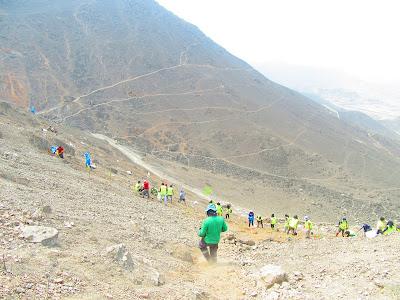
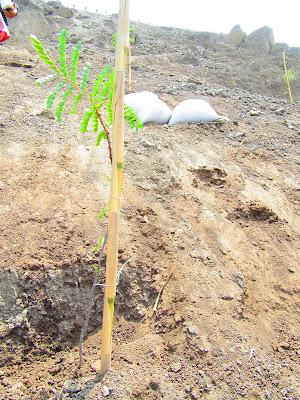
To protect the Lomas de Primavera from urban pressure and other threats, the Lomas de Primavera Ecological Association has implemented strategies for its conservation. One of the strategies this organisation has promoted is reforestation activities. Working together with the Municipality of Lima and other interested actors, they have sought to expand Lima's green spaces, improve air quality, enhance flora, and promote tourism, among other benefits (1). Lima's Municipality has supported the project by donating 20,000 trees for reforestation and to prevent land encroachment (1), social organisations and environmental activists have joint efforts to plant more than 250 trees to support the conservation efforts (2, 7). The Lomas de Primavera Ecological Association leads the project, organizing community management efforts to conserve the Lomas de Primavera sector. This association is based in the Agrupación Familiar Primavera Lomas de Carabayllo community (2). The association's conservation activities involve collaboration with various stakeholders at different levels. Locally, it works with community leaders and organizations. At the district level, it coordinates with the Carabayllo municipality and the NGO CIDAP to improve urban conditions. The metropolitan-level collaboration includes the Municipality of Lima and the ACR 'Sistema de Lomas de Lima' for ecosystem protection and valorization. Nationally, it partners with MINAM, SERNANP, MINAGRI, UNDP, UCV, and the Network of Peruvian Lomas to enhance ecosystem services, restore degraded areas, and conduct research on the Lomas (2). The preservation and reforestation of these ecosystems is essential, as they have social, cultural and environmental value, including the following ecosystem services: provision of genetic resources, soil formation, pollination, aesthetic services, ecotourism, food, education, and archaeological and historical services (3)
Overview
Nature-based solution
- Parks and urban forests
- Large urban parks or forests
Key challenges
- Climate action for adaptation, resilience and mitigation (SDG 13)
- Climate change adaptation
- Environmental quality
- Air quality improvement
- Green space, habitats and biodiversity (SDG 15)
- Green space creation and/or management
- Habitat and biodiversity restoration
- Regeneration, land-use and urban development
- Rewilding
- Economic development and employment (SDG 8)
- Tourism support
Principal problems in Functional Urban Area (FUA)
- Environmental Degradation
- Biodiversity loss
- Deforestation and forest degradation
- Land use and Socio-economic change
- Rapid urbanization
- Resource Scarcity and Competition
- Land rights conflicts
Key priorities
Focus
Project objectives
Implementation activities
Climate-focused activities
Climate change adaptation:
- Increase urban vegetation cover to reduce urban heat island effect
Biodiversity conservation or restoration-focused activities
Biodiversity restoration:
- Rehabilitate and restore damaged or destroyed ecosystems
- Restore species (native, endangered, or unspecified)
- Restore native species
- Public engagement
Main beneficiaries
- Citizens or community groups
- Marginalized groups: Socio-economically disadvantaged populations (e.g. low-income households, unemployed), Vulnerable populations in disaster-prone areas
Governance
Management set-up
- Led by non-government actors
Type of initiating organisation
- Social enterprise
Participatory approaches/ community involvement
- Co-planning (e.g. stakeholder workshops, focus groups, participatory mapping)
- Joint implementation (e.g. tree planting)
Details on the roles of the organisations involved in the project
Project implemented in response to ...
Type of enablers
Financing
Total cost
Source(s) of funding
- Unknown
Type of funding
- Unknown
Non-financial contribution
- Provision of goods
- Provision of labour
- Provision of expertise
- Public authorities (e.g. land, utility services)
- Citizens (e.g. volunteering)
Impacts and Monitoring
Environmental impacts
- Environmental quality
- Improved air quality
- Expected improved air quality
- Green space and habitat
- Increased green space area
- Expected increased green space area
- Increased conservation or restoration of ecosystems
- Expected increased conservation or restoration of ecosystems
- Increased number of species present
- Expected increased number of species present
Economic impacts
- More sustainable tourism
- Expected more sustainable tourism
- Generation of income from NBS
- Expected generation of income from NBS
Socio-cultural impacts
- Social justice and cohesion
- Increased involvement of locals in the management of green spaces
- Achieved increased involvement of locals in the management of green spaces
- Education
- Increased knowledge of locals about local nature
- Achieved increased knowledge of locals about local nature
Type of reported impacts
Presence of formal monitoring system
Presence of indicators used in reporting
Presence of monitoring/ evaluation reports
Availability of a web-based monitoring tool
Potential risks of implementation and trade-offs
References
 Information about this nature-based solution was collected as part of the Naturescapes project funded by the European Union under Grant Agreement No 101084341.