

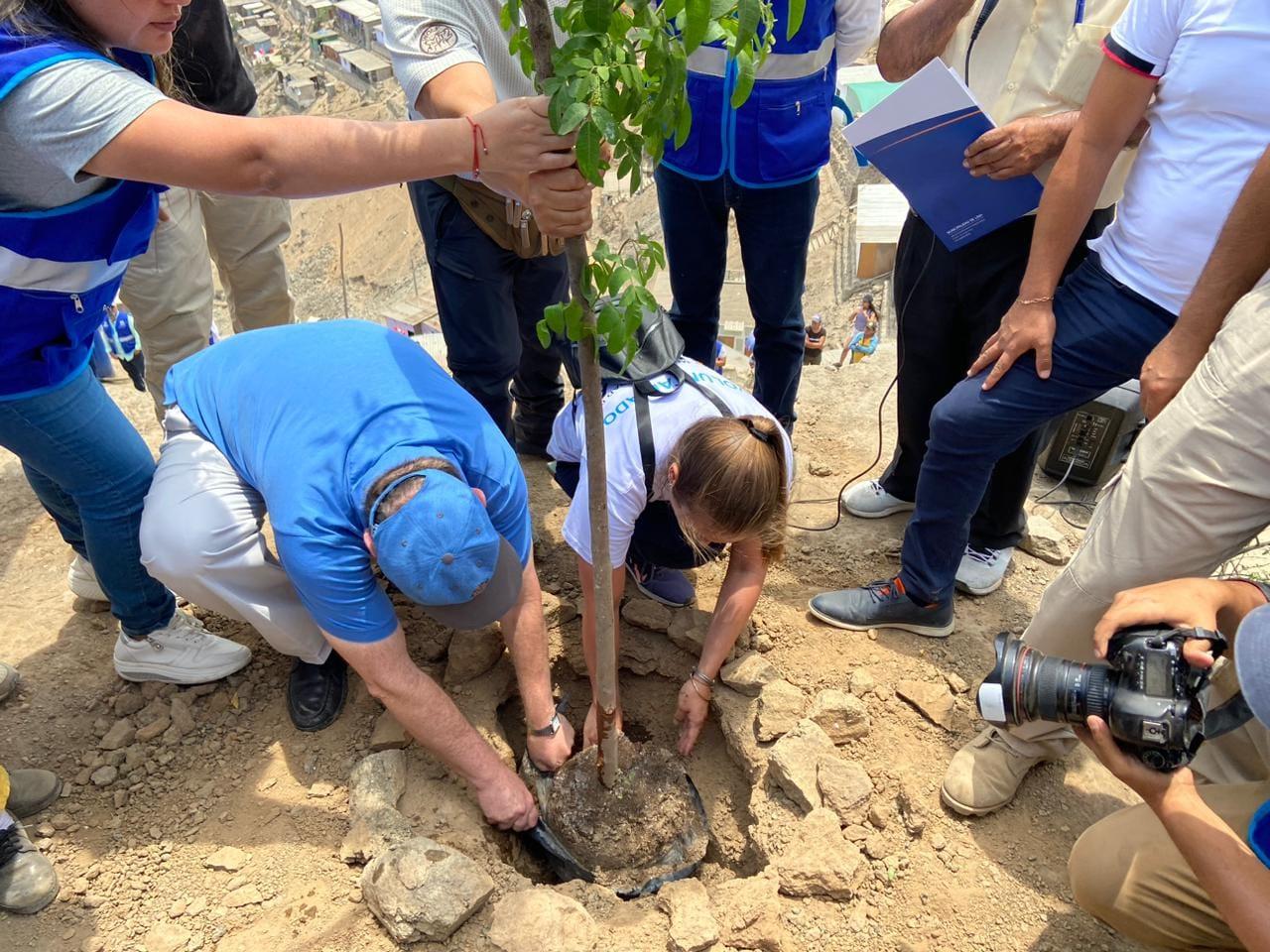
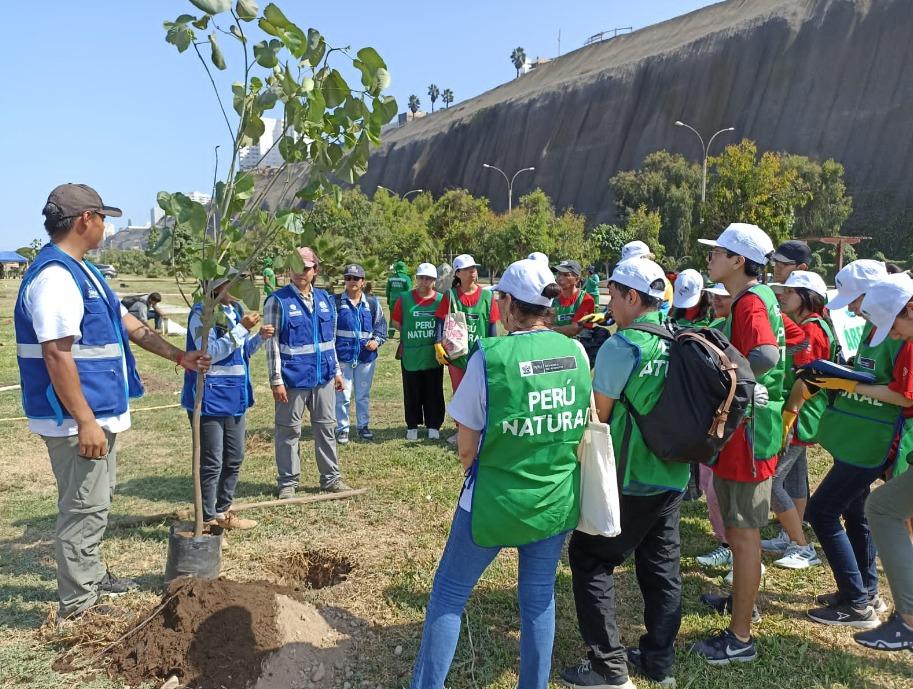
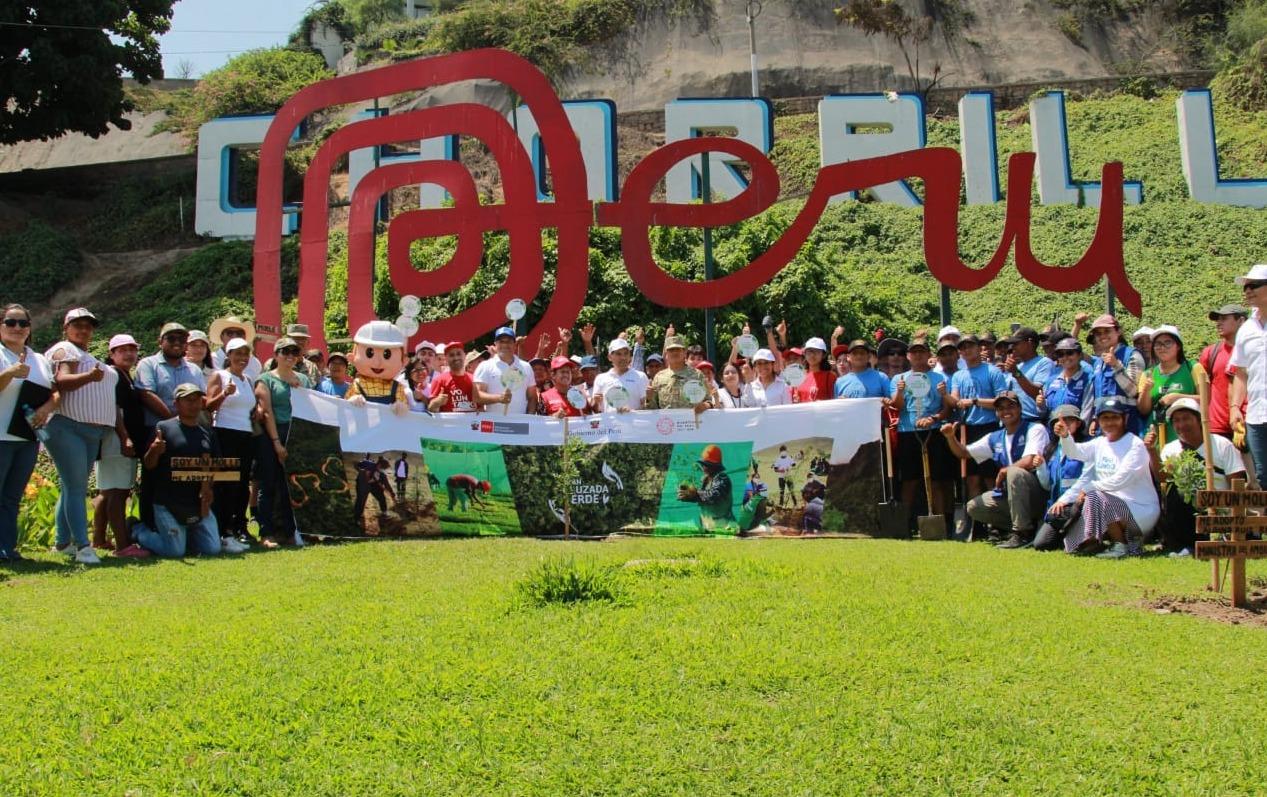
Lima Verde is one of the pillars of the metropolitan mayor's government plan and is supported by SERPAR. It aims to reforest hillsides, hills, and central berms of metropolitan and local roads, as well as public recreational spaces, to create urban lungs that generate oxygen and scenic beauty for the benefit of the health of all residents (Ref 1, 3). Its goal is to plant one million trees in four years (2022 - 2026) in different parts of North, East and South Lima (Ref 3, 5, 6). This project is being carried out to respond to the increasing problem of urban heat islands that are being generated, especially in the most vulnerable districts where there is no shade due to a shortage of trees (Ref 1, 4). It is therefore focused on areas where the environmental quality is low, where the pollution is high and where there is more danger of higher temperatures (Ref 1, 7). This programme aims to include youth volunteers, district municipalities, educational institutions, grassroots social organisations, neighbourhood leaders, residents and other entities that favour environmental conservation (Ref 1, 2, 3, 5).
Overview
Nature-based solution
- Grey infrastructure featuring greens
- Alley or street trees and other street vegetation
- Blue infrastructure
- Riverbank/Lakeside greens
- Parks and urban forests
- Large urban parks or forests
- Pocket parks/neighbourhood green spaces
- Other
Key challenges
- Climate action for adaptation, resilience and mitigation (SDG 13)
- Climate change adaptation
- Climate change mitigation
- Environmental quality
- Air quality improvement
- Green space, habitats and biodiversity (SDG 15)
- Green space creation and/or management
- Social justice, cohesion and equity (SDG 10)
- Social cohesion
- Environmental education
- Environmental and climate justice
Principal problems in Functional Urban Area (FUA)
- Climate-Related Hazards
- Heat stress & Extreme temperatures
- Environmental Degradation
- Air pollution
- Land use and Socio-economic change
- Unequal availability and access to public green spaces
- Health, Well-being and Social cohesion
- Physical health harm (from pollution, wildfire, extreme temperature)
- Inadequate access to recreational opportunities
Key priorities
Focus
Project objectives
Implementation activities
Climate-focused activities
Climate change adaptation:
- Increase urban vegetation cover to reduce urban heat island effect
- Reducing socio-economic vulnerability to climate impacts (e.g. awareness raising)
Climate change mitigation:
- Increase the availability of green urban space for carbon storage (street tree cover)
- Improve carbon sequestration through selection of more adaptable species
Specification of climate or environmentally vulnerable communities
Main beneficiaries
- Citizens or community groups
- Young people and children
- Marginalized groups: Children, young people or youth groups , Socio-economically disadvantaged populations (e.g. low-income households, unemployed)
Governance
Management set-up
- Government-led
Type of initiating organisation
- Local government/municipality
Participatory approaches/ community involvement
- Dissemination of information and education
- Joint implementation (e.g. tree planting)
Details on the roles of the organisations involved in the project
Project implemented in response to ...
Type of enablers
Financing
Total cost
Source(s) of funding
- Unknown
Type of funding
- Unknown
Non-financial contribution
Impacts and Monitoring
Environmental impacts
- Climate change
- Lowered local temperature
- Expected lowered local temperature
- Enhanced carbon sequestration
- Expected enhanced carbon sequestration
- Environmental quality
- Improved air quality
- Expected improved air quality
- Green space and habitat
- Increased green space area
- Expected increased green space area
- Increased conservation or restoration of ecosystems
- Expected increased conservation or restoration of ecosystems
Economic impacts
- Generation of other type of work opportunities (e.g. voluntary, work for rehabilitation)
- Expected generation of other type of work opportunities (e.g. voluntary, work for rehabilitation)
Socio-cultural impacts
- Social justice and cohesion
- Improved access to urban green space
- Expected improved access to urban green space
- Increased opportunities for social interaction
- Expected increased opportunities for social interaction
- Health and wellbeing
- Gain in activities for recreation and exercise
- Expected gain in activities for recreation and exercise
- Education
- Increased knowledge of locals about local nature
- Expected increased knowledge of locals about local nature
Type of reported impacts
Presence of formal monitoring system
Presence of indicators used in reporting
Presence of monitoring/ evaluation reports
Availability of a web-based monitoring tool
Potential risks of implementation and trade-offs
References
 Information about this nature-based solution was collected as part of the Naturescapes project funded by the European Union under Grant Agreement No 101084341.