

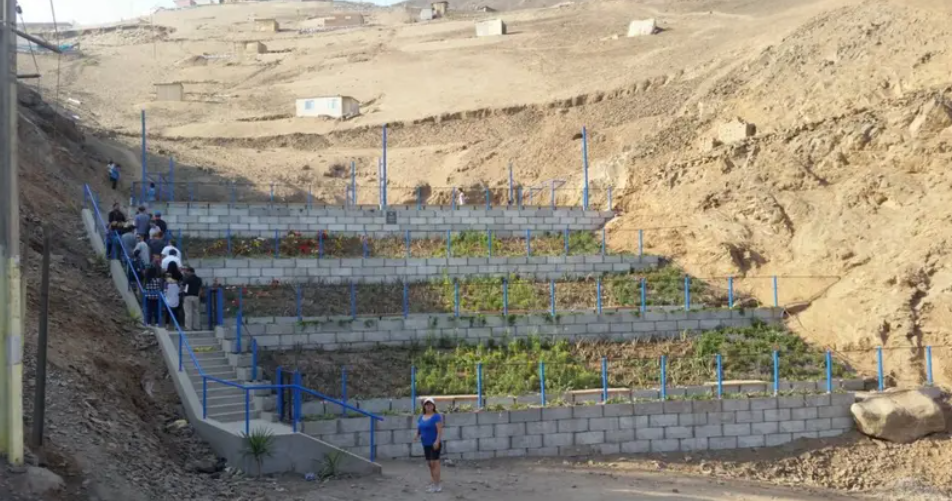
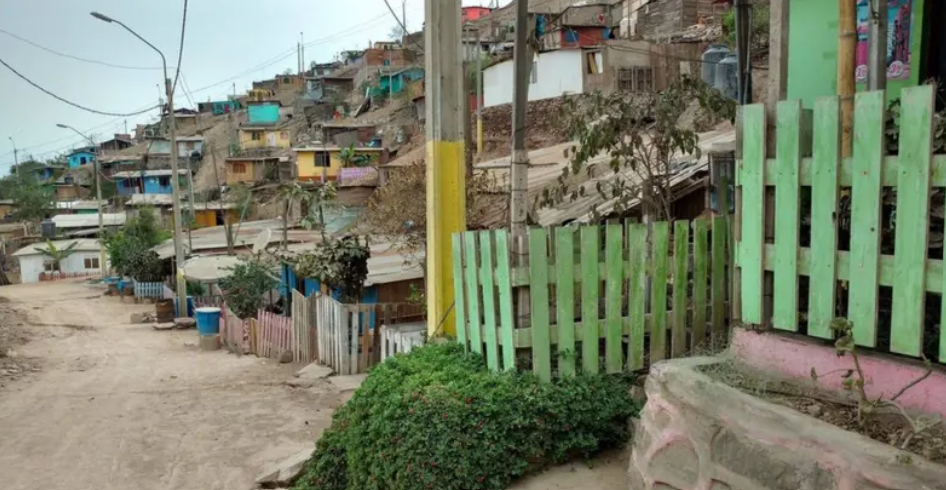
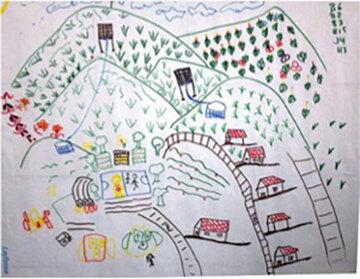
Eliseo Collazos is located in the coastal desert ecosystem of the Lomas or ‘fog oasis’, an area that receives less than 10 mm of rainfall per year. Vegetation cover is of particular importance in the hills surrounding Lima, as it provides critical solutions to erosion, landslides and soil degradation in the ecologically degraded ecosystem of the Lomas. However, this ecosystem is facing risks from urbanisation, illegal mining and agricultural practices, resulting in the lack of the delicate mist-fed greenery for which the Lomas are known (2). This has led to increased particulate matter in the air due to exposure to sand and wind, aggravating respiratory diseases such as tuberculosis, which is prevalent in Lima's informal communities (2). Low-income communities have inhabited this area, forced to migrate from the rainforest, highlands and city to the desert slums (4), who have only been able to settle in these landscapes with little access to resources, prone to disaster risk, little public investment in infrastructure and little access to green spaces (2). As a result, these communities live in poor conditions (1). For this reason, in 2013, the University of Washington, under its Urban Informal Communities Initiative programme (1), initiated a participatory project that sought to address the challenges faced by the inhabitants of this area (1, 2). In a series of participatory workshops, residents identified greenspace and food security as top priorities in their community; the Gardens, Greenspace and Health project responds to these priorities as an initial step towards the expansion of greenspace, agriculture and ecological restoration in and around the Eliseo Collazos community (2, 4). Although individual families constructed them, the front yard gardens contribute to a shared public realm and community greening (4). The general project also involved the installation of fog catchers and the creation of common recreational spaces (4).
Overview
Nature-based solution
- Community gardens and allotments
- Community gardens
- Grey infrastructure featuring greens
- House gardens
- Parks and urban forests
- Pocket parks/neighbourhood green spaces
Key challenges
- Environmental quality
- Air quality improvement
- Soil quality improvement
- Green space, habitats and biodiversity (SDG 15)
- Green space creation and/or management
- Water management (SDG 6)
- Water security
- Health and well-being (SDG 3)
- Creation of opportunities for recreation
- Enabling opportunities for physical activity
- Improving mental health
- Improving physical health
- Inclusive and effective governance (SDG 16)
- Inclusive governance
- Combatting crime and corruption
- Disaster-risk reduction
- Social justice, cohesion and equity (SDG 10)
- Social cohesion
- Social justice and equity
- Social interaction
- Environmental and climate justice
- Sense of community and community engagement
- Economic development and employment (SDG 8)
- Economic development: agriculture
- Sustainable consumption and production (SDG 12)
- Food scarcity / security
Principal problems in Functional Urban Area (FUA)
- Environmental Degradation
- Biodiversity loss
- Deforestation and forest degradation
- Soil degradation and loss
- Air pollution
- Land use and Socio-economic change
- Limited economic opportunities and local livelihoods
- Rapid urbanization
- Unequal availability and access to public green spaces
- Health, Well-being and Social cohesion
- Physical health harm (from pollution, wildfire, extreme temperature)
- Mental health issues (stress, anxiety)
- Inadequate access to recreational opportunities
- Resource Scarcity and Competition
- Food insecurity due to disruptions in food production and distribution
- Water stress (increased demand)
Key priorities
Focus
Project objectives
Implementation activities
Specification of climate or environmentally vulnerable communities
Main beneficiaries
- Citizens or community groups
- Marginalized groups: Refugees, asylum seekers, and migrants
Governance
Management set-up
- Led by non-government actors
Type of initiating organisation
- Researchers/university
Participatory approaches/ community involvement
- Co-planning (e.g. stakeholder workshops, focus groups, participatory mapping)
- Deliberative decision-making processes (e.g., consensus building, deliberative polling)
- Dissemination of information and education
- Joint implementation (e.g. tree planting)
- Co-management/Joint management
- Citizen monitoring and review
Details on the roles of the organisations involved in the project
Project implemented in response to ...
Type of enablers
Financing
Total cost
Source(s) of funding
- Research organisation / University
- Other funding sources are unclear
Type of funding
- Direct funding (grants, subsidies, or self-financed projects by private entities)
Non-financial contribution
- Provision of goods
- Provision of labour
- Provision of expertise
- Citizens (e.g. volunteering)
- Other
Impacts and Monitoring
Environmental impacts
- Environmental quality
- Improved air quality
- Achieved improved air quality
- Green space and habitat
- Increased green space area
- Achieved increased green space area
- Increased number of species present
- Achieved increased number of species present
Economic impacts
- Increase in agricultural production (for profit or not)
- Achieved increase in agricultural production (for profit or not)
- Generation of income from NBS
- Achieved generation of income from NBS
Socio-cultural impacts
- Social justice and cohesion
- Improved social cohesion
- Achieved improved social cohesion
- Improved liveability
- Achieved improved liveability
- Improved access to urban green space
- Achieved improved access to urban green space
- Increased opportunities for social interaction
- Achieved increased opportunities for social interaction
- Increased involvement of locals in the management of green spaces
- Achieved increased involvement of locals in the management of green spaces
- Increased access to healthy/affordable food
- Achieved increased access to healthy/affordable food
- Health and wellbeing
- Gain in activities for recreation and exercise
- Achieved gain in activities for recreation and exercise
- Improved physical health
- Achieved improved physical health
- Improved mental health
- Achieved improved mental health
- Cultural heritage and sense of place
- Increased awareness of flora and fauna as culturally and historically meaningful
- Achieved increased awareness of flora and fauna as culturally and historically meaningful
- Education
- Increased knowledge of locals about local nature
- Achieved increased knowledge of locals about local nature
- Safety
- Increased perception of safety
- Achieved increased perception of safety
- Other
Type of reported impacts
Presence of formal monitoring system
Presence of indicators used in reporting
Presence of monitoring/ evaluation reports
Availability of a web-based monitoring tool
Potential risks of implementation and trade-offs
References
 Information about this nature-based solution was collected as part of the Naturescapes project funded by the European Union under Grant Agreement No 101084341.