

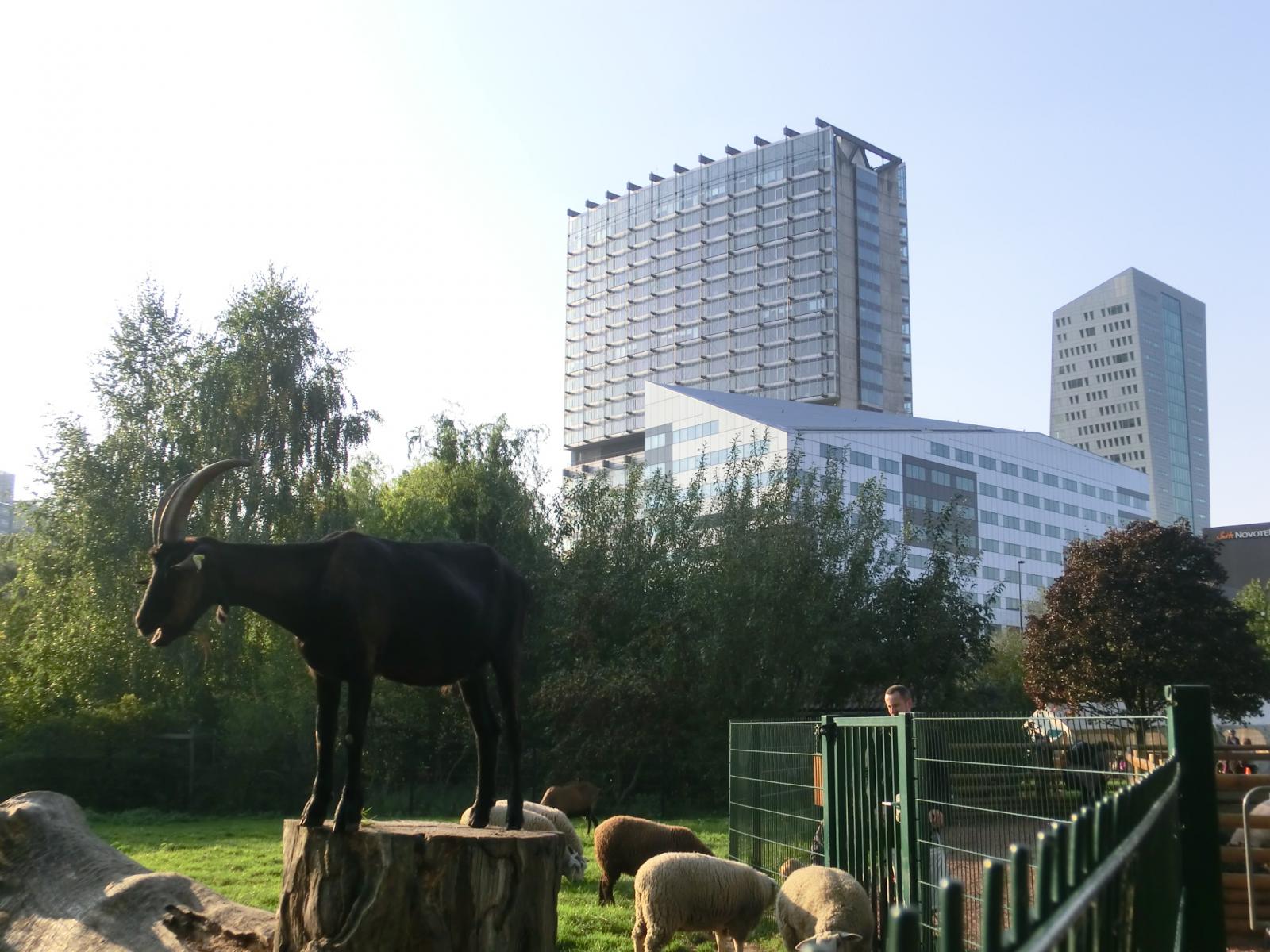
The park of Dondaines is an agro-urban park of the city. This contrast is guaranteed by the ecological management of space that aims to promote biodiversity in this highly urbanized area. The Park of Dondaines is located in a strategic position, between the old and the new Lille, and creates a link between these two entities. The park hosts a pedagogical farm. It is a framework where the urban, the animals and the plants meet. It preserves plants and small animals by providing them with food and habitat. The cover of the periphery, planted with pines, ensures the continuity of the park with the new districts of Euralille(Ref 3).The place is a garden of representation, park of proximity, urban agriculture and food production space, pedagogical farm and event platform, and a place for sports and games (Ref 2, 5).
Overview
Nature-based solution
- Parks and urban forests
- Pocket parks/neighbourhood green spaces
- Community gardens and allotments
- Other
Key challenges
- Green space, habitats and biodiversity (SDG 15)
- Habitat and biodiversity restoration
- Habitat and biodiversity conservation
- Green space creation and/or management
- Regeneration, land-use and urban development
- Promote natural styles of landscape design for urban development
- Social justice, cohesion and equity (SDG 10)
- Environmental education
- Social interaction
- Health and well-being (SDG 3)
- Creation of opportunities for recreation
Focus
Project objectives
Implementation activities
Biodiversity conservation or restoration-focused activities
Biodiversity conservation:
- Protect and enhance urban habitats
- Preserve and strengthen existing habitats and ecosystems
- Create new habitats
- Preserve and strengthen habitat connectivity
- Reduce negative impacts and avoid the alteration/damage of ecosystem
- Protect species
- Undertake specific measures to protect species
- Means for conservation governance
- Biodiversity offsets
- Manage biological resources for conservation and sustainable use
Biodiversity restoration:
- Rehabilitate and restore damaged or destroyed ecosystems
- Restore species (native, endangered, or unspecified)
- Restore ecological connectivity
Main beneficiaries
- Citizens or community groups
- Food producers and cultivators (i.e. farmers, gardeners)
- Young people and children
Governance
Management set-up
- Co-governance with government and non-government actors
Type of initiating organisation
- Local government/municipality
Participatory approaches/ community involvement
- Citizen science
Details on the roles of the organisations involved in the project
Project implemented in response to ...
Financing
Total cost
Source(s) of funding
- Public local authority budget
Type of funding
- Earmarked public budget
Non-financial contribution
Impacts and Monitoring
Environmental impacts
- Green space and habitat
- Promotion of naturalistic styles of landscape design for urban development
- Increased green space area
- Increased conservation or restoration of ecosystems
- Reduced biodiversity loss
- Increased number of species present
- Restoration of derelict areas
Economic impacts
- Increase in agricultural production (for profit or not)
Socio-cultural impacts
- Social justice and cohesion
- Increased opportunities for social interaction
- Increased access to healthy/affordable food
- Health and wellbeing
- Gain in activities for recreation and exercise
- Education
- Increased support for education and scientific research
Type of reported impacts
Presence of formal monitoring system
Presence of indicators used in reporting
Presence of monitoring/ evaluation reports
Availability of a web-based monitoring tool
References
2. Lille-en-grand (no date) Parc des Dondaines. Available at: Source link. Accessed on 21st July 2017.
3. Ville de Lille (no date) PARC DES DONDAINES. Available at: Source link. Accessed on 14th August, 2020.
4. La voix du nord (2016) Lille : le parc des Dondaines en mutation, pour vivre la ville différemment. Available at: Source link. Accessed on 14th August, 2020.
5. Florence mercier paysagiste (no date) Lille Dondaines Park. Available at: Source link. Accessed on 14th August, 2020.
6. DEPARTEMENT DU NORD ARRONDISSEMENT DE LILLE (2014) Regulations of the parks and gardens of Lille.