

Last updated: October 2021
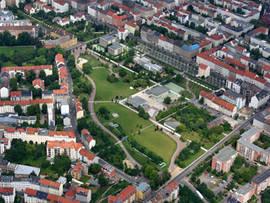
The area of Neuschönefeld where the park is located was built in the 1970s. With residents continuously leaving the area, housing fell vacant and the quality of the area decreased. Therefore, it was identified as a major regeneration area of Leipzig. The expansion and redevelopment of the Rabet park between Volkmarsdorf and Neustadt-Neuschönefeld was aimed at creating important impulses for leisure and recreation and develop a central “green switch” which contributes to sustainable urban development that also extends beyond the district (2, 3, 6).
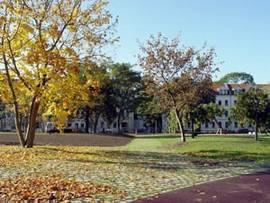
Source: http://www.leipziger-osten.de/content/stadt-umbauen/abgeschlossene-stadtumbauprojekte/stadtteilpark-rabet/
Overview
Nature-based solution
- Parks and urban forests
- Large urban parks or forests
Key challenges
- Green space, habitats and biodiversity (SDG 15)
- Green space creation and/or management
- Regeneration, land-use and urban development
- Promote natural styles of landscape design for urban development
- Health and well-being (SDG 3)
- Creation of opportunities for recreation
Focus
Creation of new green areas, Maintenance and management of urban nature, Transformation of previously derelict areas
Project objectives
1. Increased quality of life in a residential area subject to decay and housing vacancy (2, 6);
2. Gentrification of surrounding residential districts, refurbishment of dwelling houses; conversion of former industrial areas;
3. Rehabilitation of brownfields with modern townhouses (2, 6);
4. Creation of a green recreational area for residents of all ages (2).
Implementation activities
The city of Leipzig purchased ground to extend the park area and rededicated former roads.
- Creation of a large meadow in the middle of the park (4)
- Plantation of new seeds to create green islands with trees and flowers and lawns (4)
- Creation of a 1km-long active band with benches and seating arrangements, which leads to a multifunctional square that integrates typical park and playground elements such as an atrium, a pirate ship as well as sports and leisure facilities (2, 4, 6)
- Creation of two new paved entrance areas (4)
- Installation of 30 new benches and 22 seating cubes were set up along the circular route - the blackberry-colored asphalted "amoeba" (4)
- Installation of new lighting in the park (4)
- Building of a footbridge over the district heating pipes (4)
- Installation of new outdoor facilities for the daycare center and the primary school which are in line with the park design (4)
Main beneficiaries
- Local government/Municipality
- Citizens or community groups
- Marginalized groups: Socio-economically disadvantaged populations (e.g. low-income households, unemployed)
Governance
Management set-up
- Government-led
Type of initiating organisation
- Local government/municipality
Participatory approaches/ community involvement
- Co-planning (e.g. stakeholder workshops, focus groups, participatory mapping)
- Dissemination of information and education
- Consultation (e.g. workshop, surveys, community meetings, town halls)
- Citizen monitoring and review
Details on the roles of the organisations involved in the project
The regeneration and redevelopment process of the district park Rabet was initiated by the local government which determined the project as an important measure in the Conceptual City District Plan Leipzig's East. The planning for the new district park was specified by the Architectural Office in cooperation with the City Planning Office, Green Space Office, Office for Urban Renewal and Housing Promotion and AG Rabet and implemented based on the design of Berliner Büros Lützow 7 (2). The working group Rabet also took part in the planning of the intervention while citizens were involved through workshops and consultations (2, 3, 7).
Project implemented in response to ...
... an EU policy or strategy?
Yes
(EU Sustainability Strategy, European Regional Development Fund since the project was co-funded by the latter (2) )
... a national policy or strategy?
Yes
(The urban development funding programme "Social City - investments in the quarter" which targets city districts exhibiting development requirements all over Germany was initiated in 1999 by the National Ministry for Transport, Construction and Urban Development (BMVBS) in collaboration with federal authorities. Its goal was to improve living, housing and economic conditions in poor and socially deprived city districts while improving the residents' identification via community involvement activities and introducing a so-called quarter management. Leipzig’s East is one of the programme’s focus areas (11).)
... a local policy or strategy?
Yes
(The Integrated Urban Development concept for Leipzig ("integriertes Stadtentwicklungskonzept") determines the objectives, urban areas and focus areas for development and contains a set of central measures; it provides the base for cross-departmental administrative action, collaboration and participation of non-governmental actors (10).
The redesign and extension of the district park Rabet between Neutstadt-Neuschönefeld and Volkmarsdorf is laid down and outlined as one of the three focal measures in the urban redevelopment plan for Leipzig's East (2). The latter is the "Conceptual City District Plan Leipzig's East" which was issued from 2001 to 2002 and is also taken up in a model plan 2020 that follows the two principles of "connecting green spaces" and preserve urban centres" (3,7). There is also an Integrated City Development Concept for Leipzig's East which mentions the measure of the Rabet park (9).)
Financing
Total cost
€2,000,000 - €4,000,000
Source(s) of funding
- EU funds
- Public national budget
- Public regional budget
- Public local authority budget
Type of funding
- Earmarked public budget
- Direct funding (grants, subsidies, or self-financed projects by private entities)
Non-financial contribution
Unknown
Impacts and Monitoring
Environmental impacts
- Green space and habitat
- Increased green space area
- Restoration of derelict areas
Economic impacts
- Stimulate development in deprived areas
Socio-cultural impacts
- Unknown
Type of reported impacts
Expected impacts, Achieved impacts
Presence of formal monitoring system
Unknown
Presence of indicators used in reporting
No evidence in public records
Presence of monitoring/ evaluation reports
No evidence in public records
Availability of a web-based monitoring tool
No
References
1. Stadt Leipzig. (2002). Gutachterverfahren Rabet “Erweiterung und Neugestaltung des Stadtteilparks Rabet im Leipziger Osten. Accessed on October 7, 2020, Source link
2. Stadt Leipzig. (n/a). Der neue Stadtteilpark Rabet: Grüne Oase im Leipziger Osten. Accessed on October 7, 2020, Source link
3. Stadt Leipzig. (n/a). Konzeptioneller Stadtteilplan. Accessed on October 7, 2020, Source link
4. Stadt Leipzig. (n/a). Die Neugestaltung des Stadtteilparks Rabet 2004 bis 2007 Der 1. Bauabschnitt 2004. Accessed on October 7, 2020, Source link
5. Stadt Leipzig. (n/a). ‘Check the Rabet’. Kinder und Jugendliche testeten Architektenentwürfe. Accessed on October 7, 2020, Source link
6. Bundesamt für Bauwesen und Raumordnung; and Projektgruppe Werkstatt-Stadt. (2014). Parkgestaltung und Erweiterung auf Abrissflächen. Leipzig-Neuschönefeld „Stadtteilpark Rabet" (Sachsen). Website not available
7. Stadt Leipzig - der Oberbürgermeister; Dezernat Stadtentwicklung und Bau; Stadtplanungsamt (2003) ‘Konzeptioneller Stadtteilplan Leipziger Osten’, Beiträge Zur Stadtentwicklung, 38, p. 52. Accessed on October 7, 2020, Source link
8. Elsässer, R. and Löbel, R. (2006). Quartiersmanagement Neuschönefeld. Abschlussbericht. Leipzig. Accessed on October 7, 2020, Source link
9. Stadt Leipzig. (2013). Integriertes Stadtteilentwicklungskonzept Leipziger Osten. Leipzig. Accessed on October 7, 2020, Source link
10. Dezernat Stadtentwicklung und -bau. (2009). Integriertes Stadtentwicklungskonzept Leipzig 2020 (SEKo). Leipzig. Website not available
11. Stadt Leipzig. (2017). Bund-Länder-Programm Soziale Stadt - Investitionen im Quartier. Accessed on October 7, 2020, Source link
12. Stadt Leipzig and Leipziger Osten. (2003). ‘Stadtumbau Freiraum und neues Grün’. Leipzig: Grünflächenamt; Stadtteilmanagement ‘Leipziger Osten’. Website not available.
13. Stadt Leipzig. (n/a). Forum Leipziger Osten. Accessed on October 7, 2020 Source link
2. Stadt Leipzig. (n/a). Der neue Stadtteilpark Rabet: Grüne Oase im Leipziger Osten. Accessed on October 7, 2020, Source link
3. Stadt Leipzig. (n/a). Konzeptioneller Stadtteilplan. Accessed on October 7, 2020, Source link
4. Stadt Leipzig. (n/a). Die Neugestaltung des Stadtteilparks Rabet 2004 bis 2007 Der 1. Bauabschnitt 2004. Accessed on October 7, 2020, Source link
5. Stadt Leipzig. (n/a). ‘Check the Rabet’. Kinder und Jugendliche testeten Architektenentwürfe. Accessed on October 7, 2020, Source link
6. Bundesamt für Bauwesen und Raumordnung; and Projektgruppe Werkstatt-Stadt. (2014). Parkgestaltung und Erweiterung auf Abrissflächen. Leipzig-Neuschönefeld „Stadtteilpark Rabet" (Sachsen). Website not available
7. Stadt Leipzig - der Oberbürgermeister; Dezernat Stadtentwicklung und Bau; Stadtplanungsamt (2003) ‘Konzeptioneller Stadtteilplan Leipziger Osten’, Beiträge Zur Stadtentwicklung, 38, p. 52. Accessed on October 7, 2020, Source link
8. Elsässer, R. and Löbel, R. (2006). Quartiersmanagement Neuschönefeld. Abschlussbericht. Leipzig. Accessed on October 7, 2020, Source link
9. Stadt Leipzig. (2013). Integriertes Stadtteilentwicklungskonzept Leipziger Osten. Leipzig. Accessed on October 7, 2020, Source link
10. Dezernat Stadtentwicklung und -bau. (2009). Integriertes Stadtentwicklungskonzept Leipzig 2020 (SEKo). Leipzig. Website not available
11. Stadt Leipzig. (2017). Bund-Länder-Programm Soziale Stadt - Investitionen im Quartier. Accessed on October 7, 2020, Source link
12. Stadt Leipzig and Leipziger Osten. (2003). ‘Stadtumbau Freiraum und neues Grün’. Leipzig: Grünflächenamt; Stadtteilmanagement ‘Leipziger Osten’. Website not available.
13. Stadt Leipzig. (n/a). Forum Leipziger Osten. Accessed on October 7, 2020 Source link
Source: http://www.leipziger-osten.de/content/stadt-umbauen/abgeschlossene-stadtumbauprojekte/stadtteilpark-rabet/