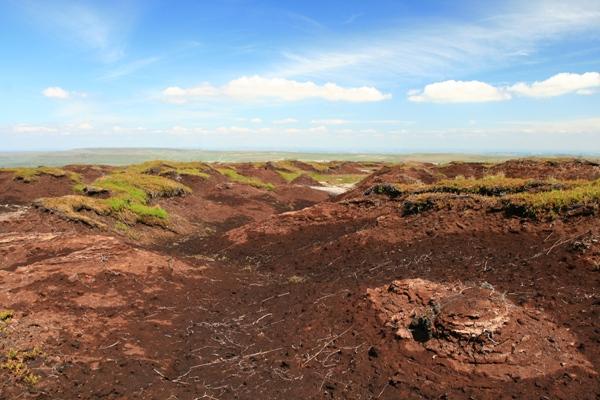
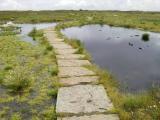
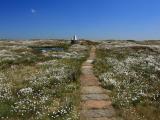
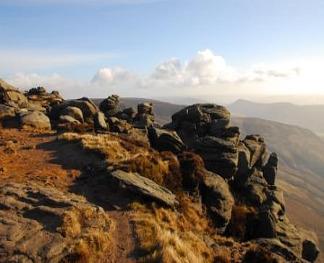
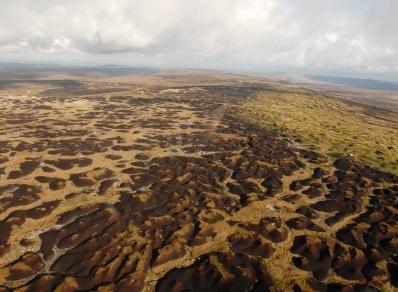
The South Pennine Moors is a conservation area in the Natura 2000 network. This site is crucial for active blanket bog and is part of two Special Protection Areas in the Birds Directive, including golden plover, dunlin, short-eared owl and merlin, dependent on the blanket bog for breeding and feeding. The conservation status of the site is threatened due to sulphate and nitrate pollution, causing severe depletion of crucial sphagnum moss cover. Fire damage has led to more extreme erosion than if the moorlands had remained sphagnum-rich. The restoration of favourable conditions thereby depends on re-establishing a sphagnum-rich bog. (3) The project included three Natura 2000 sites, the Peak District Moors (South Pennine Moors Phase 1), South Pennine Moors Phase 2 and South Pennine Moors (3).
Overview
Nature-based solution
- Blue infrastructure
- In-land wetlands, peatlands, swamps, and moors
Key challenges
- Green space, habitats and biodiversity (SDG 15)
- Habitat and biodiversity restoration
- Habitat and biodiversity conservation
- Green space creation and/or management
- Water management (SDG 6)
- Flood protection
- Social justice, cohesion and equity (SDG 10)
- Environmental education
Focus
Project objectives
Implementation activities
Biodiversity conservation or restoration-focused activities
Biodiversity conservation:
- Protect and enhance urban habitats
- Preserve and strengthen existing habitats and ecosystems
- Preserve and strengthen habitat connectivity
- Protect species
- Undertake specific measures to protect species
- Undertake specific measures to protect native species
- Means for conservation governance
- Raise public awareness
- Public engagement
- Other
Biodiversity restoration:
- Rehabilitate and restore damaged or destroyed ecosystems
- Restore species (native, endangered, or unspecified)
- Restore ecological connectivity
Main beneficiaries
- National-level government
- Local government/Municipality
- Citizens or community groups
Governance
Management set-up
- Co-governance with government and non-government actors
Type of initiating organisation
- Multilateral organisation
Participatory approaches/ community involvement
- Unknown
Details on the roles of the organisations involved in the project
Project implemented in response to ...
Financing
Total cost
Source(s) of funding
- Funds provided by non-governmental organization (NGO)
- EU funds
Type of funding
- Direct funding (grants, subsidies, or self-financed projects by private entities)
- Unknown
Non-financial contribution
Impacts and Monitoring
Environmental impacts
- Water management and blue areas
- Increased protection against flooding
- Green space and habitat
- Increased green space area
- Increase in protected green space areas
- Increased number of protection areas
- Increased conservation or restoration of ecosystems
- Reduced biodiversity loss
- Increased number of species present
Economic impacts
- Unknown
Socio-cultural impacts
- Health and wellbeing
- Gain in activities for recreation and exercise
Type of reported impacts
Presence of formal monitoring system
Presence of indicators used in reporting
Presence of monitoring/ evaluation reports
Availability of a web-based monitoring tool
References
(2) Moors for the Future Partnership. (2015). MoorLIFE 2020: Technical Summary. [Document attached]
(3) Commission. [no date]. MoorLIFE - MoorLIFE: Active blanket bog restoration in the South Pennine Moors. Source link [Accessed 7 October 2020]
(4) Moors for the Future Partnership. (2015). Successful 5-year conservation project protects 2,500 hectares of moorland. [Website unavailable in 2020]
(5) Bennett, Ken. (2017). Countryside comes closer thanks to ‘bogtastic’ exhibition van. Source link [Accessed 7 October 2020]
(6) BBC. (2015). Peak District gets about £12m to protect moorlands. Source link [Accessed 7 October 2020]
(7) Commission. (2008). Nature & Biodiversity: Projects 2008. [Website unavailable in 2020, Document attached]
(8) Vogel Paradies Weidmoos. [no date]. Aims of the project. Source link [Accessed 7 October 2020]
(9) Peak District National Park. (2015). First moorland-themed apps launched. Source link [Accessed 7 October 2020]
(10) Commission. [no date]. MoorLIFE : Moorland conservation programme on the South Pennine Moors, UK. Source link [Accessed 7 October 2020]
(11) Natural England. [no date]. South Pennine Moors SSSI. Source link [Accessed 7 October 2020]
(12) IUCN. [no date]. Bleaklow (MoorLIFE Project). [Website unavailable in 2020]
(13) Moors for the Future Partnership. [no date]. LAYMAN’S REPORT 2010–2015: MoorLIFE. [Document attached]
(14) UK Landscape Award. (2010). UK Landscape Award 2010: Moors for the Future Partnership Award Statement. [Document attached]
(15) LDA Design. (2010). Leeds city region: intelligence driving growth: Green infrastructure Strategy. Oxford. LDA Design. [Document attached]
(16) Rochdale Borough Council. (2012). Appendix C: Pennines Green Infrastructure Action Plan Schedule of Changes. [Document attached]
(17)Yorkshire live (2016) Multi-million pound scheme to revamp moors above Huddersfield Source link [Accessed 7 October 2020]