

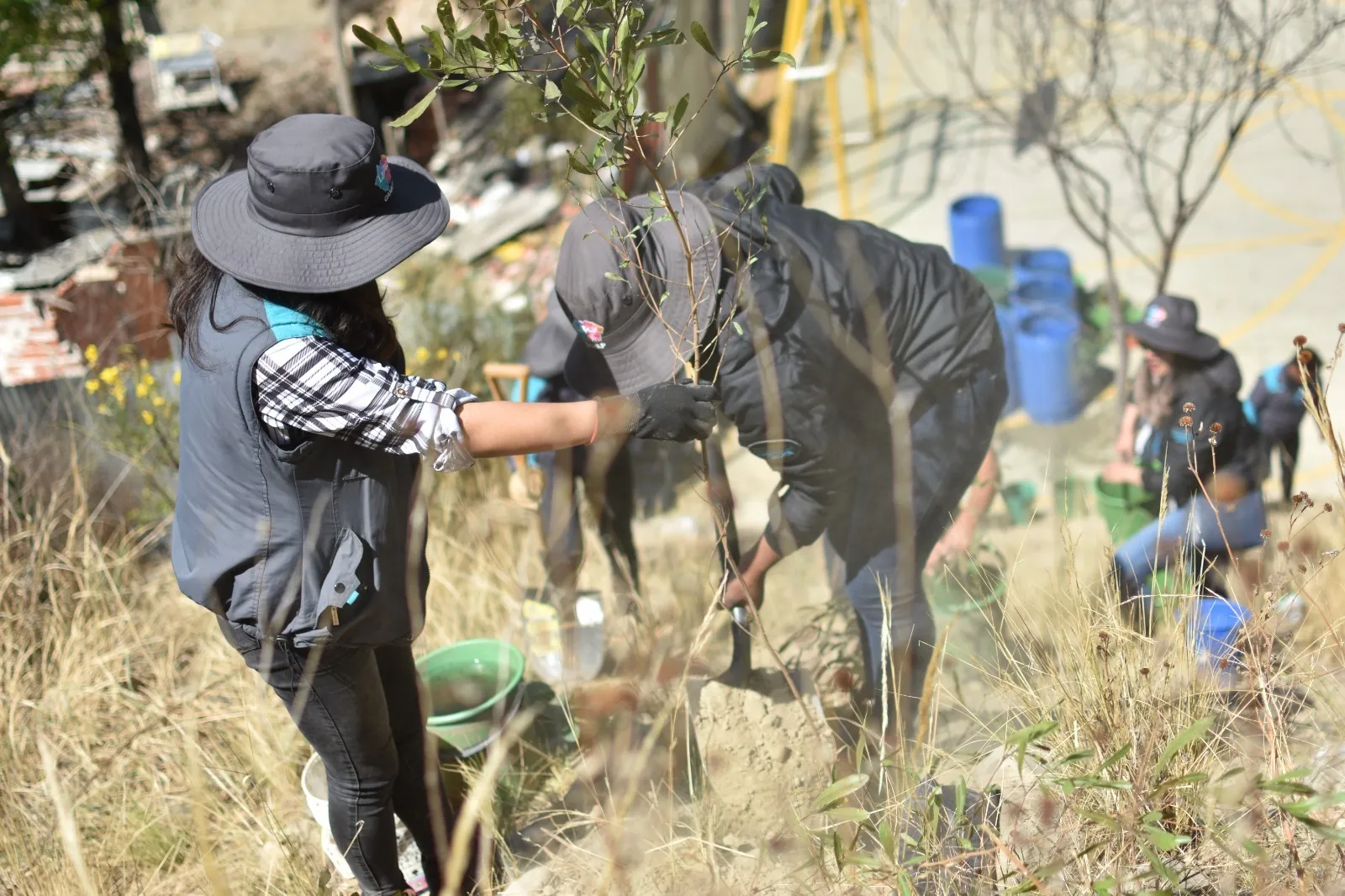
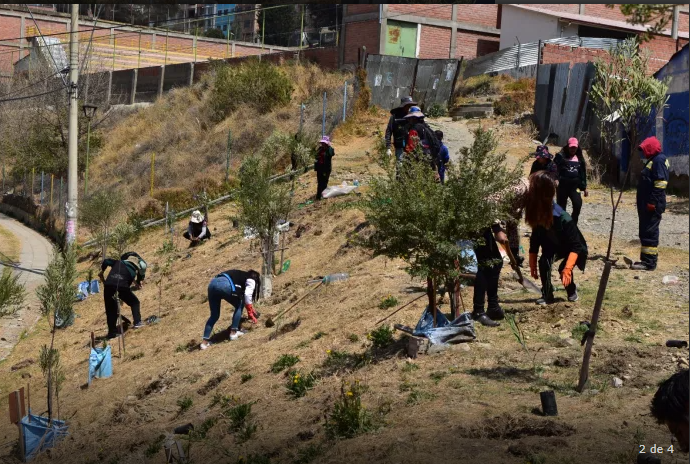
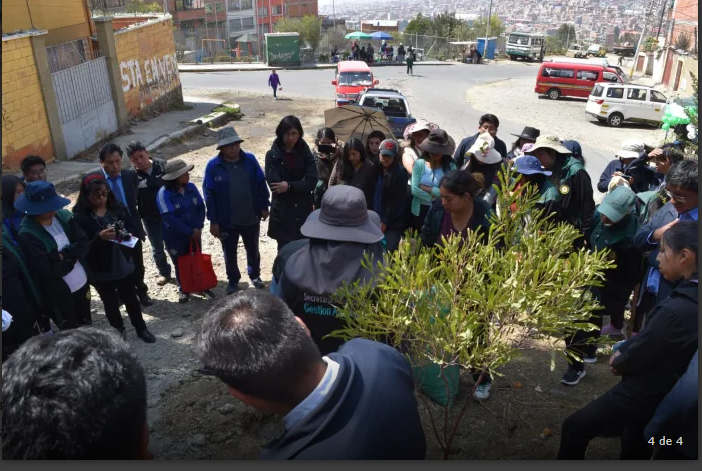
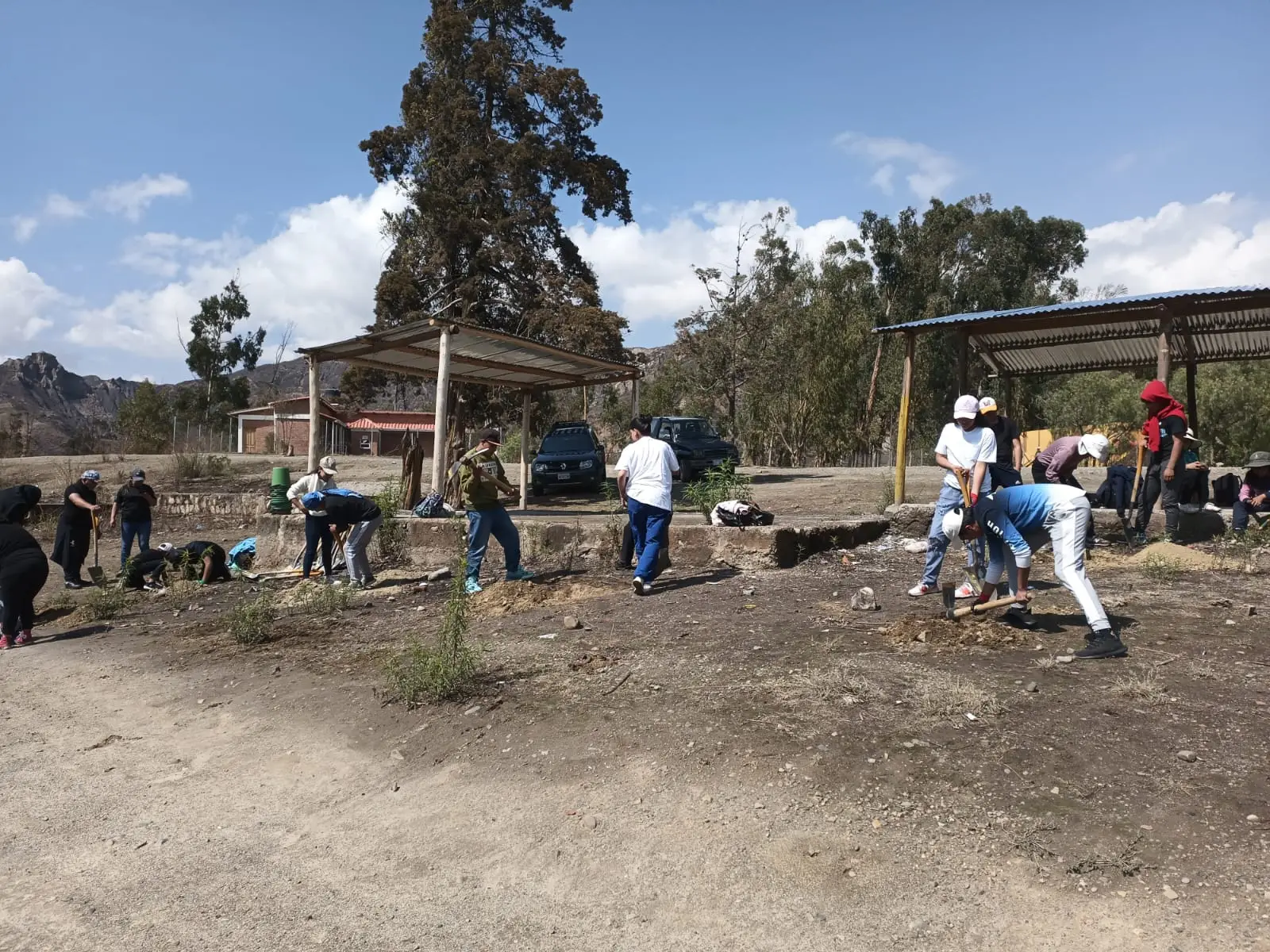
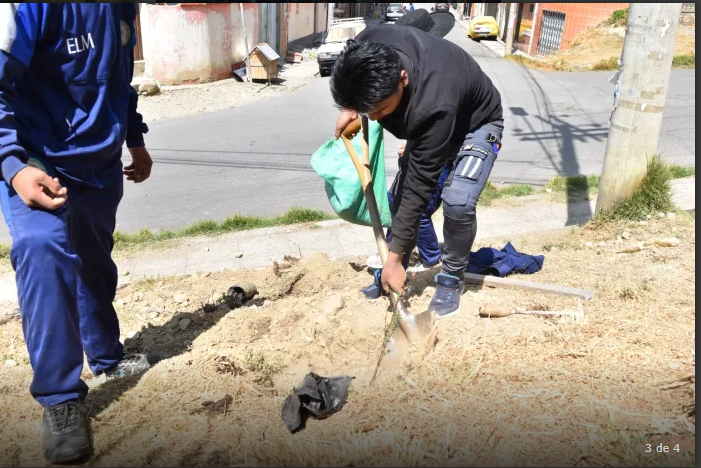
The initiative consists of an afforestation campaign promoted by the local government of La Paz, with the objective of planting 10,000 trees and shrubs (1 & 2). Carried out between 2023 and 2024, the campaign included plantations across all the macrodistricts of La Paz (1). To ensure the campaign's success, the municipality encouraged the participation of volunteers from various institutions, such as public services, environmental groups, schools and universities, neighborhood associations, church groups, and even Army and Navy units (1 & 2). The trees play specific roles in mitigating climate change, improving air quality, reducing odors from nearby landfills, and decreasing the risk of landslides and soil erosion (3 & 4). Furthermore, the campaign aims to foster environmental awareness among citizens and replace trees lost due to illegal deforestation (1). The species selected for planting were provided by EMAVERDE, the public company responsible for managing green spaces in the city. The selection included primarily native species, along with a few introduced ones, all chosen for their resilience to La Paz's varying climate conditions (1, 2 & 4). Given the challenging climate and difficult soil conditions, the municipality informed volunteers about the importance of maintaining the saplings, particularly during drought periods, to ensure their proper growth (1 & 2). The campaign also supported the municipality’s urban development plan (Plan Territorial de Desarrollo Integral "Para Vivir Bien") and the "Plan Integral de Recuperación de la Tormenta a la Esperanza," the latter developed in response to extreme rain events and floods that occurred during the campaign months (5).
Overview
Nature-based solution
- Grey infrastructure featuring greens
- Alley or street trees and other street vegetation
- Parks and urban forests
- Pocket parks/neighbourhood green spaces
- Other
Key challenges
- Climate action for adaptation, resilience and mitigation (SDG 13)
- Climate change adaptation
- Climate change mitigation
- Environmental quality
- Air quality improvement
- Green space, habitats and biodiversity (SDG 15)
- Green space creation and/or management
- Water management (SDG 6)
- Flood protection
- Social justice, cohesion and equity (SDG 10)
- Environmental education
- Sense of community and community engagement
Principal problems in Functional Urban Area (FUA)
- Climate-Related Hazards
- Landslides & mudslides
- Environmental Degradation
- Deforestation and forest degradation
- Soil degradation and loss
- Health, Well-being and Social cohesion
- Disconnection from nature
- Poor community engagement
Key priorities
Focus
Project objectives
Implementation activities
Climate-focused activities
Climate change adaptation:
- Implement measures that prevent/manage desertification, soil erosion and landslides
- Restore and protect forests for soil stabilisation and prevention of landslides
Climate change mitigation:
- Increase the availability of green urban space for carbon storage (street tree cover)
- Restore degraded forests thorough reforestation or ecological restoration to increase carbon storage in degraded forests (e.g. result of logging or fires)
- Raise public awareness of behaviours, lifestyle and cultural changes with mitigation potential
Main beneficiaries
- Citizens or community groups
Governance
Management set-up
- Government-led
Type of initiating organisation
- Local government/municipality
Participatory approaches/ community involvement
- Dissemination of information and education
- Joint implementation (e.g. tree planting)
- Co-management/Joint management
- Citizen monitoring and review
Details on the roles of the organisations involved in the project
Project implemented in response to ...
Type of enablers
Financing
Total cost
Source(s) of funding
- Public local authority budget
- Commercial banks
Type of funding
- Earmarked public budget
- Loan
Non-financial contribution
- Provision of labour
- Provision of expertise
- Citizens (e.g. volunteering)
Impacts and Monitoring
Environmental impacts
- Climate change
- Enhanced carbon sequestration
- Expected enhanced carbon sequestration
- Improved resilience against landslides
- Expected improved resilience against landslides
- Environmental quality
- Improved air quality
- Expected improved air quality
- Green space and habitat
- Increased green space area
- Achieved increased green space area
- Increased conservation or restoration of ecosystems
- Achieved increased conservation or restoration of ecosystems
Economic impacts
- Generation of other type of work opportunities (e.g. voluntary, work for rehabilitation)
- Achieved generation of other type of work opportunities (e.g. voluntary, work for rehabilitation)
Socio-cultural impacts
- Social justice and cohesion
- Improved liveability
- Expected improved liveability
- Increased involvement of locals in the management of green spaces
- Achieved increased involvement of locals in the management of green spaces
- Cultural heritage and sense of place
- Increased appreciation for natural spaces
- Expected increased appreciation for natural spaces
Type of reported impacts
Presence of formal monitoring system
Presence of indicators used in reporting
Presence of monitoring/ evaluation reports
Availability of a web-based monitoring tool
Potential risks of implementation and trade-offs
References
 Information about this nature-based solution was collected as part of the Naturescapes project funded by the European Union under Grant Agreement No 101084341.