

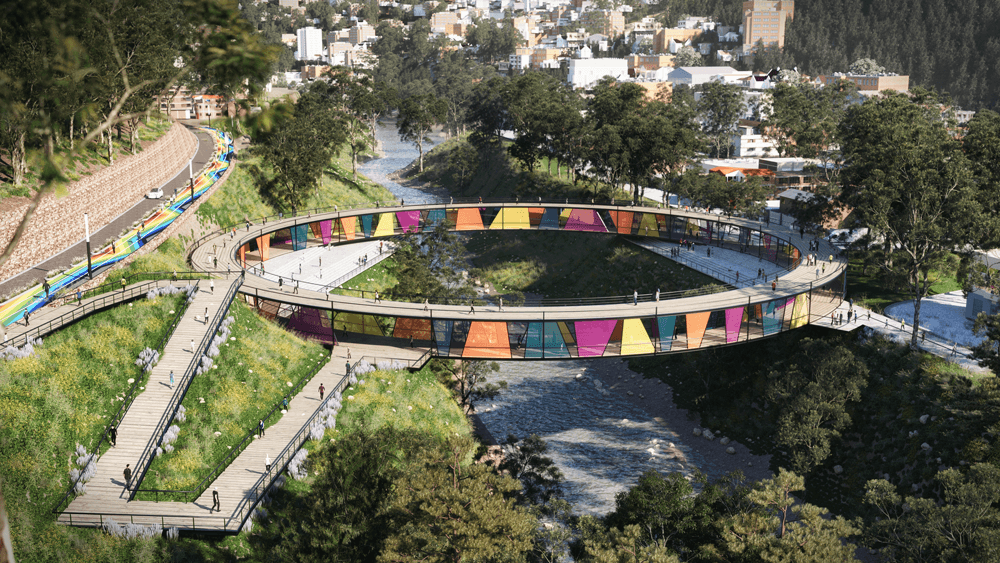
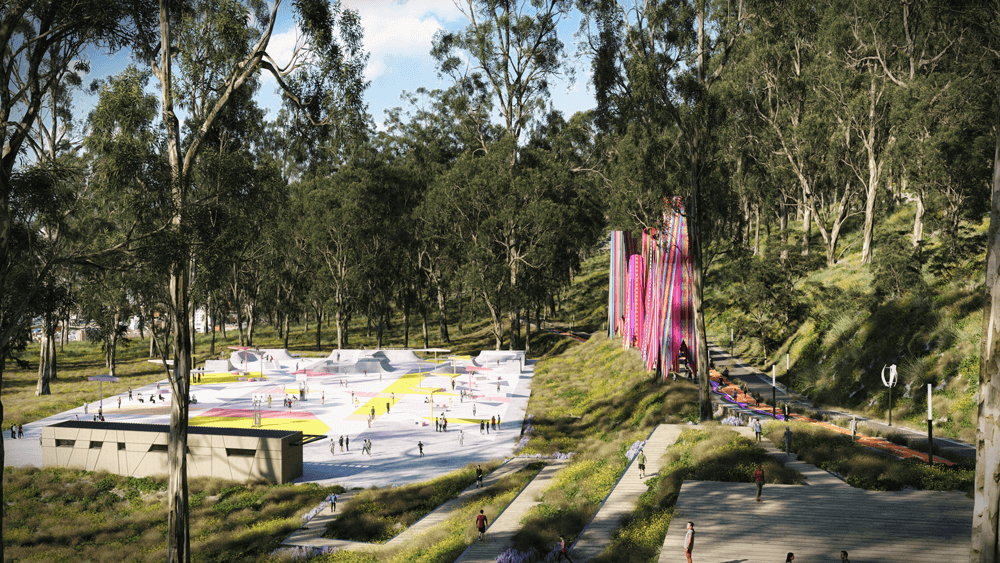
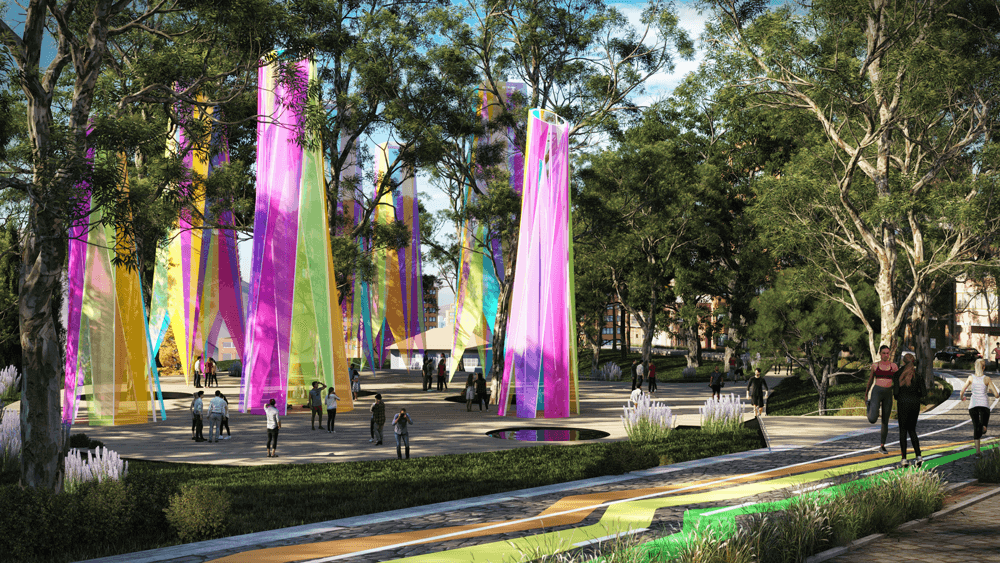
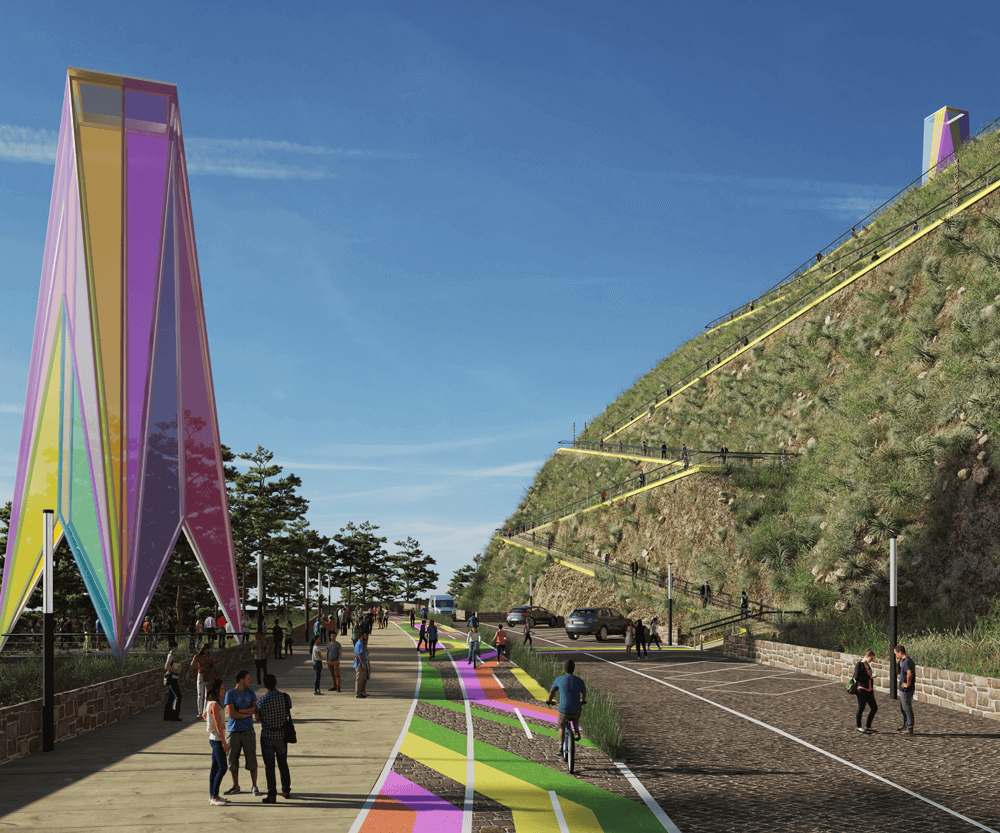
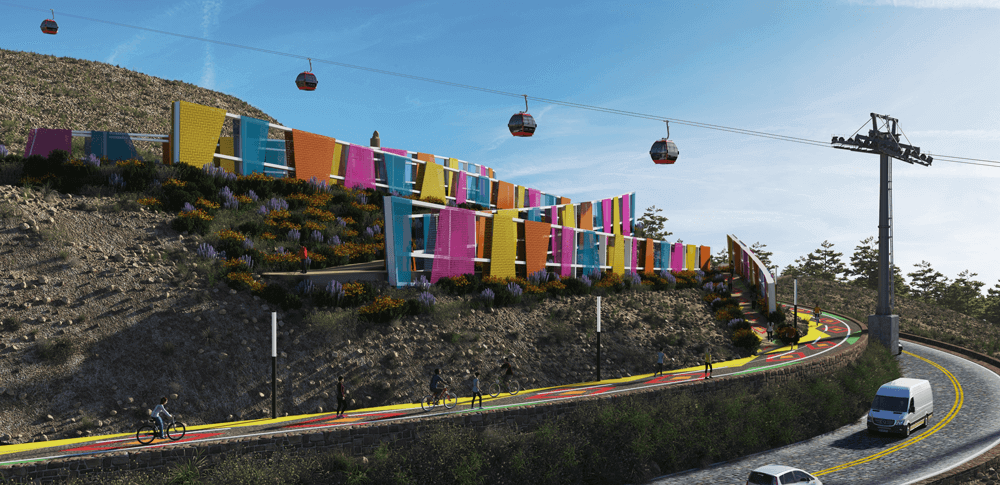
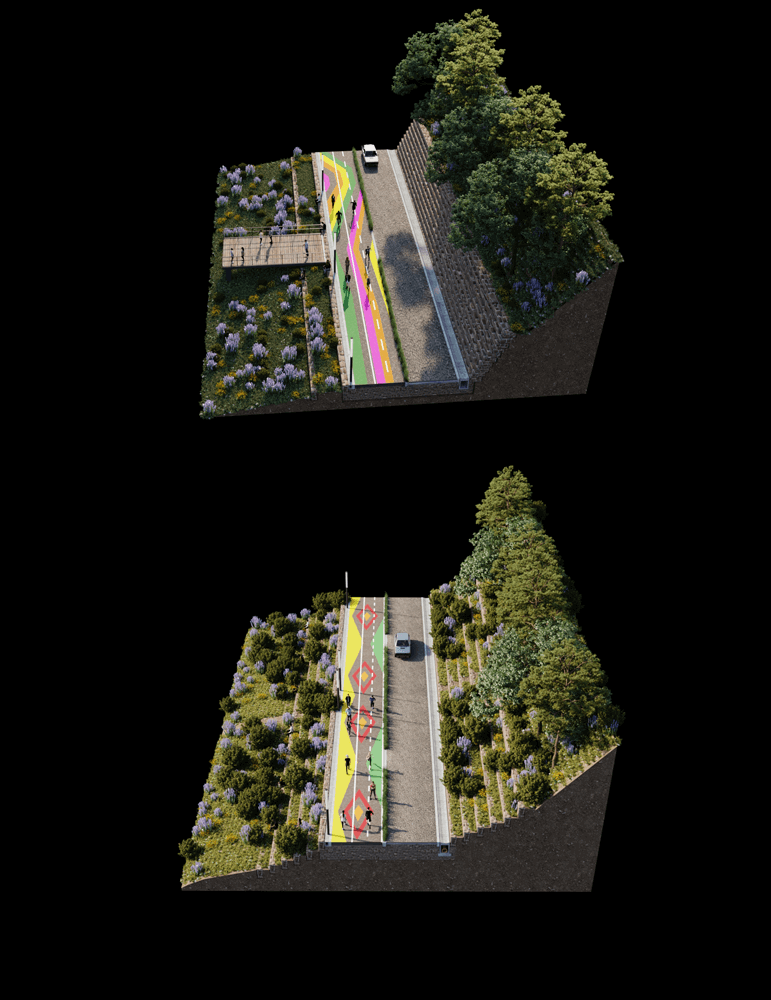
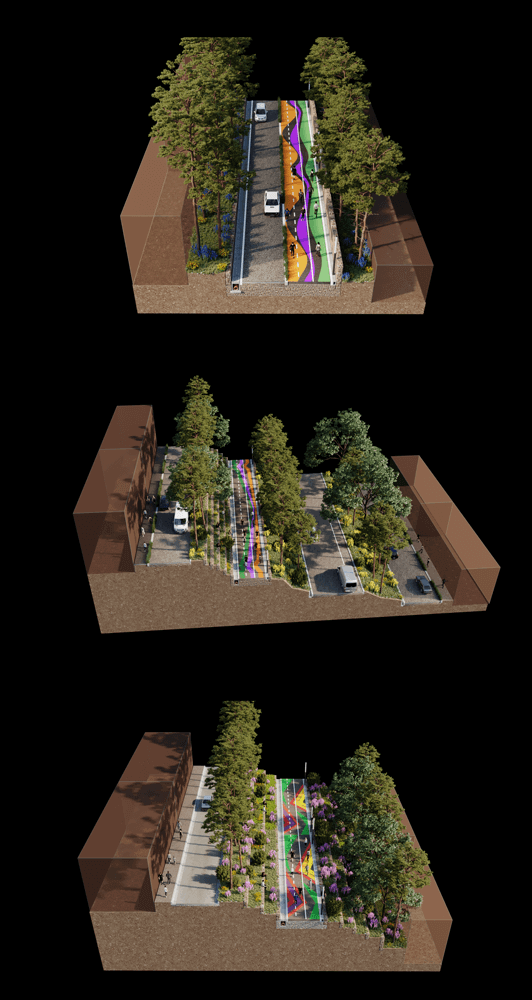
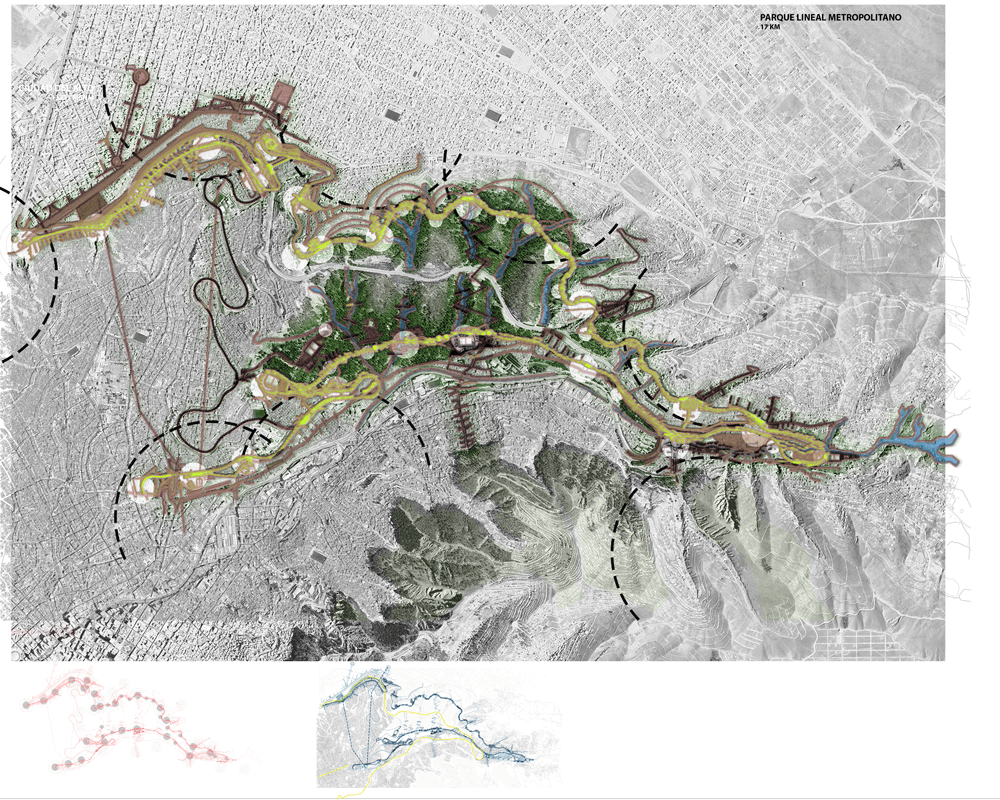
The Metropolitan Linear Park is a project initiated by the national government of Bolivia, funded by the Inter-American Development Bank (IDB) (1-8). The proposed park will be located along a disused railway corridor between the cities of La Paz and El Alto, spanning 18.2 km (8, p. 8). The project involves the construction of a linear park, divided into five sections, each with distinct objectives, uses, and designs (8, p. 9). This large-scale initiative aims to improve access to public spaces in La Paz and El Alto, enhance connectivity between the two cities, protect surrounding biodiversity and natural spaces, and strengthen resilience to and mitigate the effects of climate change (3 & 8, pp. 11-12). To achieve these goals, the project design includes outdoor sports and recreational facilities, pedestrian and cycling circuits, as well as the restoration of parks, squares, and public spaces adjacent to the park corridor (8, p. 9). Some features include balcony corridors, flower and food-producing urban gardens, and viewpoints (5). The project also plans for the re-vegetation of the area with native species and aims to stop the environmental degradation of surrounding natural environments, such as the Pura Pura forest, which has been suffering from ongoing deforestation and waste dumping (8, p. 9). These efforts are expected to increase and support biodiversity in the area (7 & 8, p. 12). Additionally, the project emphasizes social inclusion, with policies designed to incorporate women, indigenous populations, and persons with disabilities (8, pp. 7-8). The park is intended to raise awareness about climate change and biodiversity, ultimately improving the quality of life and health of nearby residents and the citizens of La Paz and El Alto (8, p. 13).
Overview
Nature-based solution
- Community gardens and allotments
- Community gardens
- Parks and urban forests
- Large urban parks or forests
- Green corridors and green belts
Key challenges
- Climate action for adaptation, resilience and mitigation (SDG 13)
- Climate change adaptation
- Climate change mitigation
- Environmental quality
- Air quality improvement
- Soil quality improvement
- Waste management
- Green space, habitats and biodiversity (SDG 15)
- Green space creation and/or management
- Habitat and biodiversity restoration
- Habitat and biodiversity conservation
- Regeneration, land-use and urban development
- Promote natural styles of landscape design for urban development
- Water management (SDG 6)
- Flood protection
- Health and well-being (SDG 3)
- Creation of opportunities for recreation
- Enabling opportunities for physical activity
- Improving physical health
- Social justice, cohesion and equity (SDG 10)
- Social cohesion
- Social justice and equity
- Social interaction
- Environmental education
- Economic development and employment (SDG 8)
- Tourism support
Principal problems in Functional Urban Area (FUA)
- Climate-Related Hazards
- Heat stress & Extreme temperatures
- Forest fires and wildfires
- Landslides & mudslides
- Environmental Degradation
- Biodiversity loss
- Deforestation and forest degradation
- Soil degradation and loss
- Air pollution
- Land use and Socio-economic change
- Rapid urbanization
- Unequal availability and access to public green spaces
- Health, Well-being and Social cohesion
- Physical health harm (from pollution, wildfire, extreme temperature)
- Inadequate access to recreational opportunities
- Social fragmentation and isolation
- Insecurity in public spaces
- Other
Key priorities
Focus
Project objectives
Implementation activities
Climate-focused activities
Climate change adaptation:
- Implement measures that prevent/manage desertification, soil erosion and landslides
- Reducing socio-economic vulnerability to climate impacts (e.g. awareness raising)
Climate change mitigation:
- Increase the availability of green urban space for carbon storage (street tree cover)
- Raise public awareness of behaviours, lifestyle and cultural changes with mitigation potential
Biodiversity conservation or restoration-focused activities
Biodiversity conservation:
- Protect and enhance urban habitats
- Preserve and strengthen existing habitats and ecosystems
- Promote environmentally-sound development in and around protected areas
- Preserve and strengthen habitat connectivity
- Reduce negative impacts and avoid the alteration/damage of ecosystem
- Protect species
- Undertake specific measures to protect native species
- Means for conservation governance
- Raise public awareness
- Public engagement
- Capacity building
Biodiversity restoration:
- Restore native species
Main beneficiaries
- Citizens or community groups
- Marginalized groups: Children, young people or youth groups , Women, People with functional diversities, Indigenous communities
Governance
Management set-up
- Government-led
Type of initiating organisation
- National government
Participatory approaches/ community involvement
- Co-planning (e.g. stakeholder workshops, focus groups, participatory mapping)
- Dissemination of information and education
- Consultation (e.g. workshop, surveys, community meetings, town halls)
- Joint implementation (e.g. tree planting)
Details on the roles of the organisations involved in the project
Project implemented in response to ...
Type of enablers
Financing
Total cost
Source(s) of funding
- Public national budget
- Multilateral funds/international funding
Type of funding
- Earmarked public budget
- Loan
Non-financial contribution
Impacts and Monitoring
Environmental impacts
- Climate change
- Strengthened capacity to address climate hazards/natural disasters
- Expected strengthened capacity to address climate hazards/natural disasters
- Enhanced carbon sequestration
- Expected enhanced carbon sequestration
- Reduced emissions
- Expected reduced emissions
- Environmental quality
- Improved air quality
- Expected improved air quality
- Improved waste management
- Expected improved waste management
- Improved soil quality
- Expected improved soil quality
- Water management and blue areas
- Improved water quality
- Expected improved water quality
- Increased protection against flooding
- Expected increased protection against flooding
- Green space and habitat
- Increased green space area
- Expected increased green space area
- Increased conservation or restoration of ecosystems
- Expected increased conservation or restoration of ecosystems
- Increased ecological connectivity across regeneration sites and scales
- Expected increased ecological connectivity across regeneration sites and scales
- Increased conversion of degraded land or soil
- Expected increased conversion of degraded land or soil
- Reduced biodiversity loss
- Expected reduced biodiversity loss
- Restoration of derelict areas
- Expected restoration of derelict areas
Economic impacts
- Increase of green jobs (e.g. paid employment positions)
- Expected increase of green jobs (e.g. paid employment positions)
- More sustainable tourism
- Expected more sustainable tourism
- Increased property prices
- Expected increased property prices
Socio-cultural impacts
- Social justice and cohesion
- Improved social cohesion
- Expected improved social cohesion
- Improved access to urban green space
- Expected improved access to urban green space
- Increased visibility and opportunity for marginalised groups or indigenous peoples
- Expected increased visibility and opportunity for marginalised groups or indigenous peoples
- Increased opportunities for social interaction
- Expected increased opportunities for social interaction
- Health and wellbeing
- Gain in activities for recreation and exercise
- Expected gain in activities for recreation and exercise
- Improved physical health
- Expected improved physical health
- Education
- Increased support for education and scientific research
- Expected increased support for education and scientific research
- Safety
- Improved community safety to climate-related hazards
- Expected improved community safety to climate-related hazards
- Increased perception of safety
- Expected increased perception of safety
Type of reported impacts
Presence of formal monitoring system
Presence of indicators used in reporting
Presence of monitoring/ evaluation reports
Availability of a web-based monitoring tool
Potential risks of implementation and trade-offs
References
 Information about this nature-based solution was collected as part of the Naturescapes project funded by the European Union under Grant Agreement No 101084341.