

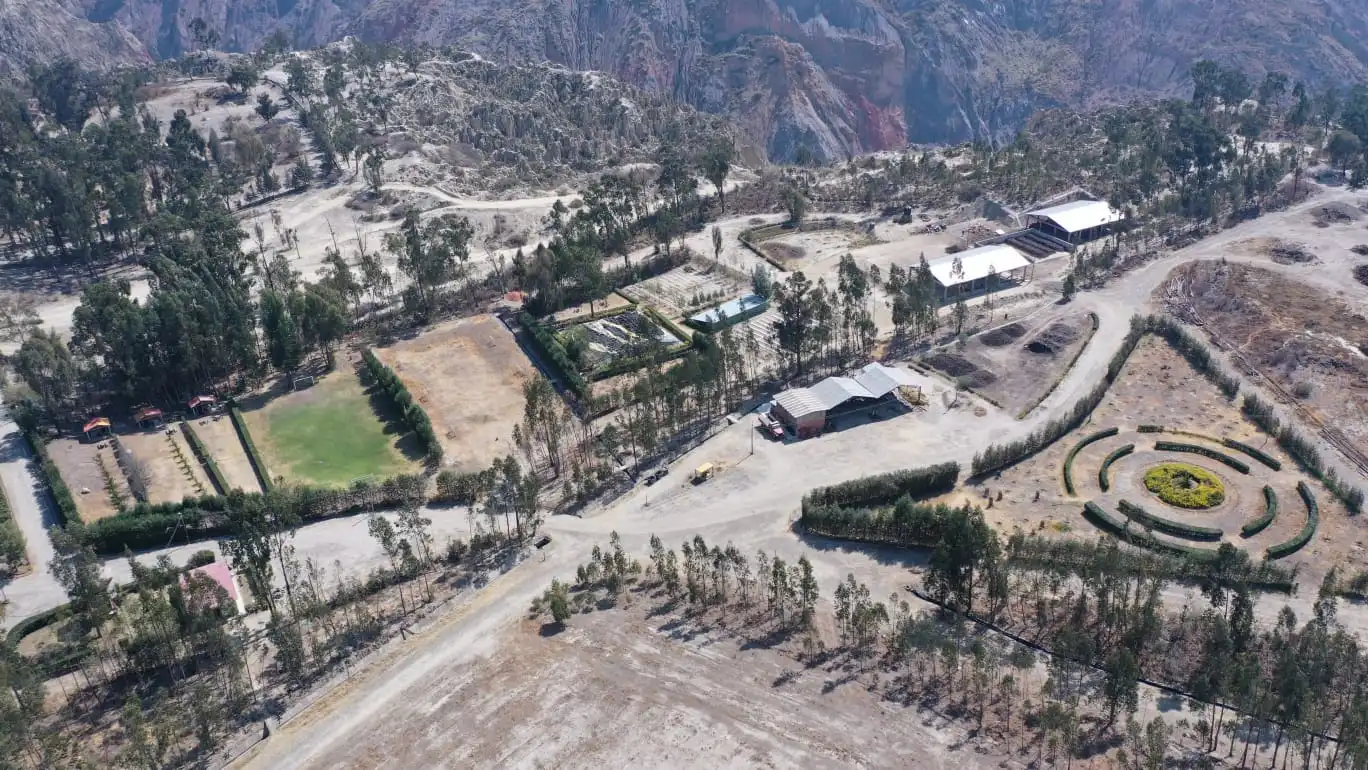
This initiative was launched by the local government of La Paz, focusing on afforestation of the Mallasa landfill, which was closed in 2004 (1-4 & 6-10). While some plantations were established in the area when the landfill was closed, the overall plan aimed to manage the waste until the site was sufficiently clean for new projects—a process expected to take at least a decade (6). By 2021, signs of biodiversity, including flora and fauna, had begun to return to the former landfill. In response, the municipality of La Paz implemented a project to plant 6,000 native tree species, along with other shrub species, to further enhance biodiversity regeneration and establish a second urban forest in the city (3 & 4 & 7 & 8). The afforestation efforts took place between 2021 and 2022, coordinated through "forestry brigades" made up of diverse volunteer groups. These groups included members from public institutions, private company representatives, NGOs (both environmental and non-environmental), universities, religious organizations, and local citizen groups (8-10). A total of 12 hectares were reforested out of the 33-hectare area (1 & 7). Following this, the area was closed to the public and is expected to become a biodiversity sanctuary within ten years, with ongoing monitoring by the municipal environmental agency (7). Among the trees planted, some were chosen to attract birds with their fruit, others to support the pollination of hummingbirds and bees, while others were intended to enrich the soil with nutrients—all species being native to the region (3 & 7). Additional goals of the initiative include raising awareness about climate change, fostering a sense of environmental stewardship through community engagement, and advancing the municipality's decarbonization plans (3 & 9). Some of the seedlings and saplings were purchased by the municipality at a cost of 6,160 euros, with private companies also contributing financial support to the initiative (1 & 7).

Overview
Nature-based solution
- Parks and urban forests
- Large urban parks or forests
Key challenges
- Climate action for adaptation, resilience and mitigation (SDG 13)
- Climate change mitigation
- Environmental quality
- Air quality improvement
- Soil quality improvement
- Waste management
- Green space, habitats and biodiversity (SDG 15)
- Green space creation and/or management
- Habitat and biodiversity restoration
- Regeneration, land-use and urban development
- Promote natural styles of landscape design for urban development
- Health and well-being (SDG 3)
- Improving physical health
- Social justice, cohesion and equity (SDG 10)
- Social interaction
- Sense of community and community engagement
Principal problems in Functional Urban Area (FUA)
- Environmental Degradation
- Biodiversity loss
- Deforestation and forest degradation
- Soil degradation and loss
- Air pollution
- Land use and Socio-economic change
- Unequal availability and access to public green spaces
- Health, Well-being and Social cohesion
- Physical health harm (from pollution, wildfire, extreme temperature)
- Inadequate access to recreational opportunities
- Poor community engagement
Key priorities
Focus
Project objectives
Implementation activities
Climate-focused activities
Climate change mitigation:
- Restore degraded forests thorough reforestation or ecological restoration to increase carbon storage in degraded forests (e.g. result of logging or fires)
- Raise public awareness of behaviours, lifestyle and cultural changes with mitigation potential
Biodiversity conservation or restoration-focused activities
Biodiversity restoration:
- Rehabilitate and restore damaged or destroyed ecosystems
- Restore species (native, endangered, or unspecified)
- Public engagement
Main beneficiaries
- Local government/Municipality
- Citizens or community groups
Governance
Management set-up
- Government-led
Type of initiating organisation
- Local government/municipality
Participatory approaches/ community involvement
- Joint implementation (e.g. tree planting)
- Citizen monitoring and review
Details on the roles of the organisations involved in the project
Project implemented in response to ...
Type of enablers
Financing
Total cost
Source(s) of funding
- Public local authority budget
- Corporate investment
Type of funding
- Earmarked public budget
- Direct funding (grants, subsidies, or self-financed projects by private entities)
Non-financial contribution
- Provision of labour
- Provision of expertise
- Citizens (e.g. volunteering)
Impacts and Monitoring
Environmental impacts
- Environmental quality
- Improved air quality
- Expected improved air quality
- Improved waste management
- Expected improved waste management
- Green space and habitat
- Increased green space area
- Achieved increased green space area
- Increase in protected green space areas
- Achieved increase in protected green space areas
- Increased conservation or restoration of ecosystems
- Expected increased conservation or restoration of ecosystems
- Increased presence and recovery of wild species
- Expected increased presence and recovery of wild species
- Enhanced support of pollination
- Expected enhanced support of pollination
- Restoration of derelict areas
- Achieved restoration of derelict areas
Economic impacts
- Generation of other type of work opportunities (e.g. voluntary, work for rehabilitation)
- Achieved generation of other type of work opportunities (e.g. voluntary, work for rehabilitation)
Socio-cultural impacts
- Social justice and cohesion
- Improved liveability
- Expected improved liveability
- Improved access to urban green space
- Expected improved access to urban green space
- Increased opportunities for social interaction
- Achieved increased opportunities for social interaction
- Increased involvement of locals in the management of green spaces
- Achieved increased involvement of locals in the management of green spaces
- Health and wellbeing
- Improved physical health
- Expected improved physical health
Type of reported impacts
Presence of formal monitoring system
Presence of indicators used in reporting
Presence of monitoring/ evaluation reports
Availability of a web-based monitoring tool
Potential risks of implementation and trade-offs
References

 Information about this nature-based solution was collected as part of the Naturescapes project funded by the European Union under Grant Agreement No 101084341.