

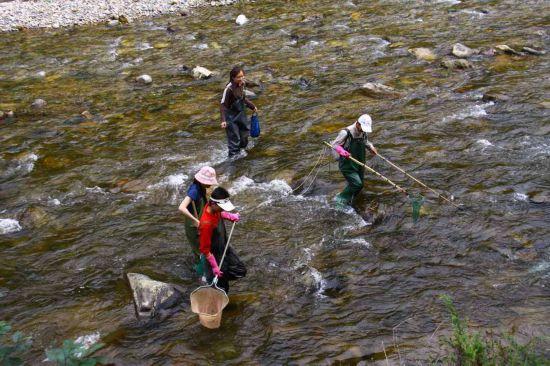
Situated in the southern suburbs of Kunming City, Dianchi is one of the largest freshwater lakes in Yunnan and the sixth largest in China (Refs 1, 2). However, due to rapid industrial development, agricultural activities around the lake, land reclamation, and population growth, Dianchi Lake became severely polluted, ranking among the most contaminated lakes in China. This pollution threatened biodiversity and degraded natural habitats (Refs 1, 2, 3). The introduction of exotic species further disrupted the lake’s ecological balance (Ref 1). In response, the Kunming Institute of Zoology (KIZ), with funding from the Chinese Government, World Bank and the Global Environment Facility (GEF) launched the Lake Dianchi Freshwater Biodiversity Restoration Project. This initiative aimed to restore natural habitats, improve water quality through biological means, and foster community engagement and institutional capacity, creating a sustainable framework for the long-term conservation of Dianchi's unique freshwater biodiversity (Refs 1, 4). The project was implemented across four key components: Wetland Management and Restoration, Surveys and Monitoring of Species Conservation, Capacity Building and Training, and Public Awareness (ibid.). The project was rated 'Satisfactory' in terms of outcomes, sustainability, and execution under a comprehensive evaluation framework that employed multiple indicators (Refs 4, 5).
Overview
Nature-based solution
- Blue infrastructure
- Lakes/ponds
- In-land wetlands, peatlands, swamps, and moors
- Riverbank/Lakeside greens
Key challenges
- Green space, habitats and biodiversity (SDG 15)
- Habitat and biodiversity restoration
- Habitat and biodiversity conservation
- Water management (SDG 6)
- Improvements to water quality
- Inclusive and effective governance (SDG 16)
- Inclusive governance
- Social justice, cohesion and equity (SDG 10)
- Environmental education
Principal problems in Functional Urban Area (FUA)
- Environmental Degradation
- Biodiversity loss
- Poor water quality
Key priorities
Focus
Project objectives
Implementation activities
Biodiversity conservation or restoration-focused activities
Biodiversity conservation:
- Protect and enhance urban habitats
- Preserve and strengthen existing habitats and ecosystems
- Protect species
- Undertake specific measures to protect native species
- Undertake specific measures to protect endangered species
- Control and clean invasive alien species
- Take measures for ex situ conservation
- Means for conservation governance
- Manage biological resources for conservation and sustainable use
- Raise public awareness
- Public engagement
Biodiversity restoration:
- Rehabilitate and restore damaged or destroyed ecosystems
- Restore species (native, endangered, or unspecified)
- Clear and control invasive alien species
- Public engagement
Main beneficiaries
- National-level government
- Local government/Municipality
- Public sector institution (e.g. school or hospital)
- Private sector/Corporate/Company
- Researchers/University
- Citizens or community groups
- Food producers and cultivators (i.e. farmers, gardeners)
- Coastal-dependent communities (e.g. small-scale fishers, coastal farmers, and indigenous peoples)
- Young people and children
- Marginalized groups: Other
Governance
Management set-up
- Co-governance with government and non-government actors
Type of initiating organisation
- Local government/municipality
- Researchers/university
- Multilateral organisation
Participatory approaches/ community involvement
- Co-planning (e.g. stakeholder workshops, focus groups, participatory mapping)
- Taskforce groups
- Dissemination of information and education
- Consultation (e.g. workshop, surveys, community meetings, town halls)
- Joint implementation (e.g. tree planting)
- Co-management/Joint management
- Citizen monitoring and review
Details on the roles of the organisations involved in the project
Project implemented in response to ...
Type of enablers
Financing
Total cost
Source(s) of funding
- Public national budget
- Multilateral funds/international funding
Type of funding
- Earmarked public budget
- Direct funding (grants, subsidies, or self-financed projects by private entities)
Non-financial contribution
- Provision of land
- Provision of labour
- Provision of expertise
- Public authorities (e.g. land, utility services)
- Citizens (e.g. volunteering)
- Other
Impacts and Monitoring
Environmental impacts
- Water management and blue areas
- Improved water quality
- Achieved improved water quality
- Enhanced protection and restoration of freshwater ecosystems
- Achieved enhanced protection and restoration of freshwater ecosystems
Economic impacts
- More sustainable tourism
- Achieved more sustainable tourism
- Reduce financial cost for urban management
- Achieved reduce financial cost for urban management
- Increase in agricultural production (for profit or not)
- Expected increase in agricultural production (for profit or not)
Socio-cultural impacts
- Social justice and cohesion
- Increased visibility and opportunity for marginalised groups or indigenous peoples
- Achieved increased visibility and opportunity for marginalised groups or indigenous peoples
- Increased involvement of locals in the management of green spaces
- Achieved increased involvement of locals in the management of green spaces
- Increased sustainability of agriculture practices
- Achieved increased sustainability of agriculture practices
- Cultural heritage and sense of place
- Protection of natural heritage
- Achieved protection of natural heritage
- Education
- Increased support for education and scientific research
- Achieved increased support for education and scientific research
- Increased awareness of NBS and their benefits
- Achieved increased awareness of NBS and their benefits
Type of reported impacts
Presence of formal monitoring system
Presence of indicators used in reporting
Presence of monitoring/ evaluation reports
Availability of a web-based monitoring tool
Potential risks of implementation and trade-offs
References
 Information about this nature-based solution was collected as part of the Naturescapes project funded by the European Union under Grant Agreement No 101084341.