

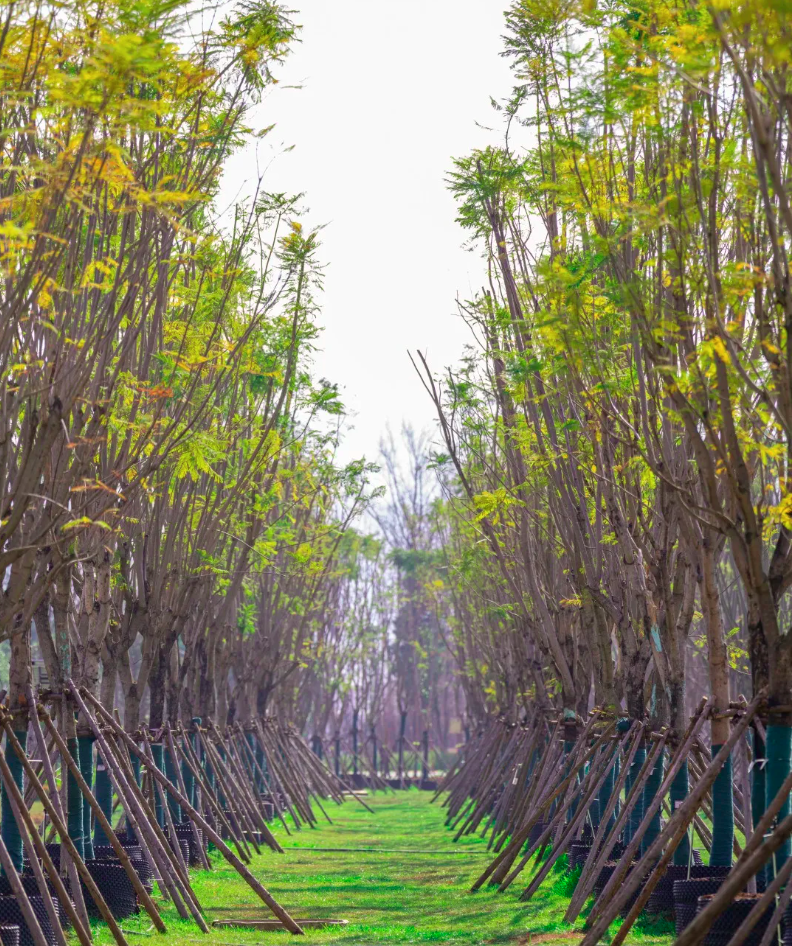
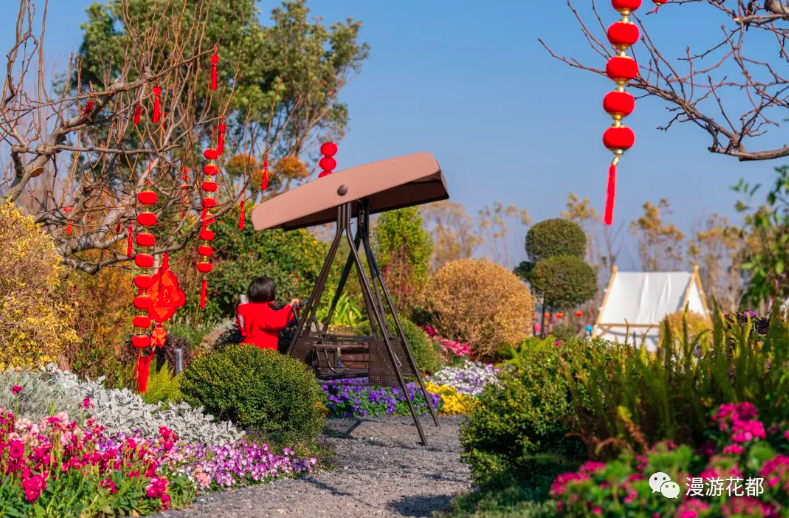
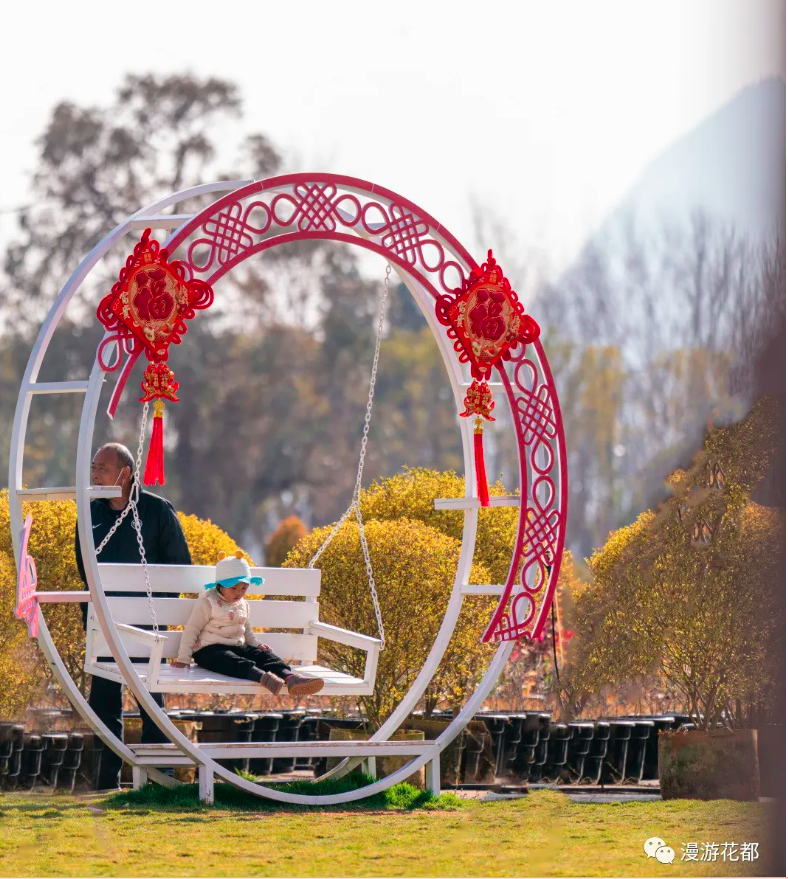
The Chaowan Nursery Garden Base Project (潮玩苗圃基地), located along the Dianchi Greenway in Kunming, was established by the Kunming Gardens Virescence Bureau (昆明市园林绿化局) in 2022 as part of the city's efforts to transform into a "city of parks" (Ref 2, 3). Covering 639 mu (42.6 hectares), the Chaowan Nursery Garden has introduced over 1.4 million plants, including trees, flowers, and grasses, greatly expanding the city's green spaces (Ref 3). It serves as a key resource for the Kunming Greening Service Center (昆明市绿化服务中心), providing seedlings for major greening projects along roads like Guangfu Road, Airport Road, Beijing Road, and the Second Ring Elevated Road (Ref 4). Innovatively designed, the nursery also functions as a park, offering an "immersive" experience with various themed areas such as rainwater gardens, rural gardens, Chinese gardens, and scenic balconies. These spaces allow visitors to stroll through and enjoy the beauty of various flowers and natural surroundings (Ref 4). The project also collaborates with local universities on seedling research, capacity building, and resource sharing, further enhancing its multifaceted role (Ref 3). Since opening to the public in 2023, the Chaowan Nursery Garden has become a popular destination for families, young people, and children, offering both recreational and educational experiences (Ref 5, 6, 7, 8).

Overview
Nature-based solution
- Green areas for water management
- Rain gardens
- Parks and urban forests
- Large urban parks or forests
Key challenges
- Climate action for adaptation, resilience and mitigation (SDG 13)
- Climate change adaptation
- Green space, habitats and biodiversity (SDG 15)
- Green space creation and/or management
- Habitat and biodiversity conservation
- Regeneration, land-use and urban development
- Promote natural styles of landscape design for urban development
- Water management (SDG 6)
- Stormwater and rainfall management and storage
- Health and well-being (SDG 3)
- Creation of opportunities for recreation
- Social justice, cohesion and equity (SDG 10)
- Social interaction
- Environmental education
Principal problems in Functional Urban Area (FUA)
- Environmental Degradation
- Poor water quality
- Land use and Socio-economic change
- Rapid urbanization
- Unequal availability and access to public green spaces
Key priorities
Focus
Project objectives
Implementation activities
Climate-focused activities
Climate change adaptation:
- Implement sustainable urban drainage schemes to manage stormwater
Biodiversity conservation or restoration-focused activities
Biodiversity conservation:
- Protect and enhance urban habitats
- Create new habitats
- Protect species
- Undertake specific measures to protect species
- Undertake specific measures to protect native species
- Means for conservation governance
- Manage biological resources for conservation and sustainable use
- Create and use scientific knowledge for conservation
Main beneficiaries
- Local government/Municipality
- Private sector/Corporate/Company
- Researchers/University
- Citizens or community groups
- Young people and children
- Marginalized groups: Children, young people or youth groups
Governance
Management set-up
- Co-governance with government and non-government actors
Type of initiating organisation
- Local government/municipality
Participatory approaches/ community involvement
- Co-planning (e.g. stakeholder workshops, focus groups, participatory mapping)
- Dissemination of information and education
- Consultation (e.g. workshop, surveys, community meetings, town halls)
- Joint implementation (e.g. tree planting)
Details on the roles of the organisations involved in the project
Project implemented in response to ...
Type of enablers
Financing
Total cost
Source(s) of funding
- Public local authority budget
Type of funding
- Earmarked public budget
Non-financial contribution
Impacts and Monitoring
Environmental impacts
- Environmental quality
- Improved air quality
- Achieved improved air quality
- Water management and blue areas
- Improved stormwater management
- Achieved improved stormwater management
- Green space and habitat
- Increased green space area
- Achieved increased green space area
- Increased number of species present
- Achieved increased number of species present
Economic impacts
- More sustainable tourism
- Expected more sustainable tourism
- Reduce financial cost for urban management
- Achieved reduce financial cost for urban management
Socio-cultural impacts
- Social justice and cohesion
- Improved access to urban green space
- Achieved improved access to urban green space
- Increased opportunities for social interaction
- Achieved increased opportunities for social interaction
- Health and wellbeing
- Gain in activities for recreation and exercise
- Achieved gain in activities for recreation and exercise
- Improved mental health
- Achieved improved mental health
- Education
- Increased support for education and scientific research
- Achieved increased support for education and scientific research
- Increased knowledge of locals about local nature
- Achieved increased knowledge of locals about local nature
Type of reported impacts
Presence of formal monitoring system
Presence of indicators used in reporting
Presence of monitoring/ evaluation reports
Availability of a web-based monitoring tool
Potential risks of implementation and trade-offs
References
 Information about this nature-based solution was collected as part of the Naturescapes project funded by the European Union under Grant Agreement No 101084341.