

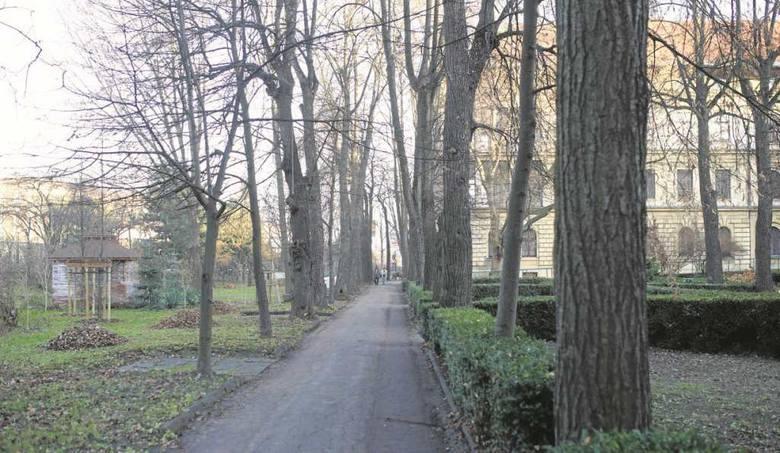
The garden is located on the territory of the social welfare home 'Helclów' in Kraków under the protection of a regional monument conservator. It is supposed to integrate the residents of various age and support physical rehabilitation and leisure with elements of garden therapy. Its main goal is to integrate the elderly from the social welfare home with other citizens through joint activities, such as flowers and herbs planting and caretaking. The initiative involves planting greenery (including 314 trees and 134 square meters of shrubs between 2010 and 2016), setting a grill area, and renovating the infrastructure for the disabled. The garden is supposed to serve as an offset for harmful developments in other parts of the city. Private investors are often obliged to provide resources for new trees in the garden’s natural wall and a noise and pollution barrier. The park is publicly accessible between 9 AM and 6 PM and is available for the organization of events and meetings. The concept to open the previously closed garden to the public was initiated an application for a participatory budget in 2016 and very much supported by all parties involved [1,2,3].
Overview
Nature-based solution
- Grey infrastructure featuring greens
- Institutional green space
- Parks and urban forests
- Pocket parks/neighbourhood green spaces
- Community gardens and allotments
- Community gardens
Key challenges
- Green space, habitats and biodiversity (SDG 15)
- Habitat and biodiversity conservation
- Green space creation and/or management
- Environmental quality
- Air quality improvement
- Noise reduction
- Regeneration, land-use and urban development
- Promote natural styles of landscape design for urban development
- Inclusive and effective governance (SDG 16)
- Inclusive governance
- Social justice, cohesion and equity (SDG 10)
- Social cohesion
- Social interaction
- Health and well-being (SDG 3)
- Enabling opportunities for physical activity
- Improving physical health
- Creation of opportunities for recreation
- Cultural heritage and cultural diversity
- Preservation of natural heritage
- Protection of historic and cultural landscape/infrastructure
Focus
Project objectives
Implementation activities
Biodiversity conservation or restoration-focused activities
Biodiversity conservation:
- Protect and enhance urban habitats
- Preserve and strengthen existing habitats and ecosystems
- Reduce negative impacts and avoid the alteration/damage of ecosystem
- Protect species
- Undertake specific measures to protect species
- Undertake specific measures to protect valued species
- Means for conservation governance
- Biodiversity offsets
- Public engagement
Main beneficiaries
- Public sector institution (e.g. school or hospital)
- Citizens or community groups
- Marginalized groups: Elderly people
Governance
Management set-up
- Co-governance with government and non-government actors
Type of initiating organisation
- Public sector institution
- Citizens or community group
Participatory approaches/ community involvement
- Co-planning (e.g. stakeholder workshops, focus groups, participatory mapping)
- Crowd-sourcing/Crowd-funding/Participatory budget
- Consultation (e.g. workshop, surveys, community meetings, town halls)
Details on the roles of the organisations involved in the project
Project implemented in response to ...
Financing
Total cost
Source(s) of funding
- Public national budget
- Public local authority budget
Type of funding
- Earmarked public budget
- Direct funding (grants, subsidies, or self-financed projects by private entities)
Non-financial contribution
Impacts and Monitoring
Environmental impacts
- Environmental quality
- Reduced noise exposure
- Green space and habitat
- Promotion of naturalistic styles of landscape design for urban development
- Increased conservation or restoration of ecosystems
- Reduced biodiversity loss
- Increased number of species present
Economic impacts
- Unknown
Socio-cultural impacts
- Social justice and cohesion
- Improved social cohesion
- Improved access to urban green space
- Increased opportunities for social interaction
- Increased involvement of locals in the management of green spaces
- Health and wellbeing
- Improved physical health
- Gain in activities for recreation and exercise
- Cultural heritage and sense of place
- Protection of natural heritage
- Protection of historic and cultural landscape / infrastructure
Type of reported impacts
Presence of formal monitoring system
Presence of indicators used in reporting
Presence of monitoring/ evaluation reports
Availability of a web-based monitoring tool
References
2. Agaciak, A., (2016), 'The mysterious garden in the city center will open the gates for Cracovians' ('Tajemniczy ogród w centrum miasta otworzy bramy dla krakowian'), Source link, Source link (Accessed: 29 August 2020).
3. (See attachment) 'RESOLUTION NO. XXXIV / 566/15 CITY COUNCIL OF KRAKOW December 16, 2015 On the Regulations of Citizens' Budget of the City of Cracow' ('UCHWAŁA NR XXXIV/566/15 RADY MIASTA KRAKOWA z dnia 16 grudnia 2015 r. w sprawie Regulaminu budżetu obywatelskiego Miasta Krakowa')
4. (See attachment) 'RESOLUTION NO. 35/2018 SOCIAL WELFARE HOME (UCHWAŁA 35/2018 DOM POMOCY SPOŁECZNEJ IM. LUDWIKA I ANNY HELCLÓW W KRAKOWIE). 07 July 2018.