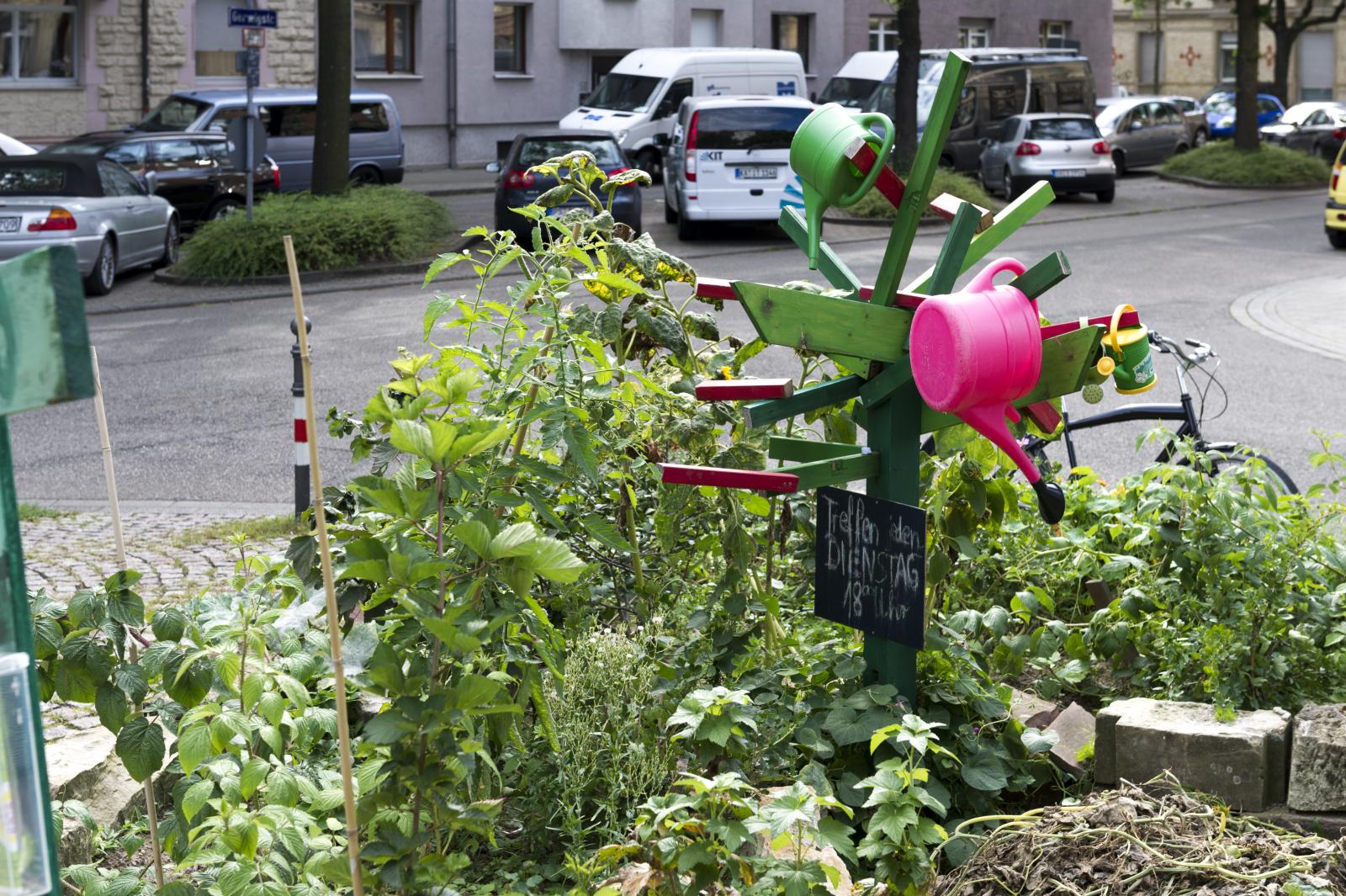
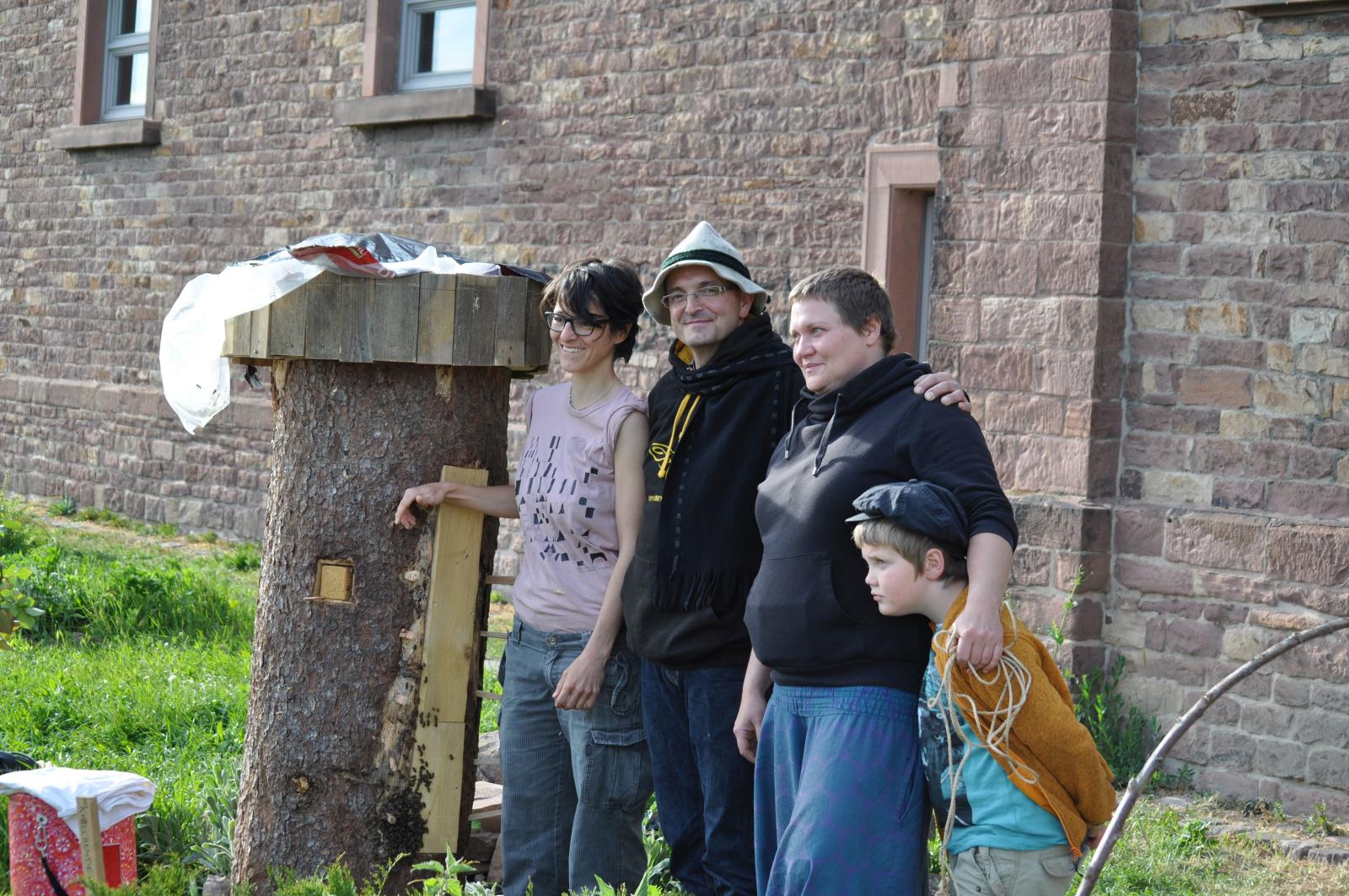
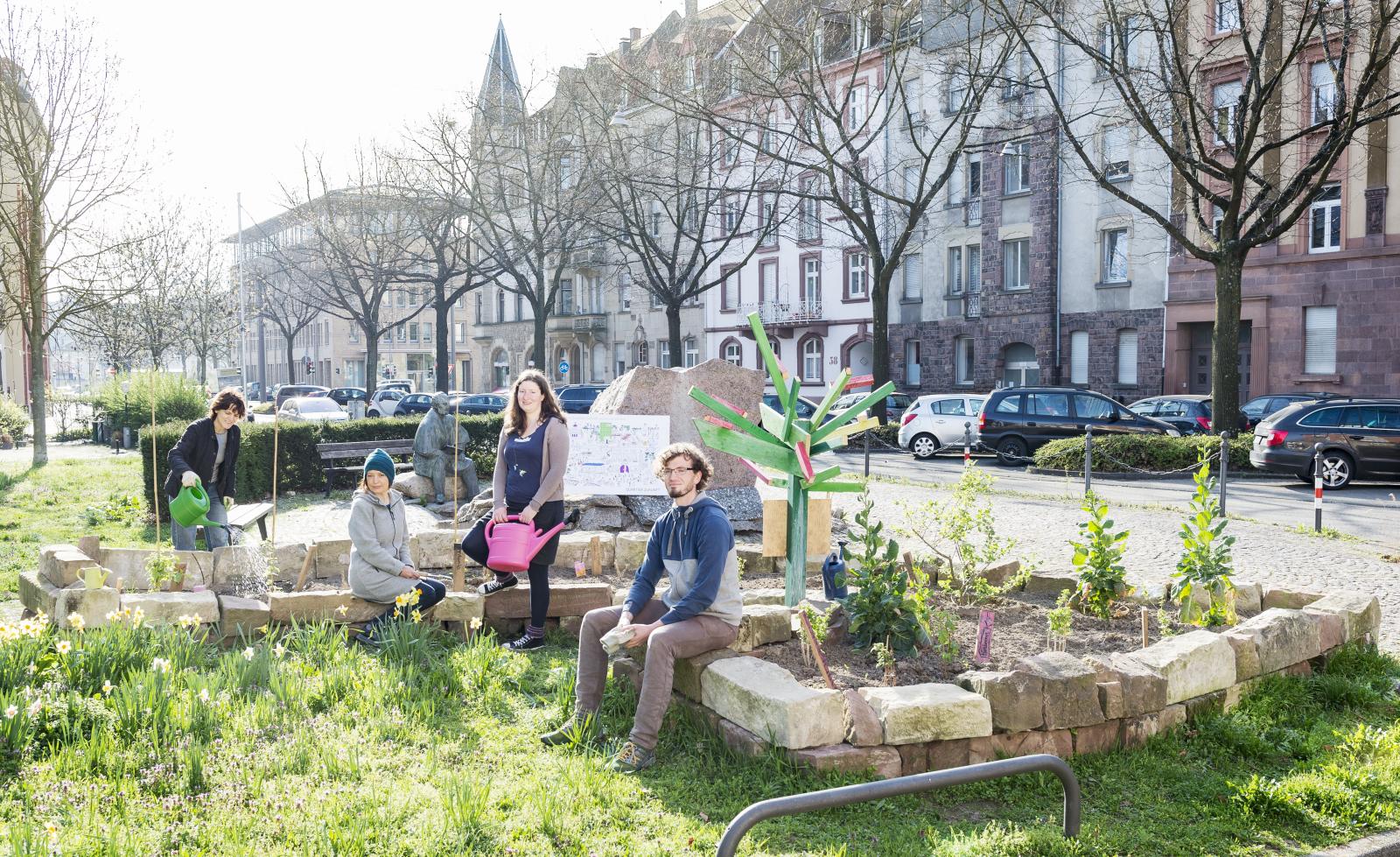
The project BEETE & BIENEN (Beds & Bees) in the Eastern part of Karlsruhe is an awarded sustainability experiment where garden beds, flower beds and beehives create a new urban greenspace for humans and animals and increase the urban bee population. Residents - in collaboration and under the guidance of gardeners – plant herbs, flowers, vegetables, fruits and trees that provide food for humans and thereby provide a natural habitat for the urban bee population to thrive. Residents shall take over ownership of maintenance and cultivation of the garden in the long run. (Ref. 1). The project is not about honey yield, but about enabling the bees to live as naturally as possible. Hives and garden beds are established in several small gardens in the city, including one Marstallgarten and another in Grötzingen. (Ref. 8)
Overview
Nature-based solution
- Grey infrastructure featuring greens
- Alley or street trees and other street vegetation
- Parks and urban forests
- Pocket parks/neighbourhood green spaces
- Community gardens and allotments
- Community gardens
Key challenges
- Green space, habitats and biodiversity (SDG 15)
- Habitat and biodiversity conservation
- Green space creation and/or management
- Social justice, cohesion and equity (SDG 10)
- Environmental education
- Social cohesion
- Social interaction
- Health and well-being (SDG 3)
- Improving mental health
Focus
Project objectives
Implementation activities
Biodiversity conservation or restoration-focused activities
Biodiversity conservation:
- Protect and enhance urban habitats
- Create new habitats
- Protect species
- Undertake specific measures to protect species
- Undertake specific measures to protect native species
- Undertake specific measures to protect endangered species
- Undertake specific measures to protect valued species
- Means for conservation governance
- Public engagement
Main beneficiaries
- Researchers/University
- Citizens or community groups
Governance
Management set-up
- Led by non-government actors
Type of initiating organisation
- Citizens or community group
Participatory approaches/ community involvement
- Dissemination of information and education
- Joint implementation (e.g. tree planting)
- Co-management/Joint management
- Citizen science
Details on the roles of the organisations involved in the project
Project implemented in response to ...
Financing
Total cost
Source(s) of funding
- Private Foundation/Trust
- Other
Type of funding
- Direct funding (grants, subsidies, or self-financed projects by private entities)
Non-financial contribution
- Provision of land
- Provision of labour
- Public authorities (e.g. land, utility services)
- Citizens (e.g. volunteering)
Impacts and Monitoring
Environmental impacts
- Green space and habitat
- Increased green space area
- Increased protection of threatened species
- Enhanced support of pollination
Economic impacts
- Unknown
Socio-cultural impacts
- Social justice and cohesion
- Improved social cohesion
- Education
- Increased support for education and scientific research
- Increased knowledge of locals about local nature
Type of reported impacts
Presence of formal monitoring system
Presence of indicators used in reporting
Presence of monitoring/ evaluation reports
Availability of a web-based monitoring tool
References
2. Trenks, H. (2016) „Dein NachhaltigkeitsExperiment“: Gemeinschaft und Entschleunigung in der Karlsruher Oststadt. Available at: Source link 21 Oct. 2020]
3. Quartier Zukunft - Labor Stadt (2016a) Da will was aus dem Ei: Die Gewinner-Ideen von „Dein NachhaltigkeitsExperiment“ stehen fest! Available at: Source link 21 Oct. 2020]
4. Quartier Zukunft - Labor Stadt (2016) Das NachhaltigkeitsExperiment BEETE & BIENEN macht die Oststadt essbar – und bringt sie zum Summen! Available at: Source link 21 Oct. 2020]
5. Quartier Zukunft - Labor Stadt (2016) Konzept. Available at: Source link 21 Oct. 2020]
6. Stadt Karlsruhe (2016) Karlsruhe: Grüne Stadt Karlsruhe. Ziele der Grünen Stadt. Available at: Source link 21 Oct. 2020]
7. Kahmann, V., Krumes, K., Mester, P., Neblung, N., Romer, R. and Sonnleitner, K. (2016) Beete & Bienen. Projektantrag. Karlsruhe.
8. Druckschrift. (2017). Beete & Bienen: Schwärmen für eine essbare Stadt. [online]. Available at: Source link [Accessed: 22 Oct. 2020].