

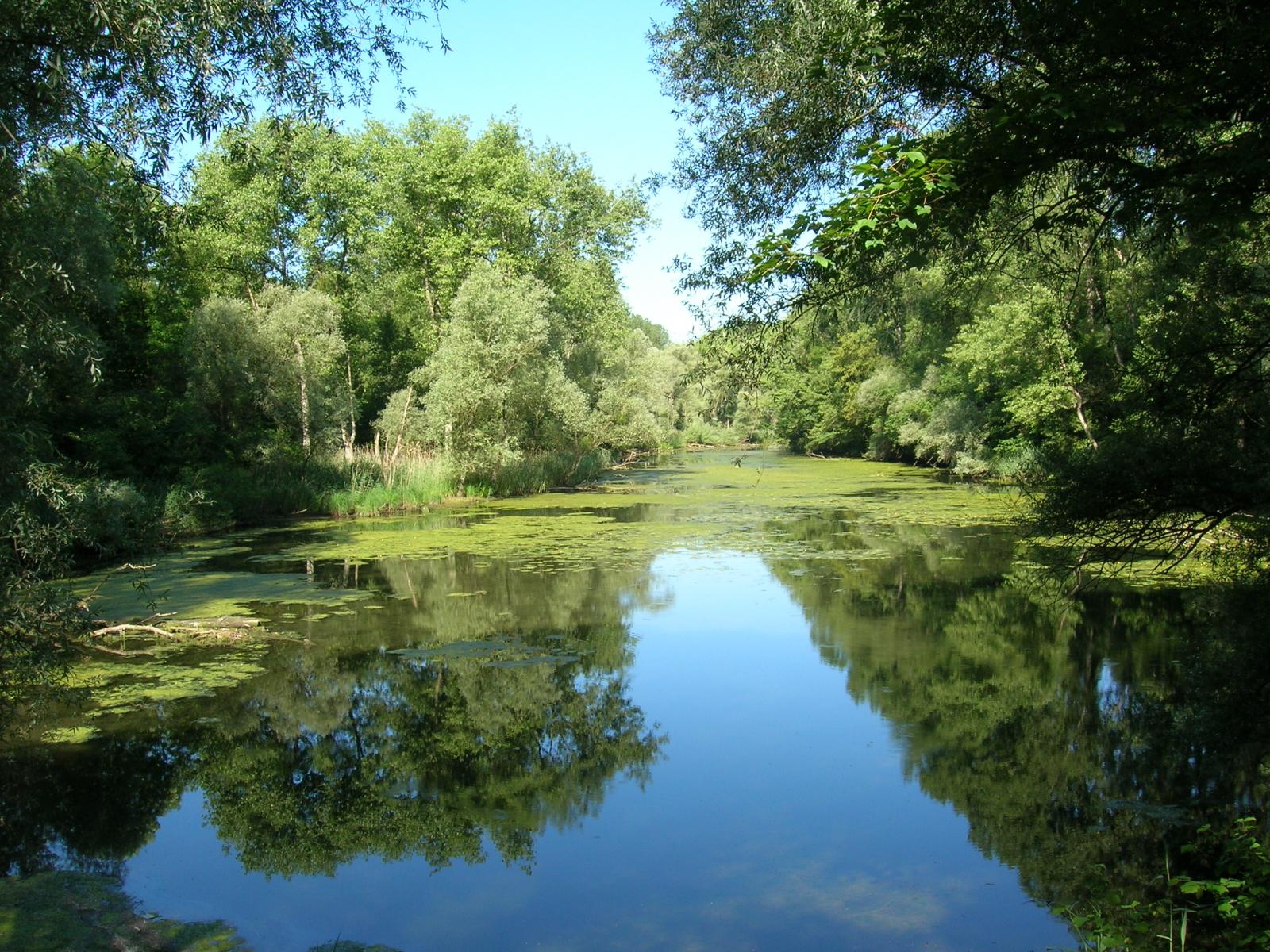
The project area comprises the morphological floodplain of the Rhine to the north and south of the city of Karlsruhe and sections of the river Alb, covering an area of about 7.665 hectares in total. Alongside Karlsruhe, five smaller communities in the neighbourhood contribute to the project as partners. Due to the channelling of the Rhine, the construction of dykes and the isolation of river channels, the area has lost its natural floodplains and precious habitats and became more vulnerable to flooding. Major objectives of the project are the re-introduction of natural floodplains and the enhancement of natural habitats for local flora and fauna. (Ref. 7). The project included an exceptionally wide range of measures including species protection measures, the complete desludging of parts of the Rhine, the re-establishment of softwood and hardwood forests typical of the floodplain, the construction of bridges, the natural remodelling of the entire river Trench systems and the creation of new bodies of water. (Ref. 9) The project also provides environmental education, informing the public about activities and encouraging their participation (Ref. 7)
Overview
Nature-based solution
- Blue infrastructure
- Lakes/ponds
- Rivers/streams/canals/estuaries
- In-land wetlands, peatlands, swamps, and moors
- Grey infrastructure featuring greens
- Riverbank/Lakeside greens
Key challenges
- Green space, habitats and biodiversity (SDG 15)
- Habitat and biodiversity conservation
- Green space creation and/or management
- Water management (SDG 6)
- Flood protection
- Social justice, cohesion and equity (SDG 10)
- Environmental education
Focus
Project objectives
Implementation activities
Biodiversity conservation or restoration-focused activities
Biodiversity conservation:
- Protect and enhance urban habitats
- Preserve and strengthen existing habitats and ecosystems
- Create new habitats
- Preserve and strengthen habitat connectivity
- Protect species
- Undertake specific measures to protect species
- Means for conservation governance
- Raise public awareness
Main beneficiaries
- Local government/Municipality
- Citizens or community groups
Governance
Management set-up
- Government-led
Type of initiating organisation
- Regional government
Participatory approaches/ community involvement
- Dissemination of information and education
- Consultation (e.g. workshop, surveys, community meetings, town halls)
Details on the roles of the organisations involved in the project
Project implemented in response to ...
Financing
Total cost
Source(s) of funding
- Public local authority budget
- Funds provided by non-governmental organization (NGO)
- EU funds
- Other
Type of funding
- Earmarked public budget
- Direct funding (grants, subsidies, or self-financed projects by private entities)
Non-financial contribution
Impacts and Monitoring
Environmental impacts
- Climate change
- Strengthened capacity to address climate hazards/natural disasters
- Water management and blue areas
- Increased protection against flooding
- Reduced risk of damages by drought
- Green space and habitat
- Increased green space area
- Increased conservation or restoration of ecosystems
- Reduced biodiversity loss
- Increased number of species present
Economic impacts
- Unknown
Socio-cultural impacts
- Cultural heritage and sense of place
- Increased appreciation for natural spaces
- Education
- Increased knowledge of locals about local nature
- Increased awareness of NBS and their benefits
Type of reported impacts
Presence of formal monitoring system
Presence of indicators used in reporting
Presence of monitoring/ evaluation reports
Availability of a web-based monitoring tool
References
2. Stadt Karlsruhe (2016b) Karlsruhe: Natur- und Umweltschutz. Lebendige Rheinaue. Available at: Source link 23 Oct. 2020].
3. Kern, K. and Zimmermann, P. (2010) EU-Life-Projekt. Lebendige Rheinauen bei Karlsruhe. LIFE2004/D/00025. Technischer Bericht. Available at: Source link [Accessed: 23 Oct. 2020].
4. Staatliche Naturschutzverwaltung Baden-Württemberg (2010) LIFE-Projekt „ Lebendige Rheinauen bei Karlsruhe “ – Ergebnisse. Karlsruhe. Available at: Source link 23 Oct. 2020].
5. Naumann, S., Davis, M., Goeller, B., Gradmann, A. and Mederake, L. (2015) Ökosystembasierte Ansätze zur Anpassung an den Klimawandel und zum Klimaschutz im deutschsprachigen Raum Ökosystembasierte Ansätze zur Anpassung an den Klimawandel und zum Klimaschutz im deutschsprachigen Raum, BfN-Skripten. Bonn. Available at: Source link 23 Oct. 2020].
6. Rijkswaterstaat Ruimte voor de Rivier (no date) alfa. Adaptive land use for flood alleviation. [Weblink unavailable in 2020].
7. Regierungspräsidium Karlsruhe (no date) Living Rhine floodplain near Karlsruhe. Available at: Source link 23 Oct. 2020].
8. European Commission (2017) Environment. LIFE Programme. Available at: Source link 23 Oct. 2020].
9. Staatliche Naturschutzverwaltung Baden-Württemberg. (2010). Naturschutz-Info. Karlsruhe: LUBW Landesanstalt für Umwelt, Messungen und Naturschutz Baden-Württemberg.