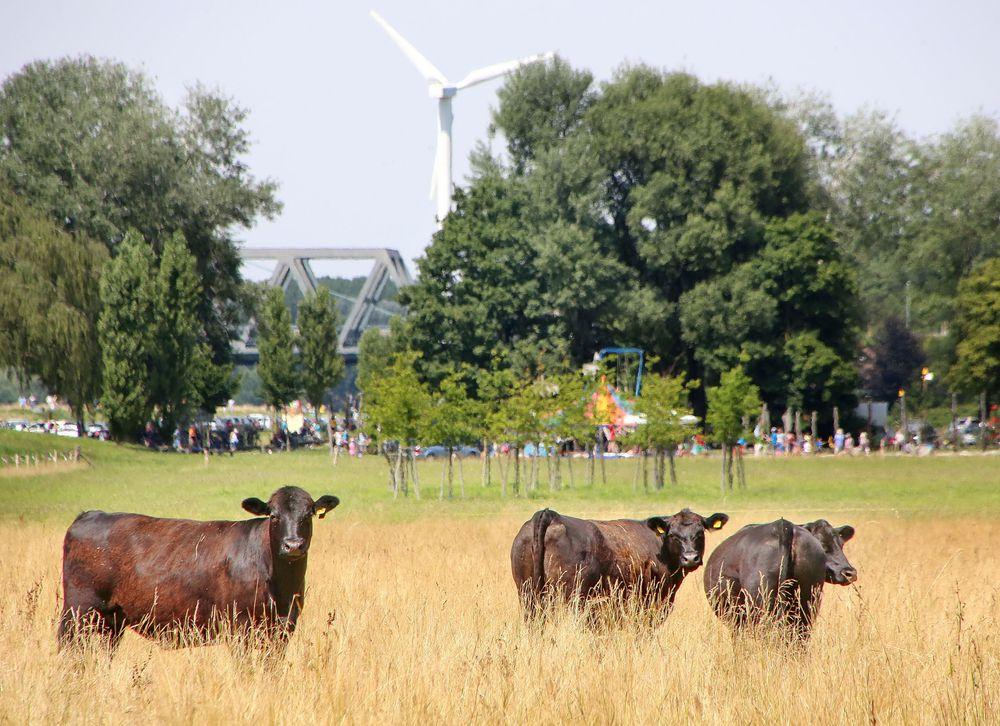
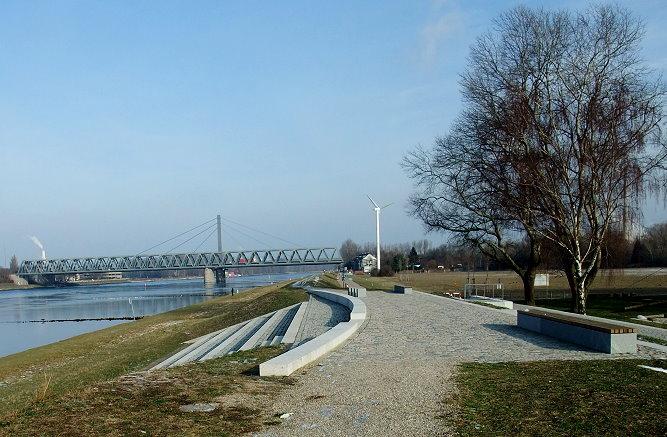
As part of the “Landscape Park Rhine”, a key project of the Karlsruhe Master Plan 2015, the city of Karlsruhe implemented the “Park Maxau” project module, which is the most important element of the larger landscape project. (Ref. 3) The “Park Maxau” is a park within an agricultural area which with its new leaseholders, has mostly been converted into ecological agricultural fields and grazing areas. (Ref. 3) Major goals were linking green corridors with the Pamina Rhine park, creating a connected recreational area and enhancing ecological diversity. The “Rhine Promenade” pedestrian route, Rhine terraces and a children’s playground were created, a visitor guidance system was introduced, and an estate was revived as a restaurant. During the 17-month development process, citizens were given the opportunity to offer their ideas and suggestions about the project through internet surveys, interviews and a citizens' conference. (Ref. 6) The area has become a hotspot for ecological agriculture, environmental education and recreation (Ref. 10).
Overview
Nature-based solution
- Grey infrastructure featuring greens
- Green playgrounds and school grounds
- Blue infrastructure
- Riverbank/Lakeside greens
- Parks and urban forests
- Large urban parks or forests
- Green corridors and green belts
- Rivers/streams/canals/estuaries
Key challenges
- Green space, habitats and biodiversity (SDG 15)
- Habitat and biodiversity conservation
- Green space creation and/or management
- Regeneration, land-use and urban development
- Regulation of built environment
- Social justice, cohesion and equity (SDG 10)
- Environmental education
- Health and well-being (SDG 3)
- Creation of opportunities for recreation
- Cultural heritage and cultural diversity
- Preservation of natural heritage
- Sustainable consumption and production (SDG 12)
- Sustainable production
Focus
Project objectives
Implementation activities
Biodiversity conservation or restoration-focused activities
Biodiversity conservation:
- Protect and enhance urban habitats
- Preserve and strengthen existing habitats and ecosystems
- Promote environmentally-sound development in and around protected areas
- Means for conservation governance
- Raise public awareness
- Public engagement
Main beneficiaries
- Private sector/Corporate/Company
- Citizens or community groups
Governance
Management set-up
- Government-led
Type of initiating organisation
- Local government/municipality
Participatory approaches/ community involvement
- Dissemination of information and education
Details on the roles of the organisations involved in the project
Project implemented in response to ...
Financing
Total cost
Source(s) of funding
- Public local authority budget
Type of funding
- Earmarked public budget
Non-financial contribution
Impacts and Monitoring
Environmental impacts
- Green space and habitat
- Increased green space area
Economic impacts
- Unknown
Socio-cultural impacts
- Social justice and cohesion
- Increased sustainability of agriculture practices
- Health and wellbeing
- Gain in activities for recreation and exercise
- Cultural heritage and sense of place
- Protection of natural heritage
- Education
- Increased support for education and scientific research
- Increased knowledge of locals about local nature
Type of reported impacts
Presence of formal monitoring system
Presence of indicators used in reporting
Presence of monitoring/ evaluation reports
Availability of a web-based monitoring tool
References
2. Hartleb, P. (2017) Hofgut Maxau. Available at: Source link 27 Oct. 2020].
3. Henz, T., Henz, A., Müller, H.-V., Schäfter, C. and Bellm, K. (2010) Landschaftspark Rhein - Park Maxau - Projektbeschreibung für den Antrag auf die naturschutzrechtliche Genehmigung des Vorhabens. Karlsruhe. Available at: Source link 27 Oct. 2020].
4. Bildungsverein Region Karlsruhe e.V. (2012) Landschaftspark Rhein, Stadtwiki Karlsruhe. Available at: Source link 27 Oct. 2020].
5. Source link (2012) ‘Raus an den Rhein: Dammterrassen und Spielplatz beim Hofgut Maxau eröffnet’, Source link. Available at: Source link [Accessed: 27 Oct. 2020].
6. Stadt Karlsruhe (2011) Der Masterplan 2015 – Eine Perspektive für das Karlsruhe von morgen. Available at: Source link 27 Oct. 2020].
7. Stadt Karlsruhe (2013) Grünsystem der Stadt Karlsruhe. Available at: Source link 27 Oct. 2020].
8. Fulda, C. and Miles, S. (2012) Karlsruhe 2020 : Integriertes Stadtentwicklungskonzept. Karlsruhe. Available at: Source link 27 Oct. 2020].
9. Stammmschröer, K. (2014) ‘Landschaftspark ist auf der Source link, Badische Neueste Nachrichten, 26 September. [Weblink unavailable in 2020].
10. n.a. (2015) ‘Landschaftspark Rhein: Karlsruhe zieht es an den Rhein’, Karlsruher Stadtzeitung. Available at: Source link. [Accessed: 27 Oct. 2020].